
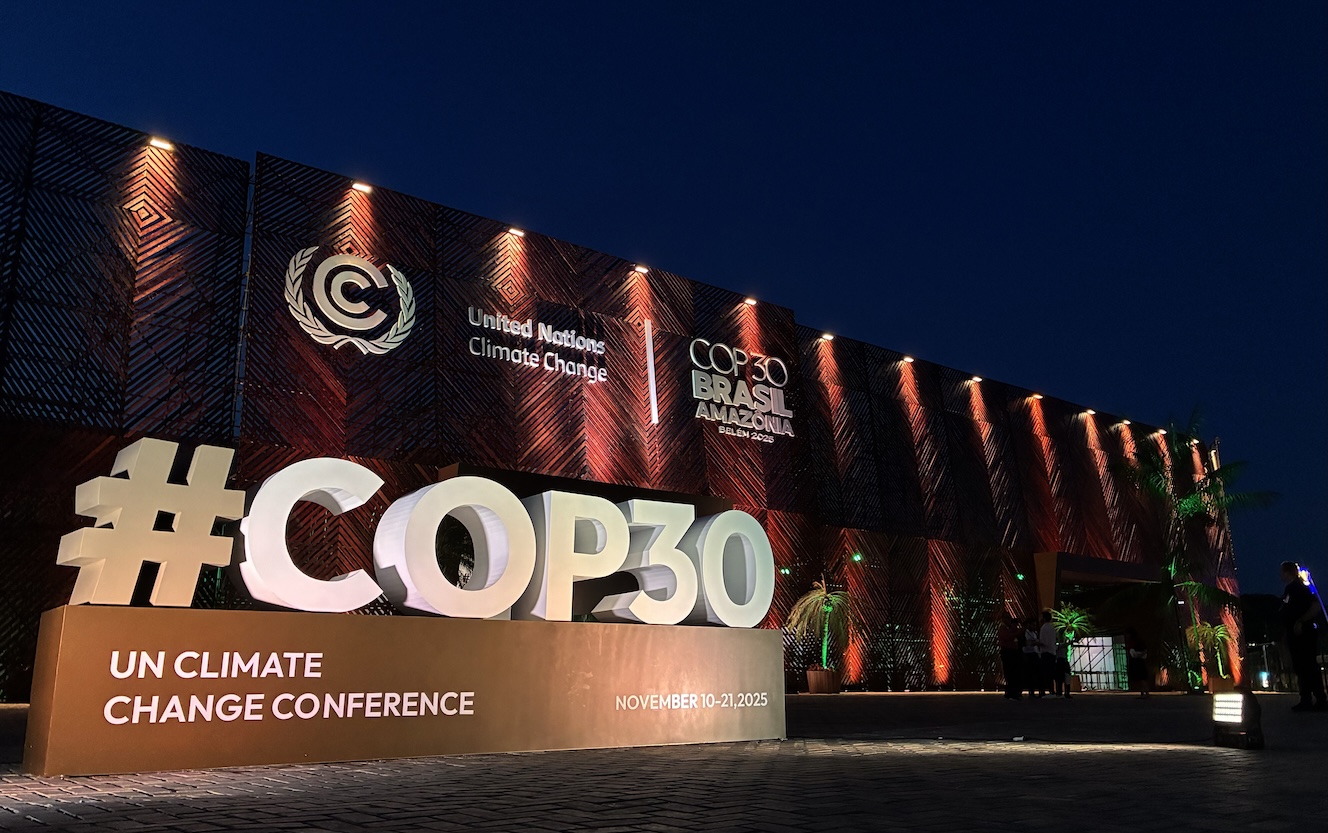
COP-30 is the United Nations Climate Change Conference that took place in Belém, Brazil, from 10 to 21 November 2025. Image: COP-30 website.
By Mariana Meneses
The 2025 United Nations Climate Change Conference (COP-30), held in Belém, Brazil, from November 10-22, 2025, aimed for a shift from climate pledges to actual implementation, focusing on fossil fuel transition, finance, and adaptation. It was hosted in the Amazon region and mobilized 190 countries across 120 climate action plans, featuring significant participation from Indigenous peoples and non-state actors. Discussions unfolded against a growing recognition that technological innovation alone cannot resolve the global climate crisis.
In a session titled “Emerging Technology Solutions for Planetary Health,” scientists, policymakers, and institutional leaders confronted a central question: what can technology realistically deliver when planetary limits are already being crossed, and under what conditions can it meaningfully contribute to change?
Moderated by Dr. Gilbert De Gregorio, Associate Director of the Frontiers Planet Prize, the event brought together Helen Elizabeth Burdett, Head of Technology at the World Economic Forum (WEF); Kirsten Dunlop, CEO of Climate-KIC; H.E. Tonika Sealy-Thompson, Barbados’ Ambassador to Brazil; and Professor Johan Rockström, Director of the Potsdam Institute for Climate Impact Research.
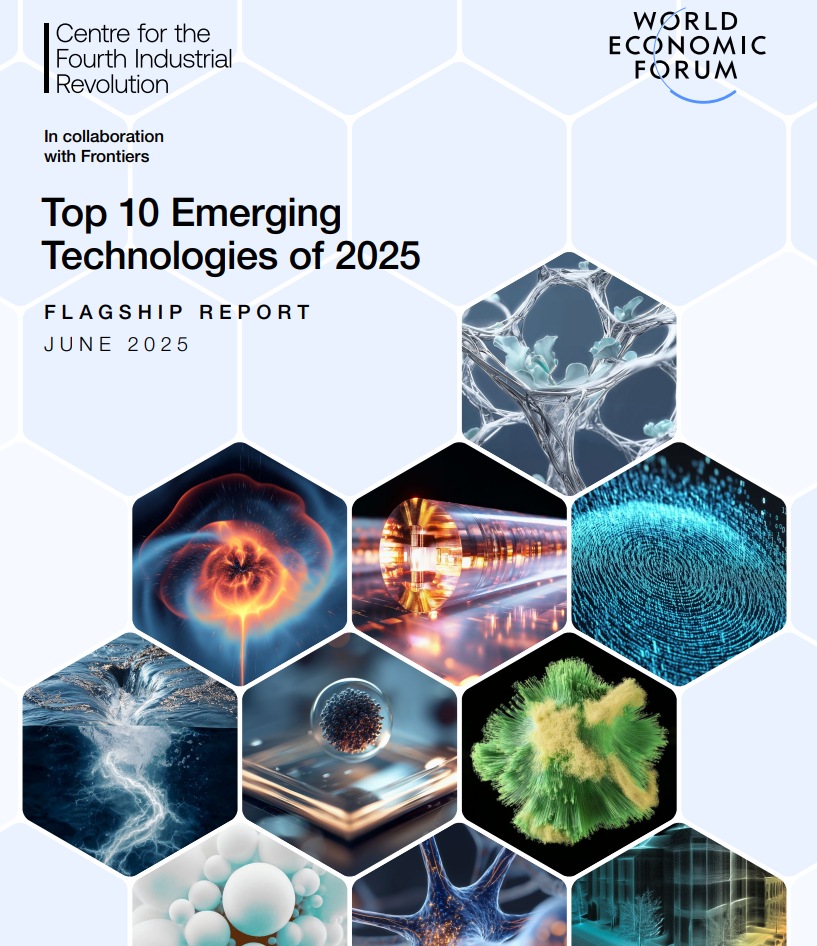
The discussion centred on a new Frontiers-World Economic Forum report identifying ten emerging technology areas related to planetary health. De Gregorio highlighted that COP30 was the first time the WEF’s long-running “top 10” format had been applied specifically to planetary health and explained the technologies that were selected through expert nominations and review and were assessed for scale and potential broad impact.
COP30 | Emerging Technology solutions for Planetary Health | Frontiers
The Top 10 Emerging Technologies of 2025: Unprecedentedly Focused on Planetary Health
Each year, the World Economic Forum’s Top 10 Emerging Technologies report highlights innovations that are no longer confined to laboratories but are approaching broader social, economic, and political relevance. The 2025 edition focuses on technologies for sustainable growth and future adaptive capacity that have reached a critical point of scientific maturity while still facing significant challenges related to scale, governance, and societal adoption. We summarize below each of the technologies featured in the WEF report.
Structural battery composites combine energy storage and mechanical function in a single material, allowing components such as vehicle panels to act simultaneously as batteries. By embedding electrochemical capacity into load-bearing materials, these composites could reduce overall system weight and improve energy efficiency, particularly in transportation applications. The report emphasizes that while laboratory demonstrations are promising, challenges remain around energy density, durability under repeated stress, safety standards, recycling, and regulatory adaptation before large-scale deployment becomes viable.

“Structural battery composites: Merging energy and engineering in motion”. Credit: The Top 10 Emerging Technologies of 2025.
Osmotic power systems generate electricity from the natural salinity difference between freshwater and seawater, using specialized membranes to convert chemical differences into usable energy. Unlike intermittent renewables like solar or wind energy, osmotic power can operate continuously, offering a stable and low-impact energy source in coastal or estuarine environments. Advances in membrane performance have revived interest in a concept first proposed decades ago, though the report notes that economic competitiveness and infrastructure integration remain key barriers to widespread adoption.
Advanced nuclear technologies, including Generation III+ and IV reactors as well as small modular reactors (SMRs), aim to deliver low-carbon, reliable energy with enhanced safety and flexibility. SMRs are designed for factory-based manufacturing and decentralized deployment, making them suitable for remote regions or industrial applications requiring consistent heat and power. The report highlights that beyond technical design, the success of these systems depends on regulatory frameworks, public trust, skilled workforces, and resilient supply chains.
Engineered living therapeutics use genetically modified microorganisms or cells to produce therapeutic compounds directly within the human body. This approach could reduce manufacturing complexity and resources for global distribution, enabling continuous or adaptive treatment for conditions such as cancer, metabolic disorders, and chronic wounds. According to the report, early clinical trials show potential, but significant challenges remain in ensuring biological containment, safety controls, and regulatory oversight for therapies that remain active inside patients over time.
GLP-1 receptor agonists, already widely used to treat diabetes and obesity, are being investigated for potential benefits in treating neurodegenerative diseases such as Alzheimer’s and Parkinson’s. The report describes growing evidence that these drugs may reduce inflammation and improve cellular metabolism in the brain, though results are still mixed and long-term effects are not yet fully understood. If proven effective, their impact on eldercare support infrastructures could be substantial given ageing populations, but issues of affordability, supply constraints, and equitable access remain unresolved.
Autonomous biochemical sensing refers to self-powered systems capable of continuously detecting biological or chemical signals in real time. Using enzymes, antibodies, or engineered biological components, these sensors could monitor health conditions, environmental pollutants, or food safety without repeated manual testing. The report notes that while the technology promises persistent and decentralized monitoring, it raises important questions about sensor longevity, data governance, privacy, and regulation, especially when biological components are involved.

“Autonomous biochemical sensing: Wiring biological sensors for real-time insight”. Credit: The Top 10 Emerging Technologies of 2025.
Green nitrogen fixation seeks to replace the energy-intensive Haber–Bosch process with cleaner methods for producing ammonia, using electrochemical, biological, or renewable-powered techniques. Since ammonia is central to fertilizer production and is increasingly considered as an energy carrier, improvements in nitrogen fixation could reshape agriculture, energy storage, and global trade. The report stresses that scaling these alternatives will require overcoming cost barriers, managing toxicity, and navigating geopolitical dependencies linked to critical materials.
Nanozymes are synthetic materials made from nanoparticles of metals, metal oxides, carbon, and other materials engineered to mimic natural enzymes that catalyze chemical reactions while offering greater stability and lower production costs. Their potential applications range from medical diagnostics and cancer treatment to water purification, environmental remediation, and reduction of energy usage and waste in industrial catalysis. According to the report, while nanozyme technology is advancing rapidly, challenges remain in achieving high specificity, ensuring biocompatibility, and establishing regulatory frameworks for materials that blur the line between chemistry and biology.
Collaborative sensing connects networks of distributed sensors—across vehicles, infrastructure, satellites, and urban systems—using artificial intelligence and edge computing to enable shared, real-time situational awareness. This approach could improve traffic management, disaster response, environmental monitoring, and precision agriculture. The report emphasizes that successful implementation depends not only on sensor technology but also on data standards, connectivity infrastructure, cybersecurity, and public trust in how shared data are used.
Generative watermarking embeds imperceptible markers into AI-generated text, images, audio, or video to help identify synthetic content and trace its origin. As generative AI becomes more widespread, watermarking is presented as a potential tool for addressing misinformation, intellectual property disputes, and erosion of trust in digital media. The report cautions that technical limitations—such as watermark removal or inconsistent standards—mean that watermarking is not a complete solution but rather one emerging component of a broader digital trust infrastructure.
Across the panels at COP-30, speakers emphasized that the relevance of these technologies lies less in their technical feasibility than in the conditions for their deployment.
Technologies, they argued, cannot operate in isolation and must be embedded within broader transformations in policy, governance, and finance. Several panellists warned against treating innovation as a substitute for structural change, stressing that technological tools must address the drivers of climate damage rather than merely improving efficiency within existing economic models.
Structural barriers featured prominently in the discussion.
Kirsten Dunlop argued that many climate technologies falter not because they fail technically, but because they are designed around pilot projects instead of being conceived for scale from the outset. She cited modular geothermal energy as an example whose uptake is constrained by market design and regulatory frameworks as much as by engineering challenges. H.E. Tonika Sealy-Thompson highlighted a parallel concern from the perspective of small island and developing states that technologies are often deployed in vulnerable regions without durable financing, local ownership, or capacity-building, reinforcing dependency instead of long-term resilience.
The panel’s conclusions remained cautious. Technologies were repeatedly described as necessary but insufficient, requiring accountability mechanisms, reliable Earth-system measurement, and policy decisions capable of shifting incentives at scale. Proposals discussed ranged from replacing self-reported sustainability data with sensor-based monitoring to deploying stronger regulatory signals to accelerate adoption.
A shared assumption ran through the session: without changes in how technologies are financed, governed, and evaluated, even well-established innovations are unlikely to redirect current trajectories toward a safe operating space.
These debates unfolded within a broader diplomatic context shaped by the outcomes of previous COP negotiations.
Following the COP29 in Azerbaijan

“COP30 CEO Ana Toni reaffirmed technology as a catalyst for climate solutions. Image: Rafa Neddermeyer / COP30”. Source: COP-30 website.
The COP-30 Science and Technology Day on November 10 featured the launch of the Green Digital Action Hub, which stems from the Green Digital Action Declaration that was endorsed by 82 countries and 1,800 organizations at COP29 in Azerbaijan.
“The Green Digital Action Hub, or GDA Hub, brings together multiple actors, including the World Bank, the European Green Deal Coalition, the German Agency for International Cooperation, the Coalition for Digital Environmental Sustainability, and the Global Green Growth Institute, under Brazilian leadership.” — Tomas Lamanauskas, Deputy Secretary-General of the International Telecommunication Union (ITU) in the COP-30 website.

Minister of Management and Innovation Ms. Esther Dweck discussed Brazil’s experience using technology to respond to the climate crisis. Image: Rafa Neddermeyer / COP30. Source: COP-30 websiteCOP-30 website.
Announced during COP30, the new Artificial Intelligence Climate Institute (AICI) aims to position AI as an enabler of climate action in developing countries by strengthening local skills, infrastructure, and innovation capacity. Launched under the Green Digital Action Hub, the initiative is supported by Brazil’s National Telecommunications Agency (Anatel), the International Telecommunication Union (ITU), and UNESCO, and focuses on training, digital literacy, and partnerships linking governments, academia, and industry.
Anchored in the COP29 Green Digital Action Declaration’s objective of promoting digital inclusion, AICI seeks to equip communities, particularly in Least Developed Countries and Small Island Developing States, with the resources to design and apply AI responsibly for climate mitigation and adaptation. AICI launched a pilot workshop in Belém with students from countries in the Amazon region.
However, alongside official enthusiasm for digital solutions, COP30 also saw a coordinated critique of artificial intelligence from Latin American organizations working at the intersection of technology and the environment. They argued that while AI was elevated to a strategic theme in the COP Action Agenda, its environmental and social costs were largely sidelined.
The statement warns that AI is not a climate “techno-solution,” but an energy- and resource-intensive industrythat increases emissions, fossil fuel dependence, water use, mineral extraction, and socio-environmental pressures across global supply chains. It also highlights the concentration of power among a small number of large technology companies, cautioning that AI’s rapid expansion risks distorting a just energy transition, especially in developing countries, unless governments impose stronger regulation, require full lifecycle accounting, and explicitly include digital infrastructure in national climate commitments.
The Belém Package
On November 22, the Belém Package was approved, and, according to the COP-30 website:
“One hundred and ninety-five Parties adopted the Belém Package this afternoon, demonstrating humanity’s resolve to turn urgency into unity, and unity into action in tackling climate change. The 29 decisions approved by consensus include agreements on topics such as just transition, adaptation finance, trade, gender, and technology, renewing the collective commitment to accelerated action, and a climate regime more connected to people’s lives.”
However, the international reception of COP-30’s results was not so optimistic. For instance, on November 21, The Guardian reported that a new draft outcome text released by the Brazilian presidency at COP30 omits any reference to a roadmap for phasing out fossil fuels, despite explicit warnings from at least 29 countries that they would block an agreement without such a commitment. According to the report, the omission reverses language included in an earlier draft and appears to reflect pressure from petrostates and major fossil fuel consumers, even as more than 80 countries had joined an initiative to develop a non-binding forum to discuss a future transition roadmap following the COP28 pledge to “transition away from fossil fuels.”
Supporters of the roadmap described it as a red line backed by science and public expectations, warning that a weak or empty text would undermine climate multilateralism. The Guardian reported its understanding that “Brazil faced pressure from some petrostates to omit the potential resolution.” During the event, Indigenous protesters clashed with security at the COP30 venue in Belém while demanding land rights, forest protection, and stronger climate action, highlighting tensions between summit negotiations and grassroots calls for environmental justice.
The European Union concluded that COP-30 in Belém delivered incremental but uneven progress: more than 120 countries submitted updated climate pledges covering most global emissions, adaptation finance was prioritized with a call to triple funding by 2035, and initiatives on just transition, forests, gender, and carbon markets gained formal backing. The conference reinforced the 2015 Paris Agreement’s role in bending the emissions curve and renewed commitments to transition away from fossil fuels and scale up renewables, led in part by an EU-backed coalition of over 80 countries. However, many targets remain insufficient to meet the 1.5°C global temperature reduction goal, key details on finance and implementation were left vague, and major emitters lagged, leaving COP30 framed as a step forward for multilateralism and participation but one that still falls short of the scale and speed required.
Cláudio Puty, a researcher at the Federal University of Pará, Brazil, shares a similar view:
“COP30 in Belém was marked by strong civil society participation, indigenous leadership, and symbolic democratic relevance, but its substantive outcomes fell short of what the climate crisis demands. While the conference reaffirmed the urgency of action, especially on fossil fuels and climate finance, responses remained timid, reflecting deeper geopolitical constraints rather than procedural flaws. Major emitters arrived weakened or cautious, China positioned itself as a technological partner of the Global South without assuming leadership, and financial commitments lacked scale, clarity, and enforceability. Initiatives like Brazil’s Tropical Forest Forever Fund gained recognition, but overall, the final text avoided concrete numbers and timelines, reinforcing the sense that COP30 mirrored existing power imbalances more than it transformed them.” — Cláudio Puty, for the Climate Finance Center For The Global South.
Taken together, the discussions at COP30 and the technologies highlighted in the Frontiers–World Economic Forum report point to a shared constraint: innovation is advancing faster than the political and institutional systems meant to guide it.
Across energy, materials, biology, and digital infrastructure, the emerging tools described are technically credible and, in some cases, already approaching deployment. Yet the panel repeatedly returned to the same conclusion: without changes in how technologies are financed, governed, measured, and owned, their capacity to alter current trajectories remains limited.
COP30’s outcomes, from the launch of new digital initiatives to the cautious language of the Belém Package, reflect this tension between ambition and implementation. Technology may be necessary to address planetary health, the speakers argued, but it is insufficient on its own. Whether these emerging tools contribute to a genuine shift toward a safe operating space will depend less on their novelty than on the political choices, regulatory frameworks, and power structures that determine how, and for whom, they are ultimately deployed.

Indigenous Knowledge and Greater Sustainability. Image: COP-30 website.
The Guardian reported that Brazil’s minister for Indigenous peoples, Sonia Guajajara, told COP-30 that the energy transition risks deepening mining pressures on traditional territories unless rights are enforced. During the event, according to BBC, Brazil announced the creation of 10 new Indigenous territories, a move welcomed by Indigenous leaders as a step toward land protection and climate action amid protests highlighting ongoing violence, exclusion, and enforcement gaps.
For further reading on this topic, The Quantum Record explored related ideas in Indigenous Knowledge Integrates Science and Nature for Greater Sustainability, examining how Indigenous knowledge systems integrate science and nature through long-standing, place-based understandings of ecosystems. Drawing on examples from Australia, the Arctic, and South America, the piece showed how practices such as controlled burning, multigenerational climate observation, and community-led research challenge the historical separation between western science and traditional knowledge.
Have we made a mistake?
We’d love to learn more and correct any unintentional inaccuracies we may have published in the past. Please reach out to us at info@thequantumrecord.com. Additionally, if you’re an expert in this field and would like to contribute to our future content, feel free to contact us. Our goal is to foster a growing community of researchers who can communicate and reflect on global scientific and technological developments in plain language.
Craving more? Check out these recommended TQR articles:
- Thinking in the Age of Machines: Global IQ Decline and the Rise of AI-Assisted Thinking
- Cleaning the Mirror: Increasing Concerns Over Data Quality, Distortion, and Decision-Making
- Not a Straight Line: What Ancient DNA Is Teaching Us About Migration, Contact, and Being Human
- Digital Sovereignty: Cutting Dependence on Dominant Tech Companies
We would love to know what you think about The Quantum Record and content like this. Share your thoughts in this 2-minute survey.