Science News

Explore  with us some of the latest developments in science, including physics, biology, mathematics, chemistry, information, and astronomy.  Imagine what the future holds with today’s discoveries in these and other scientific pursuits.  Along the way we will encounter fascinating people and their ideas that push the boundaries of science and shape the future direction of knowledge.

We feature some of the latest developments in a range of scientific branches, highlighting the human ingenuity and circumstances that lead to discovery and new technologies.   We explain the ideas, the problems that led to the solutions, and the function of the discoveries, in words designed for the general audience so no background in science is required to appreciate the work of the scientists.  The ideas for our stories are drawn from other freely-available publications as well as paid subscriptions, and we welcome contributions and story ideas from volunteer contributors.  Join our science writers Mariana Meneses and Saulo Silvestre as we explore the exciting new developments in science and the showcase the good people who dedicate their life’s work to the advancement of knowledge and the human mission.


In Focus

New Technologies Bring Us Closer to Communicating With Animals. Will the Experience be Humbling?

If we could learn to speak dog, elephant, or any of the vast array of sounds that animals communicate with, how would our perception of life change? Machine learning could soon help answer the question, as algorithms enable scientists to detect patterns and meaning in animal sounds. The studies of bioacoustics and ecoacoustics, and technologies like passive acoustic localization, have already led to important discoveries. As science comes closer to cracking the code of animal language, will legal and ethical systems respond to preserve nature, recognize animal intelligence, and prevent human manipulation?

Do We Live Inside a Black Hole? New Evidence Could Redefine Distance and Time

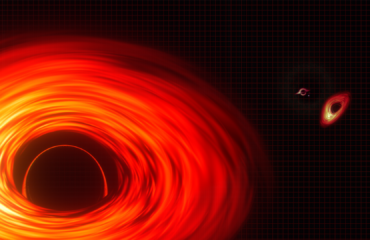
What difference would it make if we knew that we’re living inside a black hole? New evidence of galactic rotation patterns suggests that we do, and that we should reconsider how we measure distance and time. Is time linear, on a one-way trip from past to future, or is time actually circular? Evidence that galaxies rotate on a universal axis revives black hole cosmology and shockwave cosmology theories first proposed decades ago.

Cleaning the Mirror: Increasing Concerns Over Data Quality, Distortion, and Decision-Making

As AI systems become more powerful, the spotlight often focuses on models—yet the real bottleneck may lie in the data they consume. From flawed training sets to recursive feedback loops of AI-generated content, recent studies reveal that data quality is not just a technical detail—it’s a foundational concern for the future of trustworthy machine intelligence, especially in crucial functions like healthcare.

Latest Science News

  • The Potential Clash Over Lunar Resources: NASA’s Artemis, China’s Plans, and the Limits of Space Governance

    The goal of NASA’s Artemis program has changed to building a permanent Moon base that will sustain continuous habitation and prepare for future missions to Mars. Alongside China’s efforts and the planned International Lunar Research Station, the Moon is now at the center of geopolitical competition. As nations begin planning for lunar resource extraction, unresolved legal issues persist while frameworks like the Artemis Accords are beginning to shape future access, control, and governance of the Moon.

  • New Gene Editing Approach Targets Genetic Error Source, Raising Hope for Treating Rare Diseases

    Gene editing is moving beyond the correction of single genetic mutations toward approaches that target shared types of genetic errors, allowing one strategy to apply across multiple diseases. It is also evolving from a laboratory technique into broader clinical and research applications. As these capabilities expand and reinforce each other, gene editing is also becoming an ethical and governance challenge, raising questions about safety, access, and ethical limits.

  • When a Voice Is No Longer a Person: The Risks and Rewards of Voice Cloning and Synthetic Speech

    Voice cloning now enables highly realistic speech, expanding its use in many applications. Carrying identity and emotion, synthetic speech can shape perception in the same way as real human voices, despite current limitations in factors such as natural expressiveness. Growing adoption raises security and governance challenges, including risks of impersonation, fraud, misinformation, reduced reliability of voice as an identifier, and the need for clear standards on consent and data use.

  • The Brain in Higher Resolution: What AI Reveals and What AI Can’t Explain

    A digital fruit fly that senses, moves, and behaves inside a simulation is offering a glimpse of how far neuroscience has advanced. Powered by artificial intelligence, researchers are now mapping the brain’s wiring, chemistry, and connectivity in unprecedented detail, but these advances are also revealing AI’s limits. As new studies show, understanding the brain may depend not just on what we can map, but on how we choose to describe it.

  • Is Quantum Information the Fundamental Basis of Reality? Quantum Memory Matrix Theory Says Yes

    The Quantum Memory Matrix (QMM) theory holds that information about the physical universe is permanently imprinted in cells within the curved fabric of spacetime. Consistent with the laws of thermodynamics, the QMM theory could also explain the mysteries of dark matter and dark energy as products of the way information is stored and released.

  • Low Earth Orbit Is Becoming Structurally Unstable with Megaconstellations, Space Debris, and Governance Issues

    Low Earth orbit is filling faster than can be safely managed. New studies show that space debris falling to Earth can be tracked from seismic shockwaves, that planned satellite megaconstellations will overwhelm space telescopes, and that satellite networks would quickly face catastrophic collisions if control is lost. In the race to fill and militarize Earth orbit, the risk is structural and severe.

The Quantum Record is a non-profit journal of philosophy, science, technology, and time. The potential of the future is in the human mind and heart, and in the common ground that we all share on the road to tomorrow. Promoting reflection, discussion, and imagination, The Quantum Record highlights the good work of good people and aims to join many perspectives in shaping the best possible time to come. We would love to stay in touch with you, and add your voice to the dialogue.

Join Our Community