Science News

Explore  with us some of the latest developments in science, including physics, biology, mathematics, chemistry, information, and astronomy.  Imagine what the future holds with today’s discoveries in these and other scientific pursuits.  Along the way we will encounter fascinating people and their ideas that push the boundaries of science and shape the future direction of knowledge.

We feature some of the latest developments in a range of scientific branches, highlighting the human ingenuity and circumstances that lead to discovery and new technologies.   We explain the ideas, the problems that led to the solutions, and the function of the discoveries, in words designed for the general audience so no background in science is required to appreciate the work of the scientists.  The ideas for our stories are drawn from other freely-available publications as well as paid subscriptions, and we welcome contributions and story ideas from volunteer contributors.  Join our science writers Mariana Meneses and Saulo Silvestre as we explore the exciting new developments in science and the showcase the good people who dedicate their life’s work to the advancement of knowledge and the human mission.

In Focus

Is Quantum Information the Fundamental Basis of Reality? Quantum Memory Matrix Theory Says Yes

The Quantum Memory Matrix (QMM) theory holds that information about the physical universe is permanently imprinted in cells within the curved fabric of spacetime. Consistent with the laws of thermodynamics, the QMM theory could also explain the mysteries of dark matter and dark energy as products of the way information is stored and released.

New Ways to Detect and Measure Black Holes Reveal Surprising Origins and More Mysteries

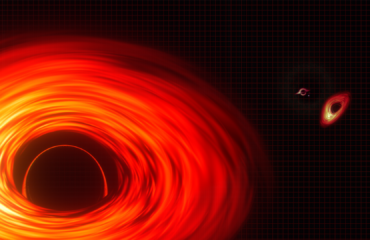
Recent studies show that black holes can be detected and measured in ways that go well beyond traditional telescope observations, using gravitational waves, neutrinos, and precise stellar dynamics. The results challenge long-standing theories about when black holes form and how they grow and move, and even question whether some identified black holes might instead be concentrations of dark matter. Tests may reveal surprising differences in black hole formation and types.

Why New Tech for Precision Tracking of Butterflies Could Unlock Major Secrets About Motion and Nature

Tiny new radio tracking devices have been attached to butterflies, allowing precise mapping of their annual migration across North America and aiding conservation efforts. By correlating data on the effects of atmospheric motion on butterfly movement, and adding the precision of quantum sensing, the technology behind the new radio tag could yield a wealth of information on the mechanical and thermodynamic processes of motion on a global scale.

Latest Science News

  • New Gene Editing Approach Targets Genetic Error Source, Raising Hope for Treating Rare Diseases

    Gene editing is moving beyond the correction of single genetic mutations toward approaches that target shared types of genetic errors, allowing one strategy to apply across multiple diseases. It is also evolving from a laboratory technique into broader clinical and research applications. As these capabilities expand and reinforce each other, gene editing is also becoming an ethical and governance challenge, raising questions about safety, access, and ethical limits.

  • When a Voice Is No Longer a Person: The Risks and Rewards of Voice Cloning and Synthetic Speech

    Voice cloning now enables highly realistic speech, expanding its use in many applications. Carrying identity and emotion, synthetic speech can shape perception in the same way as real human voices, despite current limitations in factors such as natural expressiveness. Growing adoption raises security and governance challenges, including risks of impersonation, fraud, misinformation, reduced reliability of voice as an identifier, and the need for clear standards on consent and data use.

  • The Brain in Higher Resolution: What AI Reveals and What AI Can’t Explain

    A digital fruit fly that senses, moves, and behaves inside a simulation is offering a glimpse of how far neuroscience has advanced. Powered by artificial intelligence, researchers are now mapping the brain’s wiring, chemistry, and connectivity in unprecedented detail, but these advances are also revealing AI’s limits. As new studies show, understanding the brain may depend not just on what we can map, but on how we choose to describe it.

  • Low Earth Orbit Is Becoming Structurally Unstable with Megaconstellations, Space Debris, and Governance Issues

    Low Earth orbit is filling faster than can be safely managed. New studies show that space debris falling to Earth can be tracked from seismic shockwaves, that planned satellite megaconstellations will overwhelm space telescopes, and that satellite networks would quickly face catastrophic collisions if control is lost. In the race to fill and militarize Earth orbit, the risk is structural and severe.

  • Novel Theory Explains Both Dark Matter and Dark Energy. Will a New Telescope Shed Light on the Enduring Mystery?

    A new space telescope set to launch in 2027 could finally settle mysteries about dark matter, which is invisible yet comprises one quarter of mass and energy in the universe. Examining the gravitational effects of dark matter on galaxy formation, the telescope might prove or disprove a new theory that ties dark energy to electron pairs frozen in the birth of the universe, and possibly even to dark energy.

  • The Mysteries of Dark Energy Deepen: Does it Expand the Universe at a Constant or Varying Rate?

    Recent high-precision measurements are enabling increasingly detailed tests of dark energy, the invisible force that’s thought to drive the universe’s accelerating expansion. Researchers are re-examining the long-standing assumption that dark energy remains constant over time, and several studies indicate that its force may be variable. Conclusions strongly depend on dataset selection, modeling frameworks, and unresolved systematic effects, and therefore fall short of robust evidence for new physics.

The Quantum Record is a non-profit journal of philosophy, science, technology, and time. The potential of the future is in the human mind and heart, and in the common ground that we all share on the road to tomorrow. Promoting reflection, discussion, and imagination, The Quantum Record highlights the good work of good people and aims to join many perspectives in shaping the best possible time to come. We would love to stay in touch with you, and add your voice to the dialogue.

Join Our Community