Science News

Explore  with us some of the latest developments in science, including physics, biology, mathematics, chemistry, information, and astronomy.  Imagine what the future holds with today’s discoveries in these and other scientific pursuits.  Along the way we will encounter fascinating people and their ideas that push the boundaries of science and shape the future direction of knowledge.

We feature some of the latest developments in a range of scientific branches, highlighting the human ingenuity and circumstances that lead to discovery and new technologies.   We explain the ideas, the problems that led to the solutions, and the function of the discoveries, in words designed for the general audience so no background in science is required to appreciate the work of the scientists.  The ideas for our stories are drawn from other freely-available publications as well as paid subscriptions, and we welcome contributions and story ideas from volunteer contributors.  Join our science writers Mariana Meneses and Saulo Silvestre as we explore the exciting new developments in science and the showcase the good people who dedicate their life’s work to the advancement of knowledge and the human mission.

In Focus

Is Quantum Information the Fundamental Basis of Reality? Quantum Memory Matrix Theory Says Yes

The Quantum Memory Matrix (QMM) theory holds that information about the physical universe is permanently imprinted in cells within the curved fabric of spacetime. Consistent with the laws of thermodynamics, the QMM theory could also explain the mysteries of dark matter and dark energy as products of the way information is stored and released.

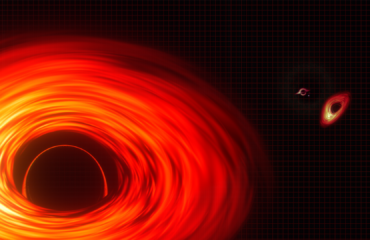
New Ways to Detect and Measure Black Holes Reveal Surprising Origins and More Mysteries

Recent studies show that black holes can be detected and measured in ways that go well beyond traditional telescope observations, using gravitational waves, neutrinos, and precise stellar dynamics. The results challenge long-standing theories about when black holes form and how they grow and move, and even question whether some identified black holes might instead be concentrations of dark matter. Tests may reveal surprising differences in black hole formation and types.

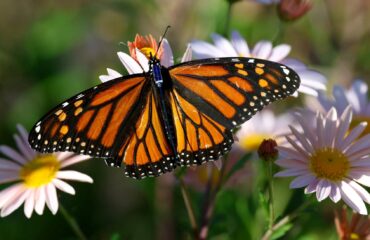
Why New Tech for Precision Tracking of Butterflies Could Unlock Major Secrets About Motion and Nature

Tiny new radio tracking devices have been attached to butterflies, allowing precise mapping of their annual migration across North America and aiding conservation efforts. By correlating data on the effects of atmospheric motion on butterfly movement, and adding the precision of quantum sensing, the technology behind the new radio tag could yield a wealth of information on the mechanical and thermodynamic processes of motion on a global scale.

Latest Science News

  • Inspired by Nature: News on Biomimicry and the Curiosities of Evolution’s Ingenious Designs

    Nature’s ingenious designs are inspiring a revolution in technology and sustainability. From the colour-shifting abilities of chameleons influencing the development of new materials to owl-inspired wind turbines, biomimicry is driving innovation across industries. As startup companies aim for breakthroughs in robotics, materials science, and more by leveraging nature’s technology, paleo-robotics is providing new insights into evolution by recreating extinct creatures with robotic models to inform future innovations.

  • The Gold For The Gold-Standard: the State of Science Funding Worldwide

    “Gold standard” research demands more than just brilliant minds – it requires sustained investment. We delve into the critical issue of ensuring globally equitable and sustainable funding for scientific research, development, and education. We explore disparities between nations, and the shifting landscape of R&D funding, highlighting the private sector’s growing influence and its potential long-term implications for research priorities. The unanswered question is, how can funding best support scientific progress for the benefit of all humanity?

  • Scientists Call for Halt to Creation of Mirror Bacteria, Warning of Global Risk to Life

    Technology has sped progress toward creating exact copies of cells, called “mirror” life. Although mirror cells might help, for example, in the binding of medicines to target cells, many scientists have joined in a public warning about mirror life’s extreme risks to humans and all other living organisms. They call for research to halt immediately, and offer for further investigation some potential countermeasures to stop a chain reaction through entire ecological systems.

  • Robotics and Prosthetics Technologies Combine to Produce Astonishingly Natural Movement

    Two branches of technological research, robotics and prosthetics, are combining forces to develop devices that move far more naturally. People living with impaired bodily functions have much reason to hope for a future when the limitations they now face will be a thing of the past. From an implantable sensor that sits on a muscle, to artificial muscles powered by water pressure, join us in exploring the frontiers of the emerging technology of movement.

  • The Mystery of Human DNA: Science Uncovers Intriguing New Clues to Our Evolutionary History

    DNA is the operating code for the body’s trillions of cells, and with advanced technology scientists are discovering a lot more about the human operating code’s history. We now know we’re a mix of DNA from the Neanderthals, Denisovans, and other earlier species. It’s upending long-held theories of humanity’s unique evolution, and revealing more about the living universe. Meet the 50,000-year-old Neanderthal named ‘Thorin’ and Lucy, the 3.2-million-year-old hominin, as we go back in time to learn about ourselves.

  • Time, the Sun, and Life: Even Bacteria Know When Earth Makes a Seasonal Change

    It seems that understanding Earth’s four seasons, which are caused by the lengthening or shortening of a region’s daily exposure to the Sun, is fundamental to all life – even tiny bacteria. Why would a cyanobacterium, consisting of only one cell with a very short life in a lab, care about what seems to us a meaninglessly small amount of time? Surprisingly, the cell is accumulating information on time, which it passes on to its next generation.

The Quantum Record is a non-profit journal of philosophy, science, technology, and time. The potential of the future is in the human mind and heart, and in the common ground that we all share on the road to tomorrow. Promoting reflection, discussion, and imagination, The Quantum Record highlights the good work of good people and aims to join many perspectives in shaping the best possible time to come. We would love to stay in touch with you, and add your voice to the dialogue.

Join Our Community