Science News

Explore  with us some of the latest developments in science, including physics, biology, mathematics, chemistry, information, and astronomy.  Imagine what the future holds with today’s discoveries in these and other scientific pursuits.  Along the way we will encounter fascinating people and their ideas that push the boundaries of science and shape the future direction of knowledge.

We feature some of the latest developments in a range of scientific branches, highlighting the human ingenuity and circumstances that lead to discovery and new technologies.   We explain the ideas, the problems that led to the solutions, and the function of the discoveries, in words designed for the general audience so no background in science is required to appreciate the work of the scientists.  The ideas for our stories are drawn from other freely-available publications as well as paid subscriptions, and we welcome contributions and story ideas from volunteer contributors.  Join our science writers Mariana Meneses and Saulo Silvestre as we explore the exciting new developments in science and the showcase the good people who dedicate their life’s work to the advancement of knowledge and the human mission.

In Focus

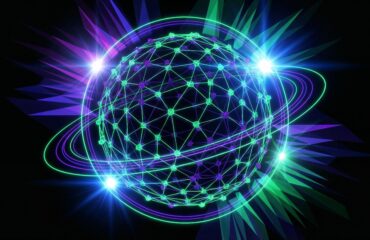
Is Quantum Information the Fundamental Basis of Reality? Quantum Memory Matrix Theory Says Yes

The Quantum Memory Matrix (QMM) theory holds that information about the physical universe is permanently imprinted in cells within the curved fabric of spacetime. Consistent with the laws of thermodynamics, the QMM theory could also explain the mysteries of dark matter and dark energy as products of the way information is stored and released.

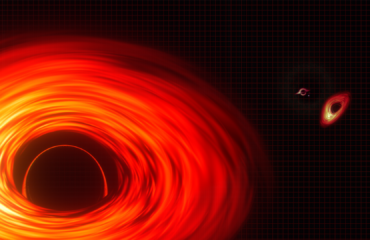
New Ways to Detect and Measure Black Holes Reveal Surprising Origins and More Mysteries

Recent studies show that black holes can be detected and measured in ways that go well beyond traditional telescope observations, using gravitational waves, neutrinos, and precise stellar dynamics. The results challenge long-standing theories about when black holes form and how they grow and move, and even question whether some identified black holes might instead be concentrations of dark matter. Tests may reveal surprising differences in black hole formation and types.

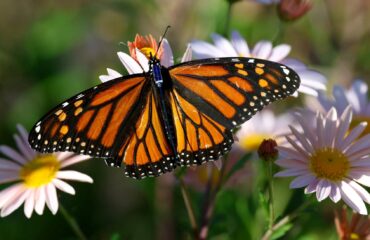
Why New Tech for Precision Tracking of Butterflies Could Unlock Major Secrets About Motion and Nature

Tiny new radio tracking devices have been attached to butterflies, allowing precise mapping of their annual migration across North America and aiding conservation efforts. By correlating data on the effects of atmospheric motion on butterfly movement, and adding the precision of quantum sensing, the technology behind the new radio tag could yield a wealth of information on the mechanical and thermodynamic processes of motion on a global scale.

Latest Science News

  • Adaptive Intelligence: The Power of Genetic Mutations and Neural Networks

    Genetic diversity and mutations play a crucial role in human adaptation to different environments. The Bajau people, known for their exceptional diving abilities, have larger spleens and, similarly, Tibetan Sherpas possess adaptations that enable them to thrive at high altitudes. A new framework, Genetic Transfer Learning, mimics natural genetic inheritance to improve neural networks, although environmental and cultural challenges threaten the preservation of unique genetic knowledge.

  • Citizen Action Combines With Innovative New Methods to Combat Cybersecurity Threats

    As the cybersecurity landscape rapidly evolves, so does the imperative to prioritize digital rights and privacy. Innovative approaches are emerging, such as the use of Large Language Models for threat detection. While evolving technologies present both opportunities and risks, it is important to strike a balance between innovation and security as well as to address disparities in preparedness for emerging cyber threats. As awareness is increasing, we look at several of many organizations working to protect digital security and privacy.

  • Image of spheres in a fractal formation

    The Incredible Power of Shape: Fractals Connect Quantum Computers to the Human Body and the Cosmos

    Fractals are intricate patterns that repeat endlessly at different scales, and are found throughout nature in examples like snowflakes and river networks. Recent research shows that fractal patterns are also found in quantum materials, in our biological brains, and in artificial neural networks. Breakthroughs in many scientific fields are bringing us closer to solving the mysteries and potentially vast potential of fractal patterns.

  • In Wiki Loves Earth Photos, Observers Share a Deep Knowledge of Nature’s Incredible Integration

    There is an intricate relationship between human activities and the natural world, highlighted by the effects of climate change, urbanization, and biodiversity loss while many new species of life are still being discovered. We illustrate the role of human observation in documenting natural heritage through the Wiki Loves Earth photography contest, underscoring the importance of integrating indigenous knowledge, international collaboration, and sustainable practices in addressing environmental challenges.

  • Thriving Together: New Findings on How Different Species Collaborate for Survival

    There are fascinating symbiotic relationships in nature, which can be seen in the cooperative benefits of species like zebras and ostriches, green algae and bacteria, and birds and capybaras. Called mutualism, these collaborations are critical for survival of species and ecosystem health and balance. Disruptions to these partnerships emphasize the need for greater understanding of interconnectedness and delicate balances in nature.

  • From Nature to Robots and Vice-Versa? Blurring the Lines Between the Real and the Virtual

    The increasing integration of nature’s mechanisms with robotics is enabling precision control of industrial robots, while raising concerns about biosecurity and ethical implications. With bio-inspired sensing systems, brain-computer interfaces enhancing human capabilities, and biomimicry inspiring new applications, the boundaries between artificial intelligence and cognitive sciences are blurring and raising questions about human outcomes.

The Quantum Record is a non-profit journal of philosophy, science, technology, and time. The potential of the future is in the human mind and heart, and in the common ground that we all share on the road to tomorrow. Promoting reflection, discussion, and imagination, The Quantum Record highlights the good work of good people and aims to join many perspectives in shaping the best possible time to come. We would love to stay in touch with you, and add your voice to the dialogue.

Join Our Community