Science News

Explore  with us some of the latest developments in science, including physics, biology, mathematics, chemistry, information, and astronomy.  Imagine what the future holds with today’s discoveries in these and other scientific pursuits.  Along the way we will encounter fascinating people and their ideas that push the boundaries of science and shape the future direction of knowledge.

We feature some of the latest developments in a range of scientific branches, highlighting the human ingenuity and circumstances that lead to discovery and new technologies.   We explain the ideas, the problems that led to the solutions, and the function of the discoveries, in words designed for the general audience so no background in science is required to appreciate the work of the scientists.  The ideas for our stories are drawn from other freely-available publications as well as paid subscriptions, and we welcome contributions and story ideas from volunteer contributors.  Join our science writers Mariana Meneses and Saulo Silvestre as we explore the exciting new developments in science and the showcase the good people who dedicate their life’s work to the advancement of knowledge and the human mission.

In Focus

Is Quantum Information the Fundamental Basis of Reality? Quantum Memory Matrix Theory Says Yes

The Quantum Memory Matrix (QMM) theory holds that information about the physical universe is permanently imprinted in cells within the curved fabric of spacetime. Consistent with the laws of thermodynamics, the QMM theory could also explain the mysteries of dark matter and dark energy as products of the way information is stored and released.

New Ways to Detect and Measure Black Holes Reveal Surprising Origins and More Mysteries

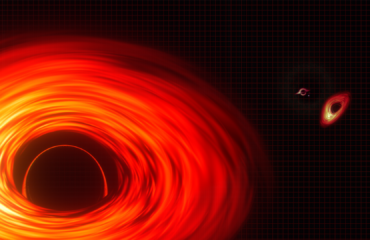
Recent studies show that black holes can be detected and measured in ways that go well beyond traditional telescope observations, using gravitational waves, neutrinos, and precise stellar dynamics. The results challenge long-standing theories about when black holes form and how they grow and move, and even question whether some identified black holes might instead be concentrations of dark matter. Tests may reveal surprising differences in black hole formation and types.

Why New Tech for Precision Tracking of Butterflies Could Unlock Major Secrets About Motion and Nature

Tiny new radio tracking devices have been attached to butterflies, allowing precise mapping of their annual migration across North America and aiding conservation efforts. By correlating data on the effects of atmospheric motion on butterfly movement, and adding the precision of quantum sensing, the technology behind the new radio tag could yield a wealth of information on the mechanical and thermodynamic processes of motion on a global scale.

Latest Science News

  • PLATO and the Quest to Give Machines the Intuition of a Newborn Human

    Engineers at DeepMind built a machine-learning system from research on how babies’ brains work. This was an important step towards giving machines cognitive ability, although much about the human brain remains unknown.

  • Human Creativity in the Era of Generative AI

    Technology that uses human art to generate new creations raises the questions of what defines art, and whether artists should be compensated. While the future of generative AI is unclear, we can ask: what is it that gives value to art in the first place?

  • The Science of Wind

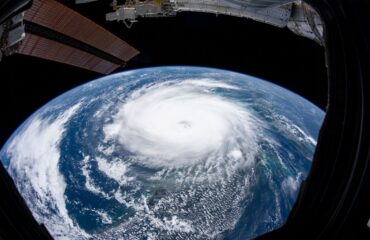
    Machine learning and other AI techniques are being developed to predict damaging winds and save lives from hurricanes, tornados, and tropical storms. The value of the technology is growing quickly as extreme winds are becoming more common and devastating.

  • The James Webb Space Telescope

    James Webb Space Telescope Advances Search for Signatures of Life

    The James Webb Space Telescope (JWST) has detected carbon dioxide in the atmosphere of an alien world, an important step in the search for life within and beyond our solar system. What will JWST discover in its search for the cause of star formation?

  • Artemis I Launch

    NASA’s Artemis Mission: Could We Have a Moon Base by 2030?

    On November 16, 2022, NASA launched a test rocket for its first moon landing since the final Apollo mission in 1972. After 25 days, it splashed down in the Pacific Ocean. Now, NASA has lots of data and big plans for our future on the Moon.

  • Asteroid Detection Systems and The Science of Planetary Defence

    Millions of years ago, an asteroid strike caused the extinction of two-thirds of all plants and animals on Earth. With the recent major success of a test mission to change the trajectory of an asteroid, the question remains how good are we at predicting and preparing for asteroid threats?

The Quantum Record is a non-profit journal of philosophy, science, technology, and time. The potential of the future is in the human mind and heart, and in the common ground that we all share on the road to tomorrow. Promoting reflection, discussion, and imagination, The Quantum Record highlights the good work of good people and aims to join many perspectives in shaping the best possible time to come. We would love to stay in touch with you, and add your voice to the dialogue.

Join Our Community