Science News

Explore  with us some of the latest developments in science, including physics, biology, mathematics, chemistry, information, and astronomy.  Imagine what the future holds with today’s discoveries in these and other scientific pursuits.  Along the way we will encounter fascinating people and their ideas that push the boundaries of science and shape the future direction of knowledge.

We feature some of the latest developments in a range of scientific branches, highlighting the human ingenuity and circumstances that lead to discovery and new technologies.   We explain the ideas, the problems that led to the solutions, and the function of the discoveries, in words designed for the general audience so no background in science is required to appreciate the work of the scientists.  The ideas for our stories are drawn from other freely-available publications as well as paid subscriptions, and we welcome contributions and story ideas from volunteer contributors.  Join our science writers Mariana Meneses and Saulo Silvestre as we explore the exciting new developments in science and the showcase the good people who dedicate their life’s work to the advancement of knowledge and the human mission.


In Focus

Is Quantum Information the Fundamental Basis of Reality? Quantum Memory Matrix Theory Says Yes

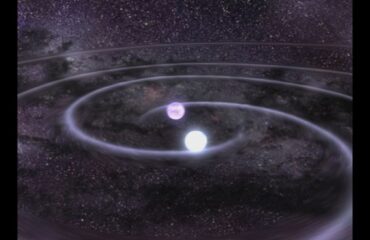
The Quantum Memory Matrix (QMM) theory holds that information about the physical universe is permanently imprinted in cells within the curved fabric of spacetime. Consistent with the laws of thermodynamics, the QMM theory could also explain the mysteries of dark matter and dark energy as products of the way information is stored and released.

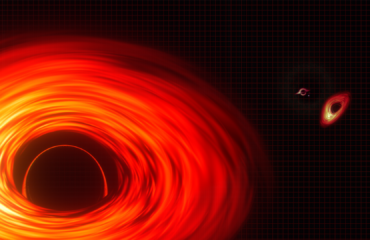
New Ways to Detect and Measure Black Holes Reveal Surprising Origins and More Mysteries

Recent studies show that black holes can be detected and measured in ways that go well beyond traditional telescope observations, using gravitational waves, neutrinos, and precise stellar dynamics. The results challenge long-standing theories about when black holes form and how they grow and move, and even question whether some identified black holes might instead be concentrations of dark matter. Tests may reveal surprising differences in black hole formation and types.

Why New Tech for Precision Tracking of Butterflies Could Unlock Major Secrets About Motion and Nature

Tiny new radio tracking devices have been attached to butterflies, allowing precise mapping of their annual migration across North America and aiding conservation efforts. By correlating data on the effects of atmospheric motion on butterfly movement, and adding the precision of quantum sensing, the technology behind the new radio tag could yield a wealth of information on the mechanical and thermodynamic processes of motion on a global scale.

Latest Science News

  • The Quest to Give Robots the Power of Human Sight

    The complexities of human vision are evident in our ability to generalize between difference and sameness. Challenges remain in replicating the power of vision in machines, with both risks and benefits.

  • Mind Reading Technology Connects Brains to Machines

    Major advances in brain-computer interface technologies may soon give us the power to control complex machinery with our minds. What opportunities and frontiers will open, for medical and other applications, and what ethical issues lie ahead?

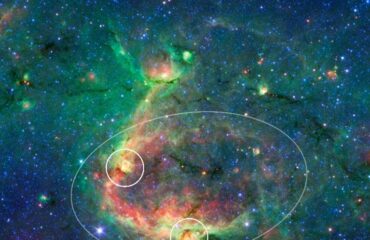
  • The Surprising Connection Between Human Bodies and Supernova Explosions

    The technology of astronomy explains the connection between the iron in our blood and the life cycle of stars. Every atom in our bodies was born in a star, and the iron flowing in our veins is the same iron that once caused a star’s supernova explosion.

  • Mysterious Skulls Raise Questions of Human Origins

    Analyses of skulls of previously unknown human species discovered in Israel and China add more pieces to the puzzle of our evolution. DNA technology and scientific advances point to older and more extensive human presence on Earth.

  • A Job for the Machines: Using Artificial Intelligence to Advance Nuclear Fusion

    Nuclear fusion powers stars and holds the potential to deliver practically unlimited amounts of clean energy to humanity. Artificial intelligence is providing the means to control and direct fusion reactions as we make significant advances in developing the technology.

  • James Webb Space Telescope: Hubble’s Successor May Rewrite the Physics Books

    In orbit 1.5 million km from Earth, the James Webb Space Telescope delivered its first images in July with stunning detail. Using infrared detection technology, Webb looks back in time over 13 billion years and promises to unlock mysteries hidden in the earliest light of the universe.

The Quantum Record is a non-profit journal of philosophy, science, technology, and time. The potential of the future is in the human mind and heart, and in the common ground that we all share on the road to tomorrow. Promoting reflection, discussion, and imagination, The Quantum Record highlights the good work of good people and aims to join many perspectives in shaping the best possible time to come. We would love to stay in touch with you, and add your voice to the dialogue.

Join Our Community