Quantum Computing

The  speed and accuracy of  quantum computers now under development are bringing humanity to the brink of a technological revolution.  It remains unclear which of the many probable futures we will choose to create with the technology’s transformative potential, but as rapid  scientific advances promise to overcome technological hurdles like error correction, a quantum computing future may be closer to the present  than imagined.  By showcasing developments in the emerging technology and deciphering some of the complexities in its mathematics, geometry, physics, and computer science, The Quantum Record  aims to empower the public imagination in shaping the future we will all share in.

The Mystery of Time: Quantum Superposition and Quantum Accounting

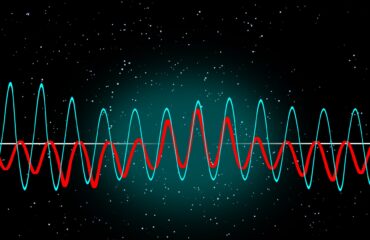
The quantum is the smallest amount of energy in the universe that can either cause physical change or be physically changed. The vast speed and power of the quantum computer comes from the physics of quantum entanglement, in which the information bits (called “qubits”) connect in a way that signals transmit between qubits with no difference in time.  This is called “superposition”, the phenomenon in quantum physics that provides no indication of the sequential order of signals and makes the quantum computer very different from computers commonly used today.  What is the cause and what is the effect, when an exchange of signals in the quantum computer gives  no indication of the order of cause and effect?  The binary computer you are using now keeps a reliable record of the order of its signals because of the time it takes to switch between signal-on and signal-off states, but in making an account of quantum signals we will need to maintain an accurate record of cause and effect when superposition provides no measurable difference of their order in time.

In Focus

Was Einstein Both Right and Wrong? New Atomic-Scale Tests Conflict on Light’s Wave-Particle Duality and Quantum Measurement

Two experimental results conflict on whether light only acts as a particle or as both a particle and a wave. Resolving the question of light’s actions of cause and effect could have significant consequences for quantum measurement and the creation of stable quantum computing circuits. One novel and intriguing interpretation is that light consists of both active photons and inert photons that are “dark.” The mathematics of dark photons support Einstein’s view that light is measurable only as a particle.

Accounting for Quantum Cause and Effect: Tensor Networks and Process Matrix Formalism Advance the Quest to Conquer Probability

Researchers recently reported success in predicting sequences of cause and effect in a fluid flow, a task that had until now been impossible because of the computational burden. Using the techniques of tensor networks, which are fundamental for quantum computing, and process matrix formalism, the research finding holds promise for simulating fluid motion, and for conquering probabilities that can result in quantum circuit decoherence.

Everything Has a Beginning and End, Right? Physicist Says No, With Profound Consequences for Measuring Quantum Interactions

Quantum technologies require measurements of quantum interactions, but is measuring accuracy possible if we can’t pinpoint the beginning and end in chains of cause and effect over time? Physicist Julian Barbour redefines time as an increasing complexity of interactions, when one arrow of time from the past splits at a “Janus point” into two arrows for the future. Could identifying the Janus point help to resolve the problem of circuit decoherence that has held back full-scale quantum computing?

Latest Quantum Computing

  • The Two Key Values in Quantum Accounting, Part 2: Where is the Elusive 0?

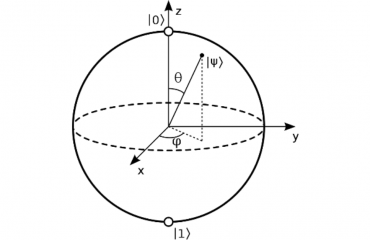
    In Part 2 of our series, we find that to balance the quantum account, zero must remain in the middle of the qubit sphere, but we face the problem and paradox of locating that point. We conclude the only way to pinpoint the middle is to define – simultaneously – the radius of the debit and credit.

  • Introduction to Quantum Accounting Theory, Part 1

    The theory of Quantum Accounting begins with the meaning of two words: “account” and “quantum”. We start with “account” and its dual application in the record of quantum computer functions.

  • Preparing for the Quantum Computing Revolution

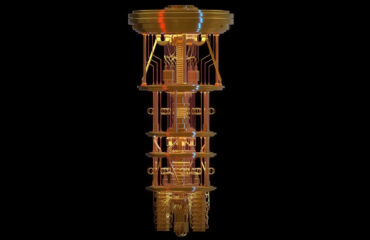
    Computing technology is on the brink of a revolutionary change.  With prototypes already in operation, the quantum computer will deliver huge – possibly unlimited – increases in speed and accuracy to existing and new applications when the technology is available for widespread use.

  • The two key values in quantum accounting

    As accounting moves from one dimension to three, it will require the use of complex numbers and two values in particular – zero and one-half – that are the basis of Bernhard Riemann’s famous hypothesis.

The Quantum Record is a non-profit journal of philosophy, science, technology, and time. The potential of the future is in the human mind and heart, and in the common ground that we all share on the road to tomorrow. Promoting reflection, discussion, and imagination, The Quantum Record highlights the good work of good people and aims to join many perspectives in shaping the best possible time to come. We would love to stay in touch with you, and add your voice to the dialogue.

Join Our Community