

Image: user6702303, on Freepik.
By Mariana Meneses
As reported in The New York Times, a new gene-editing strategy described in Nature proposes a shift away from highly personalized treatments toward a more standardized approach that could apply across many rare genetic diseases. Current gene-editing therapies often require designing a specific intervention for each mutation, which is costly and time-consuming given that more than 7,000 rare diseases affect hundreds of millions of people worldwide. The new method aims to overcome this limitation by targeting a shared mechanism rather than individual genetic errors.
The study is entitled “Prime editing-installed suppressor tRNAs for disease-agnostic genome editing”, and was authored by Sarah E. Pierce, from the Merkin Institute of Transformative Technologies in Healthcare, Broad Institute of Harvard and MIT, and co-authors, in November 2025. The authors focus on a common class of mutations, called premature stop codons, which interrupt protein production before it is complete. They argue that addressing this shared (malfunctioning) mechanism could provide a more general solution across multiple genetic diseases, since premature stop codons are involved in a significant fraction of genetic disorders.
Instead of correcting these mutations directly, the researchers developed a way to help cells bypass the faulty stop signals. They engineered a molecule called a suppressor transfer RNA (tRNA), which can insert a protein-building amino acid at the point where the cell would normally stop, allowing the full protein to be produced. This approach effectively enables the cell to continue reading genetic instructions despite the error.
To implement this, the team used a gene-editing technique known as prime editing, a method that can precisely rewrite DNA to insert the engineered suppressor tRNA into the genome and replace the existing tRNA. This creates a permanent change in how the cell interprets genetic information, rather than requiring repeated treatments.
Earlier attempts to use suppressor tRNAs faced challenges such as the need for continuous dosing and potential toxicity, but the new approach is designed as a one-time intervention and did not show harmful side effects in the reported experiments.
The researchers tested the method in cell models of several diseases. In each case, the treatment restored enough protein function that could potentially improve disease symptoms. Experts estimate that this strategy could apply to a meaningful subset of patients, though not all patients with a given disease would benefit.
Despite its promise, the authors emphasize that the approach is still in early stages and faces important challenges before it can be used in patients. A major hurdle is delivering the gene-editing components safely and effectively to all relevant cells in the body, particularly in organs like the brain or lungs. Additional testing, regulatory steps, and long-term safety studies will be required. Even so, researchers describe the work as a fundamentally new direction for gene editing, one that could expand access to treatment by moving from individualized therapies toward more broadly applicable solutions.

Image: kjpargeter, on Freepik.
By moving from targeting individual mutations to intervening in shared biological processes, these approaches point toward more scalable forms of treatment.
At the same time, gene editing is already being applied in patient-specific therapies that are beginning to enter clinical use. According to Ian Sample, writing for The Guardian, doctors are cautiously optimistic about a new one-off gene therapy for Hunter syndrome after early results from the first treated patient, three-year-old Oliver Chu.
The therapy, part of a clinical trial led by researchers in Manchester, replaced a faulty gene responsible for the genetic disorder in which the body cannot produce an enzyme needed to break down complex sugar molecules. The result is progressive damage across organs and the brain.
Although it has only been nine months since treatment and it is too early to confirm long-term success, clinicians report encouraging signs and plan to treat four additional patients to assess durability.
Boy with rare condition amazes doctors after world-first gene therapy | BBC News
The treatment works by collecting the patient’s stem cells, which are capable of developing into different cell types, modifying them in the lab to include a functioning version of the defective gene, and reinfusing them into the bloodstream. These corrected cells then produce the missing enzyme, including in the brain, which is a key limitation of the current standard treatment with the medication labelled Elaprase. Elaprase is a lifelong weekly infusion that replaces the enzyme but cannot cross into the brain, leaving cognitive decline untreated despite improving some physical symptoms. Following the therapy, Oliver no longer requires these infusions, and his enzyme levels have increased significantly.
Still according to this Sample, Oliver’s progress has included notable improvements in speech, movement, and cognitive development, suggesting the therapy may alter the disease trajectory, although it cannot reverse existing damage. Hunter syndrome is rare, affecting about one in 100,000 boys globally, and early diagnosis is critical for treatment effectiveness. Researchers note that broader use of the therapy would likely depend on newborn screening programs, already implemented in the United States but not widely available in the UK. The same gene therapy approach is now being explored for other genetic disorders involving enzyme deficiencies, such as Hurler and Sanfilippo syndromes.
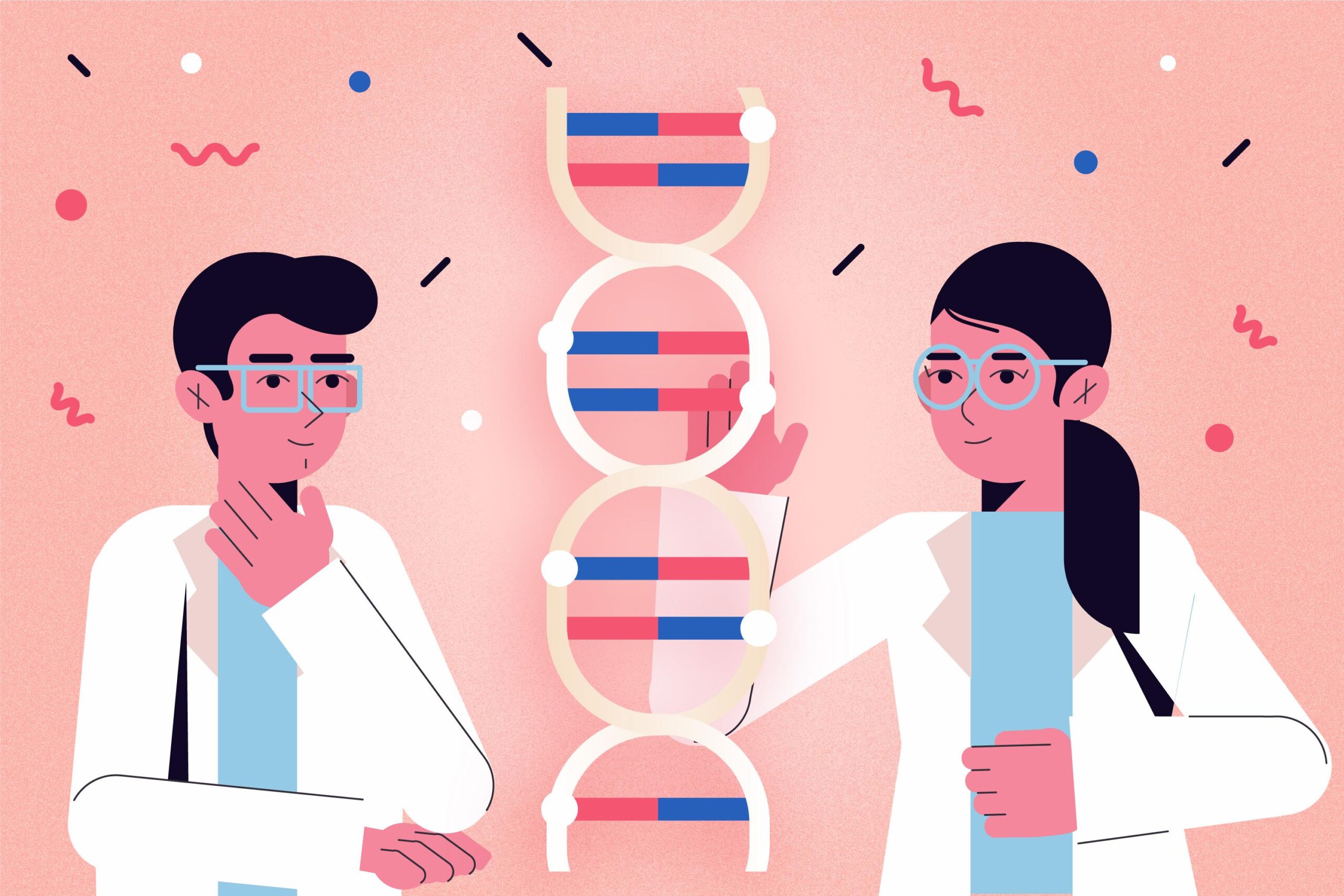
Image: freepik, on Freepik.
The expansion of gene editing is not only therapeutic, it is also changing how scientists generate knowledge about genes, offering more precise ways to study how they behave across tissues, cell types, and biological environments.
According to The Scientist’s 2025 eBook “Exploring the State of the Art in Gene Editing Techniques”, new approaches are expanding how scientists study genes by combining CRISPR, a tool that allows targeted modification of DNA, with spatial transcriptomics, which measures gene activity while preserving where cells are located in tissue.
Techniques such as Perturb-FISH (a method that uses imaging to detect gene edits and their effects inside intact cells) address a key limitation of traditional high-throughput screens, which analyze many genes at once but lose spatial context by isolating cells. By retaining this context, researchers can observe how gene perturbations affect not only individual cells but also their interactions within complex environments, linking molecular changes to functional behavior.
According to the same source, gene editing is also reshaping who is represented in biomedical research by addressing gaps in population data. CRISPR-based screening pipelines (i.e., systematic methods for testing how genes function) have been applied to cells from individuals of West African ancestry, identifying previously unknown therapeutic targets. This work highlights how genetic variation across populations can influence disease mechanisms and responses to treatment. By using gene editing to test the functional impact of these variations, researchers aim to move beyond representation in clinical samples toward representation in the underlying data that guides medical knowledge and drug development.
Moreover, advances in base editing are redefining what gene editing can do by directly modifying disease-causing DNA sequences. Base editing is a technique that changes individual DNA letters without cutting the DNA strand. This has the potential to alter the underlying progression of neurodegenerative diseases rather than only managing symptoms.
Gene editing enables target discovery (identifying genes that drive disease by selectively modifying them), disease modeling (recreating human mutations in cells or animals to study how diseases develop), and precision medicine (designing treatments tailored to an individual’s genetic profile). Together, these capabilities improve the accuracy of therapeutic development and accelerate the path from scientific insight to practical medical applications.

Image: freepik, on Freepik.
As these capabilities expand, the ethical questions surrounding gene editing also change.
What began as a technical challenge of how to modify DNA is increasingly becoming a question of how these technologies should be used, and under what limits, as their potential reaches from treating disease to shaping future generations.
The article entitled “Heritable genome editing: ethical aspects of a developing domain” was published in the Oxford Academic’s journal Human Reproduction, in November 2023, by Seppe Segers, from the Department of Philosophy and Moral Sciences, Bioethics Institute at the University of Ghent. According to the author, advances in human germline genome editing (GGE), which are genetic modifications that can be inherited by future generations, have renewed ethical debates in reproductive medicine, shifting the focus from abstract objections to more practical concerns. Earlier discussions often emphasized ideas such as “unnaturalness,” human dignity, or the protection of the human gene pool, but recent debates increasingly center on issues like safety, effectiveness, potential misuse, and the broader consequences of applying the technology in real-world contexts.
Segers argues that evaluating GGE requires looking beyond technical safety to consider its impact on individuals who would be born as a result of these interventions. This includes examining how the technology relates to parental interests, particularly the desire to have genetically related children, and questioning how far society should go in supporting these preferences. At the same time, the discussion raises deeper normative questions about how concepts like “normalcy,” “quality of life,” and “disability” are defined, and how these definitions shape decisions about which traits are considered acceptable or desirable, ultimately influencing the ethical boundaries of gene editing.
In the article entitled “Beyond safety: mapping the ethical debate on heritable genome editing interventions”, published in Nature’s journal Humanities and Social Sciences Communications in 2022, Mara Almeida, from the University of Lisbon, and Robert Ranisch, from the University of Potsdam, note that concerns about genetic engineering are not new, but they have become more pressing as these technologies move closer to real-world applications in humans.
According to the authors, new gene-editing tools like CRISPR have made it possible to change DNA with much greater precision than before, including in ways that could be passed on to future generations. This expands the potential use of gene editing in medicine and beyond, but it also raises more urgent ethical and regulatory questions.
The article explains that the ethical debate around gene editing can be understood through three types of arguments. Categorical arguments focus on fundamental questions, such as whether it is acceptable to alter human genetics at all. Pragmatic arguments focus on practical issues, like safety, effectiveness, and the risk of misuse. Sociopolitical arguments look at the broader impact on society, including inequality, governance, and public trust.
In recent years, the discussion has shifted toward pragmatic concerns, especially safety, while deeper questions about values and long-term consequences have received less attention.
Almeida and Ranisch argue that focusing mainly on safety risks oversimplifying the debate. Even if gene editing becomes safer, there are still open questions about how it should be used and what kinds of changes are acceptable. These include how society defines ideas like “normal” or “desirable” traits, and how these decisions might affect future generations. For this reason, the authors emphasize that ethical discussions should go beyond technical risks and include broader social values, ensuring that public debate keeps pace with scientific progress.

Image: rawpixel.com, on Freepik.
These debates are no longer only theoretical. As gene editing moves closer to real-world application, they are driving efforts to establish national and international frameworks to guide its use and manage its risks.
The World Health Organization’s Expert Advisory Committee on Developing Global Standards for Governance and Oversight of Human Genome Editing is an expert advisory committee that was established to examine the scientific, ethical, social, and legal challenges associated with human genome editing, including both somatic and germline applications. The panel was tasked with reviewing existing research, assessing current and potential uses of the technology, and considering societal attitudes toward different forms of genome editing. Based on this work, the committee would provide guidance on appropriate oversight and governance mechanisms at both national and global levels.
The organization notes that recent advances in tools such as CRISPR-Cas9 have intensified the need for coordinated standards in this field. The expert group is expected to operate in a consultative manner, building on prior initiatives and working alongside international organizations, scientific academies, and other relevant bodies. Central to this effort is the development of frameworks that promote transparency, ensure trustworthy practices, and support careful risk–benefit assessment before any genome-editing applications are approved.
While these efforts aim to establish coordinated international standards, governance is also developing unevenly at the national level, often driven by specific controversies that reveal the risks of insufficient oversight.
In the article entitled “Responsible governance of human germline genome editing in China” and published in the journal Biology of Reproduction, in 2022, Yaojin Peng, from the Chinese Academy of Sciences, and co-authors similarly note that although rapid advances in gene-editing technologies have expanded their application in human research, heritable germline genome editing (i.e., genetic changes that can be passed to future generations) continues to raise significant ethical, legal, and social concerns.
According to Peng et al. (2022), these concerns intensified following the “gene-edited babies” incident, which triggered widespread controversy and underscored the risks of proceeding without adequate oversight. In response, China has increasingly recognized the importance of ethical governance in life sciences and biotechnology.
The authors explain that this recognition has led to accelerated legislative and policy development, with China moving toward a precautionary model of governance, aimed at anticipating and preventing potential harms before they occur. Using legal analysis alongside big data studies of public opinion, the paper examines the scientific background, ethical debates, and evolving regulatory framework surrounding germline genome editing in China. It highlights how governance efforts have been shaped both by technological progress and by public and international scrutiny following the controversy.
Despite these developments, Peng et al. argue that China’s regulatory system remains incomplete and requires further strengthening in three key areas. First, there is a need for better coordination between legislation and regulatory agencies to ensure consistent oversight. Second, the establishment of higher-level and more robust ethical review systems is necessary to guide research and potential applications. Third, expanding public participation and education is essential to ensure that governance reflects broader societal values. Together, these improvements are presented as critical for building a regulatory framework that is scientifically informed, ethically grounded, and responsive to social concerns.

Image: Freepik
Even as governance frameworks take shape, their effectiveness depends on how gene editing is understood and evaluated across different parts of society. Beyond regulation, the question becomes how acceptable these interventions are in practice, as they are assessed through ethical reasoning, public opinion, and research standards.
The article entitled “Ethical Perspectives of Therapeutic Human Genome Editing From Multiple and Diverse Viewpoints: A Scoping Review”, by Andrew M Joseph and co-authors from the Nova Southeastern University Dr. Kiran C. Patel College of Osteopathic Medicine, in the US, was published in the journal Cureus in November 2022.
The authors argue that therapeutic human genome editing, which is genetic modification aimed at treating or preventing disease, is accompanied by a wide range of ethical concerns. In their scoping review of 27 selected studies, the authors examine these concerns across multiple domains, including philosophy, theology, public opinion, and research ethics, to understand how different perspectives evaluate the acceptability of this technology.
The review finds that, from philosophical and theological viewpoints, therapeutic genome editing is generally considered ethically acceptable, particularly when it is used to treat disease.
Public opinion across most regions aligns with this view, although some disagreement exists, especially in the Oceanic region, largely due to concerns about the long-term effects on future generations. These concerns highlight the uncertainty surrounding how genetic modifications may persist and affect individuals beyond the initial patient.
At the level of research ethics, the authors identify more concrete issues related to how genome editing is studied and implemented. These include gaps in informed consent, and the need to protect the autonomy of children who may be affected by such interventions. The review concludes that further research is necessary to better understand potential risks to mothers, fetuses, and future generations, emphasizing that ethical evaluation must evolve alongside scientific development.

Image: Feepik
Gene editing is no longer defined by a single purpose. It is simultaneously becoming a way to treat disease, a platform for studying how genes function in complex biological systems, and a technology that forces new ethical and institutional questions.
The shift from targeting individual mutations to addressing shared biological processes points toward more scalable therapies, while clinical applications show how these advances are already beginning to alter disease trajectories. At the same time, the expansion of gene editing into research is changing how scientific knowledge is produced, making it possible to observe how genetic changes affect cells within their native environments.
As these capabilities grow, the central challenge is no longer only what gene editing can do, but how it should be used and governed. Ethical debates are moving beyond abstract concerns toward questions of safety, limits, and long-term consequences, particularly as some applications extend to future generations.
Governance frameworks are beginning to take shape, but remain uneven and incomplete, while public acceptance continues to vary across contexts. Thus, the future of gene editing may be shaped not only in laboratories and clinics, but in the social and political processes that determine what kinds of intervention are acceptable or not.
Craving more information? Check out these recommended TQR articles:
- Thinking in the Age of Machines: Global IQ Decline and the Rise of AI-Assisted Thinking
- Cleaning the Mirror: Increasing Concerns Over Data Quality, Distortion, and Decision-Making
- Quantum Governance: Can the Gap Between Technological Acceleration and Risk Management be Closed?
- Low Earth Orbit Is Becoming Structurally Unstable with Megaconstellations, Space Debris, and Governance Issues
- Digital Sovereignty: Cutting Dependence on Dominant Tech Companies
Enjoyed this? Help us improve.
Have we made any errors?
Spotted an error or want to contribute your expertise? We’d love to hear from you — reach us at info@thequantumrecord.com. The Quantum Record exists to bring researchers and curious minds together around science and technology that matters.