

Image: Google DeepMind, via Unsplash
By Mariana Meneses
Reverse transcriptase has become an increasingly important tool in biotechnology. New discoveries are revealing that its functions are more diverse than previously understood, opening even more possibilities for treating diseases and improving gene editing methods. But as scientists learn to manipulate genetic processes more effectively, questions about safety, unintended consequences, and responsible use become increasingly important.
Inside our cells, DNA acts as the permanent master instruction manual. It is shaped like a double-stranded twisting ladder and holds our genetic information. Normally, information flows in one direction: cells use an enzyme called RNA polymerase to make a temporary, single-stranded DNA copy called mRNA, which is then used to build proteins that are responsible for our body’s functioning. This process is called transcription.
Reverse transcriptase is an enzyme that flips this process backward. It reads a temporary strand of RNA and builds a permanent, double-stranded DNA copy out of it, called complementary DNA (cDNA). These enzymes were found in a group of viruses that carry fragile RNA and use reverse transcriptase to convert their code into double-stranded DNA. This allows them to speak the cell’s “language,” blend in perfectly, and stitch their viral instructions directly into the chromosomes.
“A retrovirus is a virus that uses RNA as its genomic material. Upon infection with a retrovirus, a cell converts the retroviral RNA into DNA, which in turn is inserted into the DNA of the host cell. The cell then produces more retroviruses, which infect other cells. Many retroviruses are associated with diseases, including AIDS and some forms of cancer.” – US National Human Genome Research Institute.
By studying these viruses, scientists turned a biological hijack into a massive opportunity. Reverse transcriptase has become an essential tool in biotechnology and medical research, with applications ranging from detecting RNA viruses such as SARS-CoV-2 to studying molecular cloning, gene expression, RNA sequencing and more. Emerging applications include synthetic biology and the use of artificial genetic molecules for long-term data storage.
One of the many research areas using reverse transcriptase is anti-aging. This year, Biology Professor Vera Gorbunova’s research team from the University of Rochester received an award of $21.6 million from the Advanced Research Projects Agency for Health (ARPA-H), a United States federal funding agency, to conduct an original research project entitled “Repurposing Transcriptase Inhibitors to Treat Aging”.
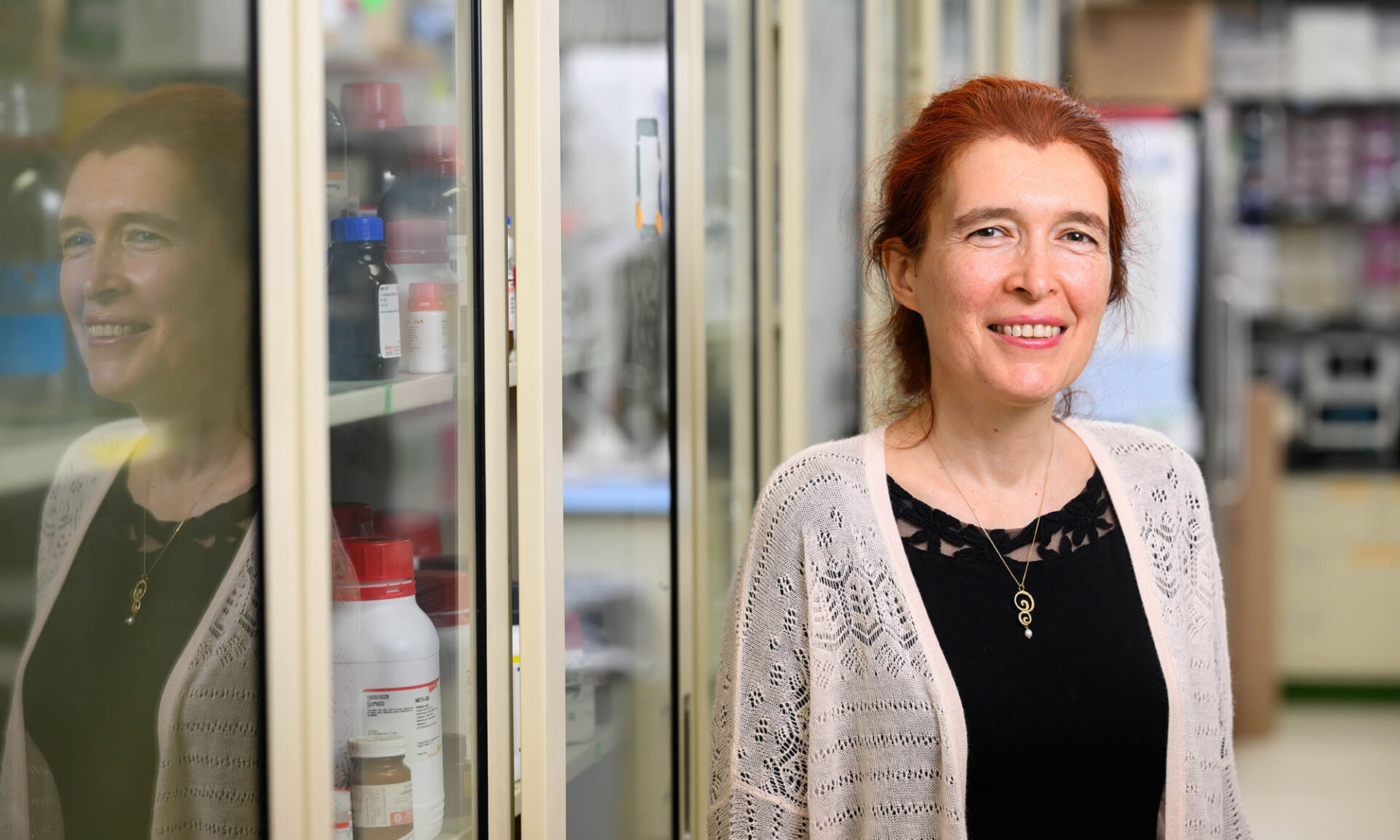
Dr. Vera Gorbunova is a pioneer in the research of longevity mechanisms, genome stability, and cancer resistance in exceptionally long-lived mammals, who has received numerous prestigious awards. We cited Dr. Gorbunova’s work in a 2024 article about the scientific pursuit of longer human lifespans and the environmental challenges of keeping Earth habitable for future generations. Photo: University of Rochester / J. Adam Fenster.
Gorbunova’s research team is investigating whether a drug originally developed to treat HIV can slow biological aging by suppressing retrotransposons, which are virus-like genetic elements within our DNA that become more active with age and that use reverse transcriptase to make copies of themselves. This process can trigger chronic inflammation linked to aging, prompting researchers to investigate whether drugs that inhibit reverse transcriptase could help people stay healthier for longer. The research will include animal studies and a clinical trial involving 200 healthy adults aged 60–65 to assess whether the treatment can preserve physical and cognitive function and improve health in later life.
“The global reverse transcriptase market size reached USD 387.67 million in 2026. Looking forward, the market to reach USD 544 million by 2035, exhibiting a growth rate (CAGR) of 3.8% during 2026-2035.” – Market Growth Reports.
Another example of application in healthcare comes from a March 2026 review published in Wiley’s journal Fundamental & Clinical Pharmacology, by Mariyam Hussain and colleagues from the School of Pharmaceutical Education and Research in India, which explored how drugs originally developed to treat HIV by inhibiting reverse transcriptase could also help treat Alzheimer’s disease. The authors note that these drugs may reduce brain inflammation and processes associated with the disease, including the buildup of amyloid and tau proteins. The researchers also highlighted Kamuvudine-9, a newer compound designed to offer similar benefits with fewer harmful effects, although further studies are needed to confirm its safety and effectiveness.
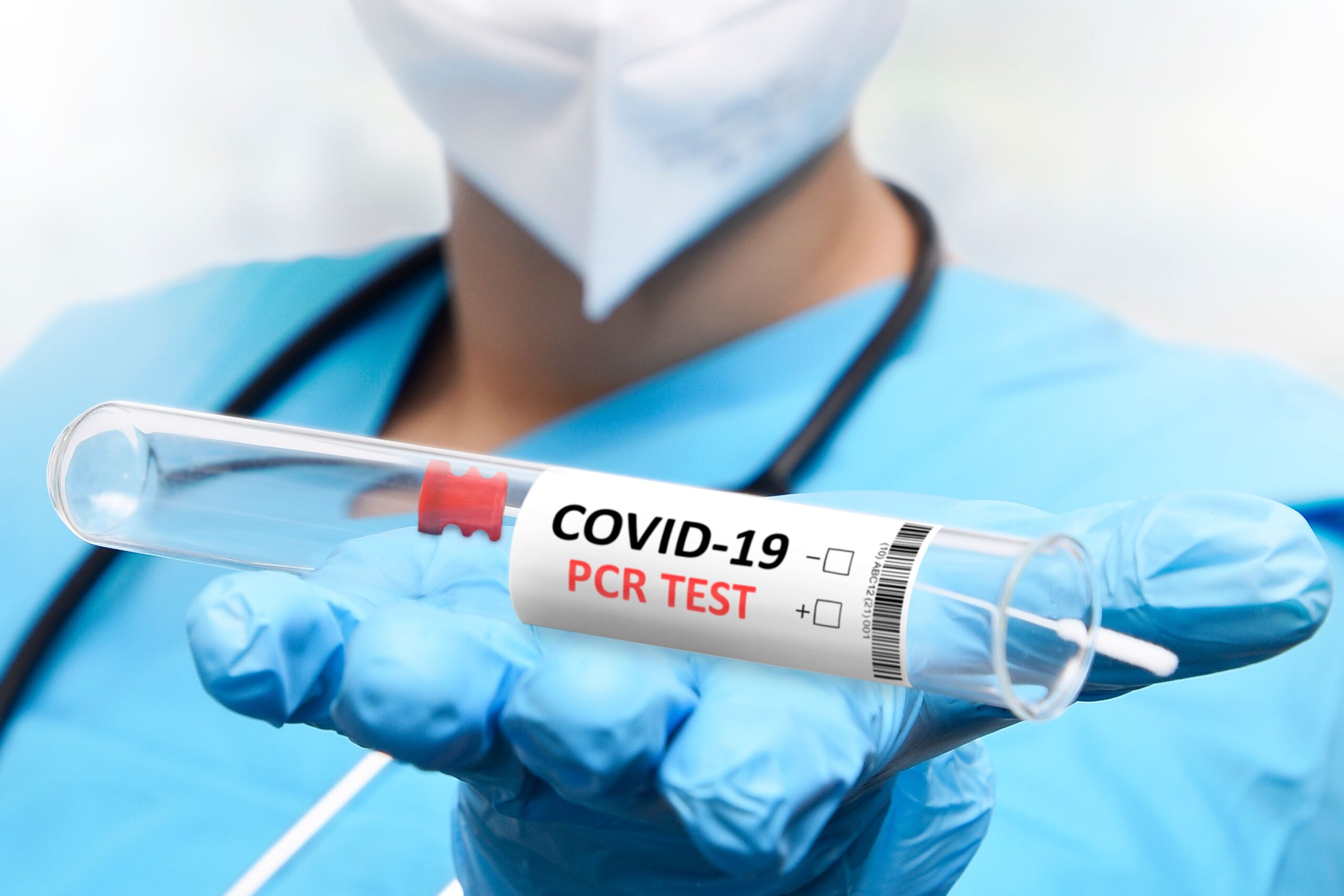
“[R]eal time reverse transcription–polymerase chain reaction (real time RT–PCR) [is] one of the fastest and most accurate laboratory methods for detecting, tracking and studying the COVID-19 virus” (International Atomic Energy Agency, IAEA). Image: adrian vieriu, on Pexels.
Reverse transcriptase can play a role in antiviral defense beyond its familiar function of copying RNA into DNA.
A June 2026 article published in the journal Nature Structural & Molecular Biology by researchers from The University of Texas at Austin in partnership with New England Biolabs Inc., led by Nolan Neville and Nicole V. Johnson, discovered how a bacterial enzyme called DRT1 helps bacteria defend themselves against viruses. Unlike typical reverse transcriptases, which copy RNA into DNA, DRT1 can produce short, partly random DNA sequences without a template. These DNA molecules help regulate the bacterium’s antiviral defense system, switching the enzyme between active and inactive states.
“Reverse transcriptases are usually introduced as enzymes that copy RNA into DNA. That description remains useful, but it is becoming inadequate for a growing set of bacterial antiviral systems. In just a few years, DRTs have expanded from a family-level curiosity into a mechanistically rich field in which distinct subfamilies generate different DNA outputs. DRT2 systems use non-coding RNAs to assemble de novo genes during phage infection. DRT9 synthesizes long DNA homopolymers through an RNA-templated, protein-primed mechanism. DRT3 now goes further by producing alternating dinucleotide-repeat DNA through a protein-templated process. These studies suggest that DRTs are not simply unusual immune enzymes, but a broader repertoire of noncanonical DNA-writing systems.” – Yaojun Tong (2026)
Another study, published in April in Science by Pujuan Deng, from Stanford University and co-authors, revealed an even more unusual role for reverse transcriptase in bacterial defense against viruses. Researchers investigating a system called DRT3 found that it uses two different reverse transcriptases to produce double-stranded DNA. While one enzyme copies RNA into DNA, the other builds the matching DNA strand without using an RNA or DNA template. Instead, it uses its own protein structure to determine the DNA sequence. This discovery reveals a previously unknown mechanism of DNA production and expands our understanding of what reverse transcriptase enzymes can do.
Although reverse transcriptase can promote certain repair processes, long-term effects still need to be better understood.
A 2025 study published in Nature Biotechnology by a group of researchers from the RNA Therapeutics Institute, University of Massachusetts Chan Medical School, led by Chunwei Zheng, found that reverse transcriptase can affect how mammalian cells repair damaged DNA. It helps cells repair DNA breaks but also changes the repair process, increasing small DNA insertions and reducing more precise repairs. A modified version of the gene-editing tool had less effect on DNA repair and may be safer for medical use. The findings highlight the need to study the long-term effects of these tools on cells.
In a May TQR article, we explored how advances in gene editing are opening new possibilities for treating genetic diseases, including approaches that target shared genetic errors rather than requiring personalized treatments for each mutation. We also examined how these technologies are transforming biomedical research and raising ethical questions about safety, inequality, and the potential consequences of genetic changes that can be passed on to future generations, highlighting the need for effective governance and public debate.
Despite the uncertainties, researchers continue to develop new ways to use reverse transcriptase to make gene editing more precise and efficient.
A June 2026 study published in Advanced Science identified a reverse transcriptase derived from ancient viral DNA in rats that could improve gene editing. Researchers modified the enzyme to make prime editing, which is a technique for precisely changing DNA, 20% more efficient in mammalian and plant cells and 88% more efficient in particularly difficult DNA regions. The findings could help advance gene therapy and crop breeding.

Image by Schäferle, on Pixabay.
There is a contrast between our growing ability to control biological processes and our incomplete understanding of their consequences. The ethical dilemma is whether to accept uncertain long-term risks in the hope of helping people suffering from diseases like Alzheimer’s today, or to delay potentially life-changing treatments until their safety is better understood. In the meantime, there is a broader movement toward programmable biology, with a growing market.
For instance, Sarah Coles, writing for Popular Mechanics, described a research program by the US Defense Advanced Research Projects Agency (DARPA) that aims to reprogram living cells using light. The idea is to develop a microscopic “3D printer” inside specially engineered cells that could receive instructions through light and produce specific DNA or RNA sequences. Although the technology does not yet exist, potential applications include medicine, agriculture, biological research, and military uses. DARPA also acknowledges the risks of deliberate misuse and unintended biological consequences, raising important questions about safety and regulation.