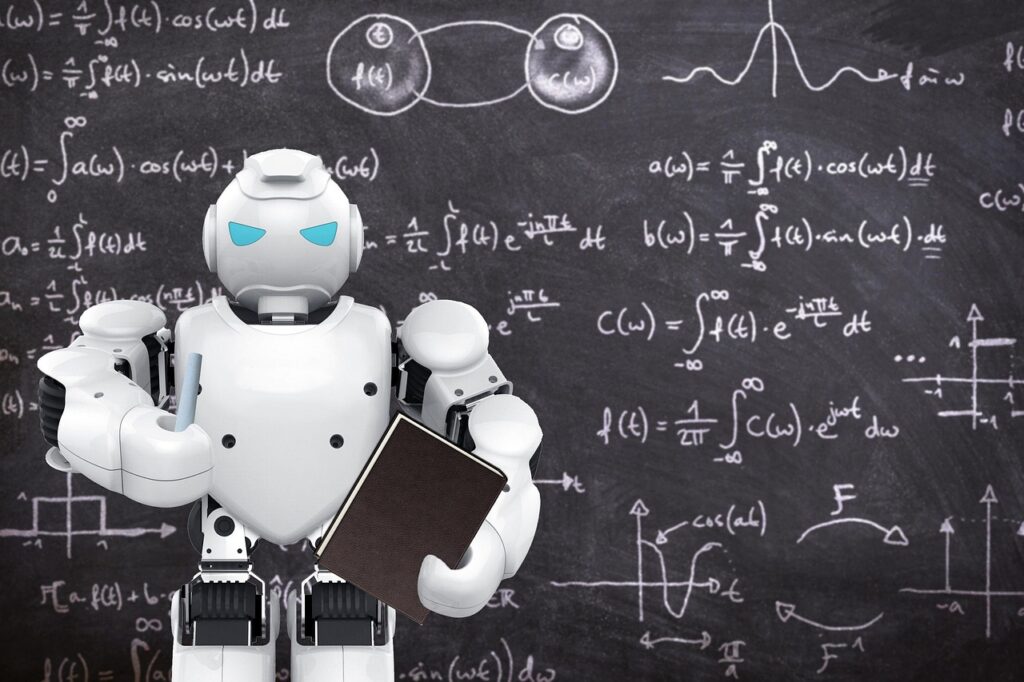
- Image: Tumisu, on Pixabay.
By James Myers
By some measures, mathematicians have become victims of their own success.
The AI-driven neural networks behind ChatGPT, Claude, Gemini, and other popular large language models (LLMs) wouldn’t function without advanced mathematics, but the AI that was applied by ChatGPT-maker OpenAI to crack an exceptionally tough mathematical problem has mathematicians questioning the future of their profession.
On September 8, OpenAI delivered a proof, developed by one of the company’s internal AI systems, for the longstanding Navier-Stokes problem . Navier-Stokes is one of the seven Millennium Prize Problems for which the Clay Mathematics Institute established, in May 2000, a $7 million prize fund. Established in 1998 by businessman and benefactor Landon Clay, CMI will award its prizes for mathematical solutions that, within two years of publication in a recognized journal, gain widespread acceptance by the mathematical community.
The CMI’s prizes were intended for humans, not machines. Could the $1 million prize for the Navier-Stokes solution be awarded to OpenAI? It’s too early to tell, since the requisite two years haven’t elapsed and OpenAI’s proof was delivered in an unconventional form that mathematicians are struggling to understand and may still prove to be faulty.
The Navier-Stokes equations, which are named after two 19th-century mathematicians, apply to fluid motion and have wide application in weather forecasting, aerodynamics, and other systems. According to OpenAI, the company’s AI proved that the equations can develop a singularity – meaning their answer can go to infinity – within a defined time limit.
In the two months since its release, OpenAI’s Navier-Stokes solution has received prominent attention in international media. At the same time, it has triggered much discussion in the mathematical community over concerns for the potential of machines to outperform the world’s brightest mathematicians. Mathematicians have attempted for over 90 years to find a Navier-Stokes solution, with some having recently achieved near-success and now arguing that OpenAI’s algorithms plagiarized their work that was shared in open-access preprints and LLM chats.
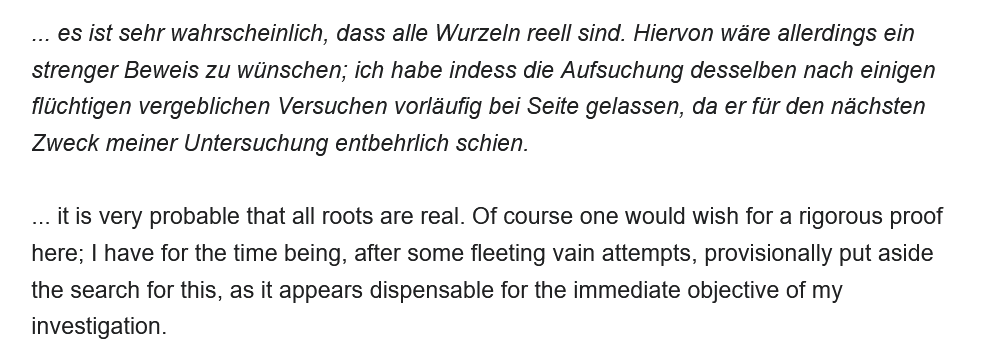
- The Riemann Hypothesis, as expressed by mathematician Bernhard Riemann in 1859. Image: Wikipedia.
Five other Millennium Prize Problems await mathematical solutions. Among them, the Riemann Hypothesis, which is about the distribution of prime numbers, is considered the most difficult and consequential. There is little doubt that global fame would immediately attach to any mathematician who cracks the Riemann Hypothesis, but when some mathematicians have devoted much of their careers to the challenge what would happen if a machine beat humans in proving the famous hypothesis?
Concern in the mathematical community for the uncertain future of their profession continues to mount, especially after OpenAI released 700 machine-generated mathematical papers on October 6.
Does the future of mathematics belong to humans or to machines?
While mathematics has been primarily a pursuit of the human mind without experimental tools available to other scientists like physicists and chemists, for decades mathematical research has been aided by computers and, more recently, by artificial intelligence.
As the complexity of mathematical problems has grown and the science has split into 63 different disciplines, mathematicians specializing in one or more of the disciplines have been building on proofs developed by peers and predecessors. Given the many cross-discipline complexities involved in papers that can run 100 pages or more, it’s not uncommon for mathematicians to deliver proofs without fully understanding every part of the work on which they have relied.
In a podcast discussion, 2026 Fields Medal recipient Jacob Tsimerman stated that in his work, “I have used other theorems that are very much accepted by the community to which I usually know the main ideas but not even always.” Tsimerman mentioned specifically o-minimality theory, which he has used many times but the proofs for which he “kind of” knows and “definitely couldn’t re-create” from first principles.
Tsimerman, who is a University of Toronto Mathematics Professor, was awarded the Fields Medal for his work with the André-Oort conjecture. In its press coverage of the award, the university explained, “At a high level, the conjecture concerns the appearance of highly special points inside geometric spaces that encode rich arithmetic information. Mathematicians suspected that whenever these special points appear in large numbers, they do so because they are part of a larger hidden geometric structure.”
Awarded every four years by the International Mathematical Union, the Fields Medal is often referred to as the “Nobel Prize for mathematics.” On the day the medal was awarded to Tsimerman, he took temporary leave from his position at the University of Toronto to begin working for OpenAI in researching AI safety. AI safety will likely prove to be a key factor in mathematics, because in the podcast discussion Tsimerman concludes that, “I think pretty soon we’re going to have proofs that no one understands and they’re going to underlie mathematics.”
At 20:35, 2026 Fields Medal winner Jacob Tsimerman states “I think pretty soon we’re going to have proofs that no one understands and they’re going to underlie mathematics.”
Explaining the importance of mathematics to AI and neural networks, Tsimerman told a reporter at The Atlantic that “going to OpenAI made the most sense in part because one of the things that I’m most lacking is a background in software engineering. I’m a lot more comfortable with the theoretical aspects of neural networks and how AI systems work, and less so with the entire pipeline of how we train these things and how we get them to do what they do. So, from the perspective of just getting myself in a better position to understand the whole picture, joining an AI lab right now made the most sense.”
Over the past ten years, algorithms and mathematics have become intertwined with the Lean code for proof-checking.
To establish the accuracy of proofs, or components of proofs that highly skilled mathematicians like Tsimerman don’t completely understand, mathematicians have recently relied on the free, open source Lean programming language that was first introduced in 2013. Primarily developed by Brazilian computer scientist Leonardo de Moura, Lean contains a library of already-established proofs that can be correlated with new ideas to check their logic and formalize in acceptable proof format. In 2021, Lean gained widespread respect in the mathematical community and philanthropic funding after mathematician and 2018 Fields Medal winner Peter Scholze asked his peers to use the programming language to validate and clarify a complicated new proof.
Prompted by growing concern about over-reliance on and misuse of AI in mathematics, in June 2026 a group of mathematicians published the Leiden Declaration on Artificial Intelligence and Mathematics, which was endorsed by the International Mathematical Union. The Declaration includes a series of recommendations for individual mathematicians, mathematics organizations, and policymakers.
The mathematical profession and its students are threatened, according to the Declaration, because “Current automated techniques can produce plausible but unreliable (or even incorrect) arguments which are difficult to distinguish from correct mathematical proofs. This applies not only to informal arguments, but also to formalizations, where the difficulty lies in the translation between computer-encoded and human presentations of concepts. These fast-moving developments put our present system of review under increasing pressure, jeopardizing our ability to implement traditional standards for the correctness, transparency, and independent verifiability of proof.”
The Declaration’s preamble states that, “Mathematicians have a choice about whether and how to adopt artificial intelligence in the conduct of their research. They also have a responsibility to ensure the continued flourishing of the discipline. This Declaration calls upon mathematicians to exercise this responsibility, and provides recommendations for individuals, institutions, government, and industry. Although we adopt the perspective of mathematical research, much of what we write applies equally to other aspects of mathematics. This includes work in the broader mathematical sciences, education, mentoring, publishing, funding, science policy, and use of mathematics in the wider world.”
In September, the Fields Institute for Research in Mathematical Sciences (which is not affiliated with the Fields medal), at the University of Toronto, launched a series of wide-ranging panel discussions with mathematicians around the globe on the Leiden Declaration. For individual mathematicians, the Declaration’s first recommendation is to disclose use of “automated tools, including large language models, machine learning systems, proof assistants, and other mathematical software,” a subject that dominated the Fields Institute’s initial panel discussion.
The Declaration calls on mathematicians to support the review process with disclosure of tool use and provision of precise and clear references, which can become problematic with over-reliance on AI. It also recommends that, “Credit and responsibility continue to belong to humans within the mathematical community and should not be given to automated systems. Artificial intelligence may obscure, but does not replace, the collective human labor behind a result.” A corresponding recommendation is for mathematicians to make a “proactive effort to find and credit the sources that made a new result possible,” which is another threat posed by over-reliance on AI.
A significant amount of discussion to date in the biweekly panel sessions of the Fields Institute has centred on human attribution and the accuracy of AI-assisted proofs. As one panellist stated, using a mathematical metaphor for human interactions, “In any dynamical system, one wants to identify invariants and fixed points.”
Attribution was already a complex subject before the AI boom. Online collaboration and freely available preprints posted on platforms like arXiv can raise questions about the relative contributions of multiple authors to a paper and the many sources from which authors draw their ideas. The Leiden Declaration advises mathematicians to be cautious in selecting automated tools for their work, and panellists noted that some mathematicians are now choosing not to post preprints or to use publicly accessible LLMs like ChatGPT for fear that their work will be plagiarized by AI. A consequence of this caution, some panellists noted, would be the reduction of human collaboration.
There is already a vast amount of freely available online information that complicates full and correct attribution. Panellist Jarold Alper, who was one of the Leiden Declaration’s authors, founded the University of Washington’s Math AI Lab which, in a student-led project, studied the retrieval of 9.2 million mathematical theorem statements posted on arXiv and seven other publicly available sources. Alper’s lab developed an approach for effectively indexing theorems based on their semantic content, aiding mathematicians who develop new theories to search hundreds of thousands of online papers and properly cite the contributions of other mathematicians.
In the wake of OpenAI’s Navier-Stokes solution, peer recognition ranks highly among the concerns of the mathematical community and has been a focus of discussion in the Fields Institute’s panels. While few mathematicians hold out hopes for million-dollar prizes or enter the profession for financial reward, peer recognition and citations have become indispensable for obtaining teaching positions at good universities and funding for research.
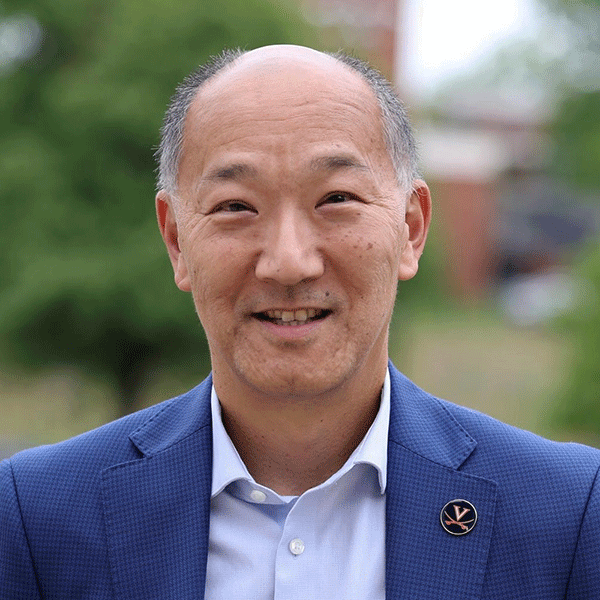
- Mathematician Ken Ono, who established that in the mathematics of black holes, sometimes infinity minus infinity equals four. Image: Wikipedia.
The established system of peer recognition is threatened by AI’s newfound capabilities in mathematical proofs, and students in mathematics are particularly concerned about the consequences for their careers. An October 2026 Quanta Magazine article entitled Is AI the End of Math As We Know It? reported on a University of California, Berkeley, presentation delivered two days after OpenAI’s Navier-Stokes solution. The talk was delivered by mathematician Ken Ono (who, among other things, established that in some cases infinity minus infinity equals 4) and was attended by 150 mathematics students, postdoctoral researchers, and professors. Scheduled for 50 minutes, the session lasted for more than two hours with students expressing frustration and concern for their future.
“The young mathematicians recognized that their field would have to change or risk extinction,” writer Jordana Cepelewicz observed. “Mathematical culture has developed almost entirely around problem-solving. Graduate students cut their teeth on simpler versions of big, complex problems, then seek to get their work published, find good jobs, and earn credit and recognition — all of which are assessed in terms of the theorems they prove. The incentive structures that power the mathematical community are not set up for a world where solving problems is easy and understanding their answers remains hard.”
The students’ concerns were echoed by Terence Tao, who received his doctorate in mathematics from Princeton University at the age of 20 and is now among the world’s most famed mathematicians. As reported by The New York Times, after OpenAI’s October 6 release of 700 AI-generated mathematics papers, Tao blogged, “I am horrified by the many person-years” of research, particularly by young mathematicians, “being casually disrupted or destroyed.” Tao continued, “Much as one cannot unhear a movie spoiler or a crossword clue, one cannot explore a problem as profitably and richly once one is aware of an existing solution,” mourning “the path not taken, and the opportunities lost in the frantic race to develop this technology.”
What lies ahead for humans in mathematics?
One Fields Institute panellist stated, “The values system needs to change,” to shift some of the spotlight from the first mathematician to solve the problem to the mathematician who is best able to explain it. Other panellists echoed the “expository value” of mathematicians, particularly for teaching the science to the next generation.
In the meantime, key problems in mathematics remain to be solved and OpenAI’s Navier-Stokes solution has yet to be verified. To date, one of the seven Clay Mathematics Institute’s Millennium Prizes Problems has been solved. In 2010, mathematician Grigoriy Perelman was awarded $1 million for his solutions to the Poincaré Conjecture, a prize that Perelman famously rejected on the basis that it had been unfairly awarded because his contribution was no greater than that of another mathematician, Richard Hamilton.
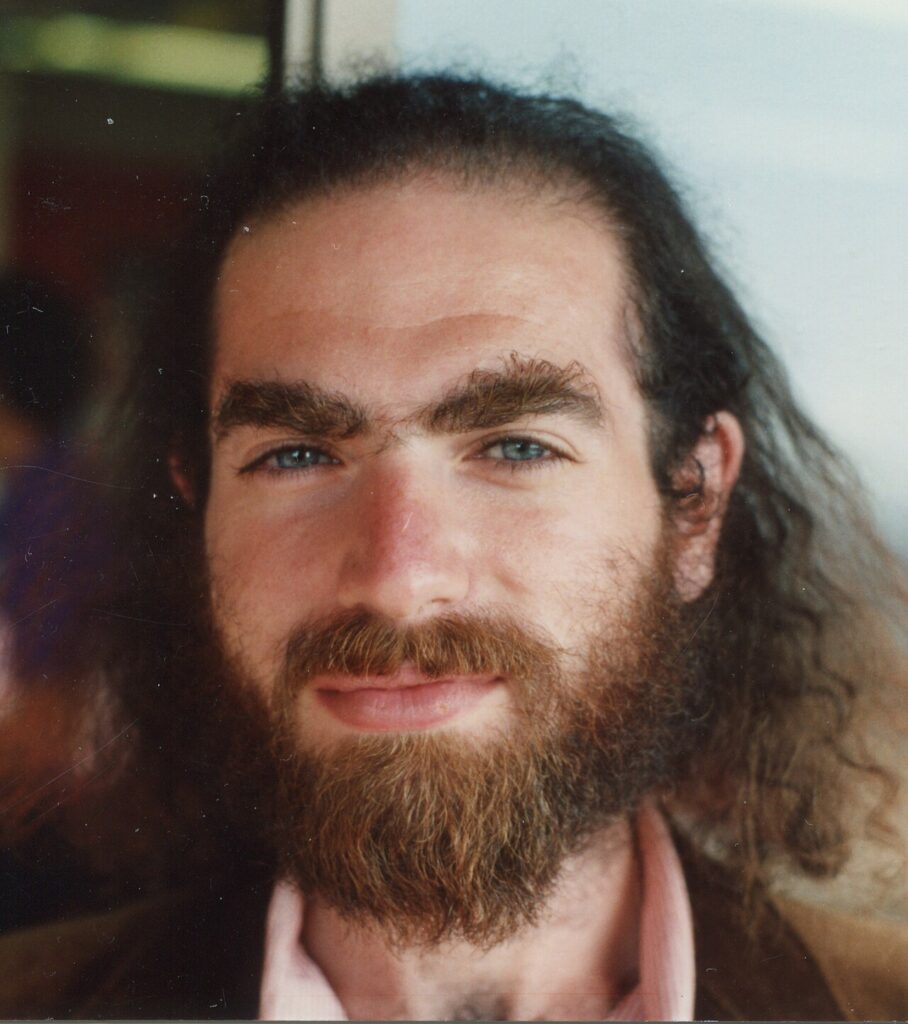
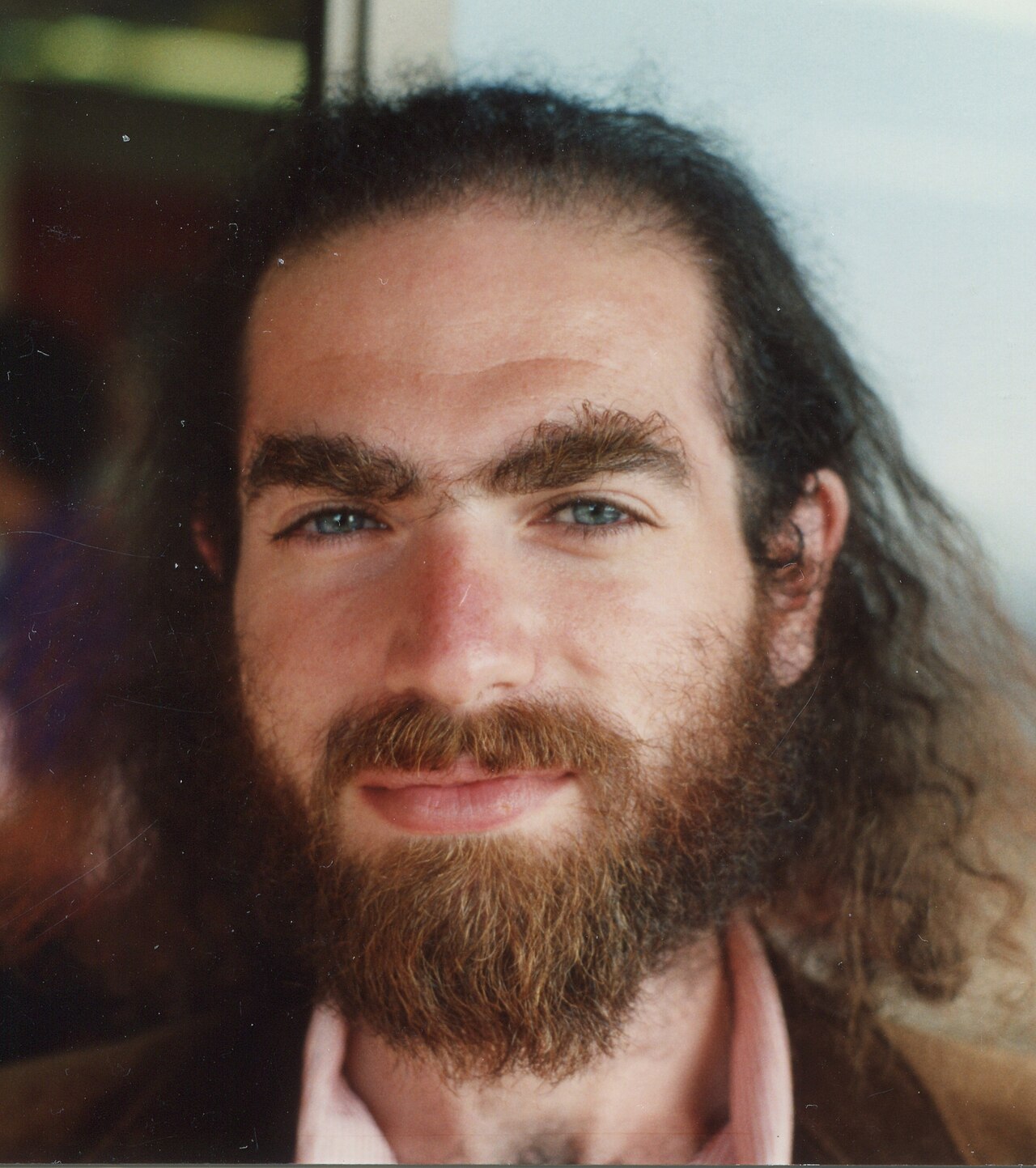
- Grigoriy Perelman, pictured in 1993. Image by George M. Berman, on Wikipedia.
Perelman is a rarity among mathematicians, other scientists and academics, and likely most everyone else. The Millennium Prize was not the first to have been awarded to and rejected by Perelman, who has become reclusive and made himself inaccessible to media and the mathematical community. In 1996, Perelman refused to accept an award from the European Mathematical Society, and in 2006 he became the first and only mathematician to decline the prestigious Fields Medal despite 10 hours of personal persuasion applied by the president of the International Mathematical Union.
On declining the Fields Medal, Perelman was quoted as saying, “I’m not interested in money or fame, I don’t want to be on display like an animal in a zoo. I’m not a hero of mathematics. I’m not even that successful; that is why I don’t want to have everybody looking at me.” Perelman also stated that the Fields Medal was “completely irrelevant for me. Everybody understood that if the proof is correct, then no other recognition is needed.”
For most, recognition for success is a prime motivation for hard work, and especially so for mathematical solutions that have – before AI and neural networks – required years and sometimes decades to perfect with few resources other than the power of the human mind.
How the mathematics profession will adapt to the power of AI remains very much unsettled, although the Leiden Declaration and discussions like the panels hosted by the Fields Institute help to bring focus to the issues. What is becoming clear is the increasing importance for mathematicians to add creative imagination to AI’s functions, and to endow the next generation of mathematicians with both core knowledge for verifying AI outputs and an ability to use AI safely and effectively.
Perhaps, above all, a key lesson of the as-yet not fully understood Navier-Stokes solution delivered in September is how crucial it will be for mathematicians to express incredibly complex solutions in the form of first principles. It’s a challenge that brilliant mathematicians like Jacob Tsimerman acknowledge, and a skill that would be of great service to math students and the rest of the world as AI’s dominance extends into the mathematics that underpins many other scientific fields.
Craving more information? Check out these TQR articles
- Reverse Transcriptase: The Viral Enzyme Helping Scientists Rewrite DNA
- Is the Link Between Prediction Markets and Social Media Algorithms Another Form of Human Fracking?
- Engineered for Overconsumption: The Health Risks and Regulatory Battle Over Ultra-Processed Foods
- Personal Data Tracking Is Everywhere: Why Privacy Protection Remains Uneven
- The AI Boom is Drawing Public Opposition to Data Center Expansion and Burden on Local Resources
Enjoyed this? Help us improve.
Have we made any errors?
Spotted an error or want to contribute your expertise? We’d love to hear from you — reach us at info@thequantumrecord.com. The Quantum Record exists to bring researchers and curious minds together around science and technology that matters.