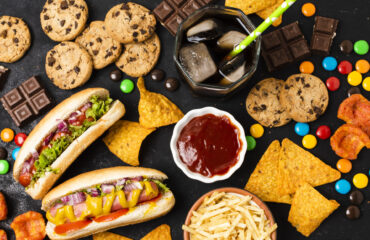
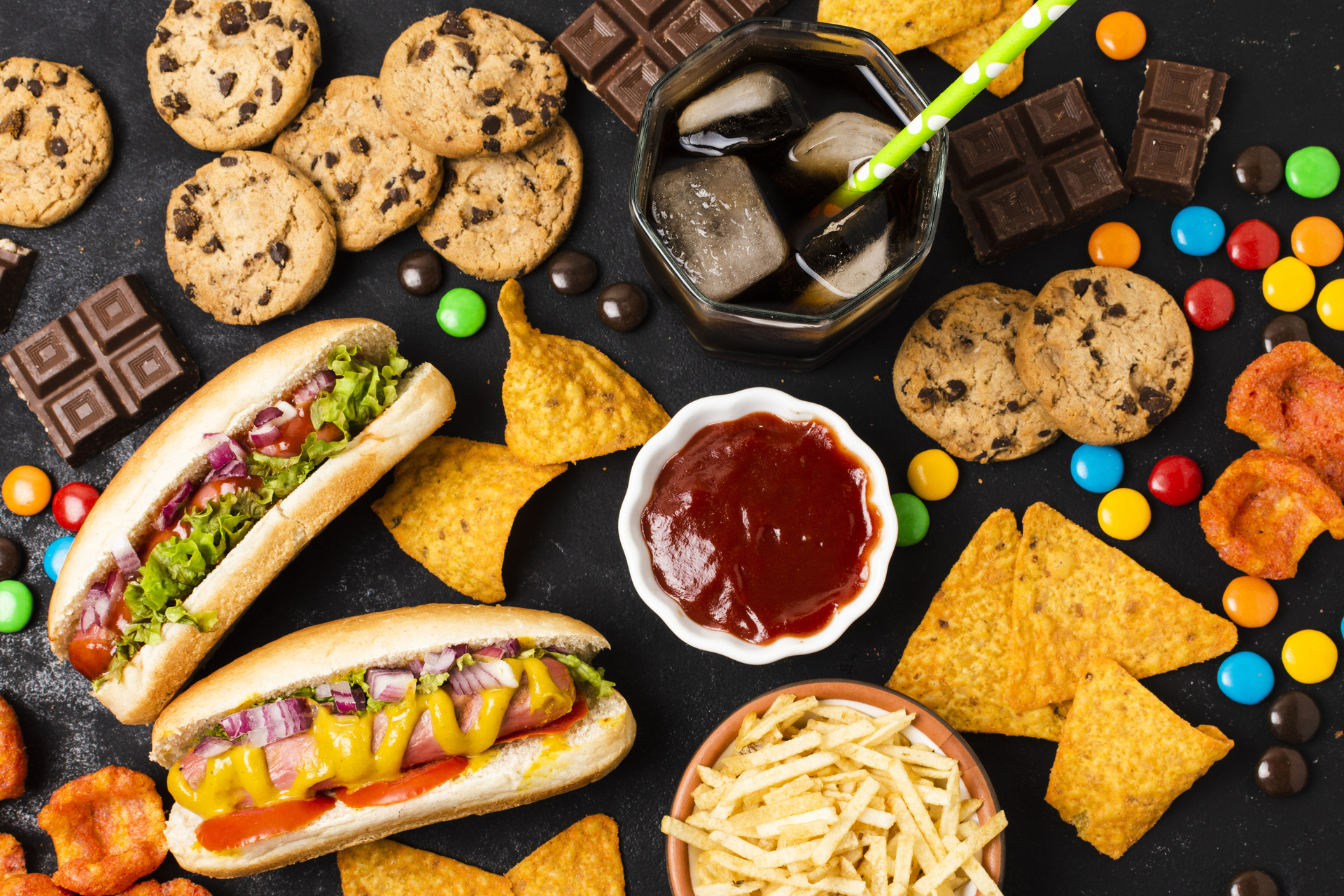
Engineered tastes for profitability. Image: Md Monwarul Islam Mijan.
By Mariana Meneses
In August 2026, Andrew Gregory, writing for The Guardian, reported on major ultra-processed food companies using lawsuits to challenge or delay public health measures aimed at reducing unhealthy diets and obesity. Gregory reports on a multi-country investigation which identified 235 lawsuits filed between 2010 and 2025 over policies such as front-of-package warning labels, junk-food taxes, and marketing restrictions.
Even though companies lost three-quarters of the settled cases, the litigation delayed regulations for years, draining government resources and adding billions of dollars to legal and healthcare costs. The investigation argues that these lawsuits can create a “regulatory chill,” discouraging other governments from adopting similar measures.
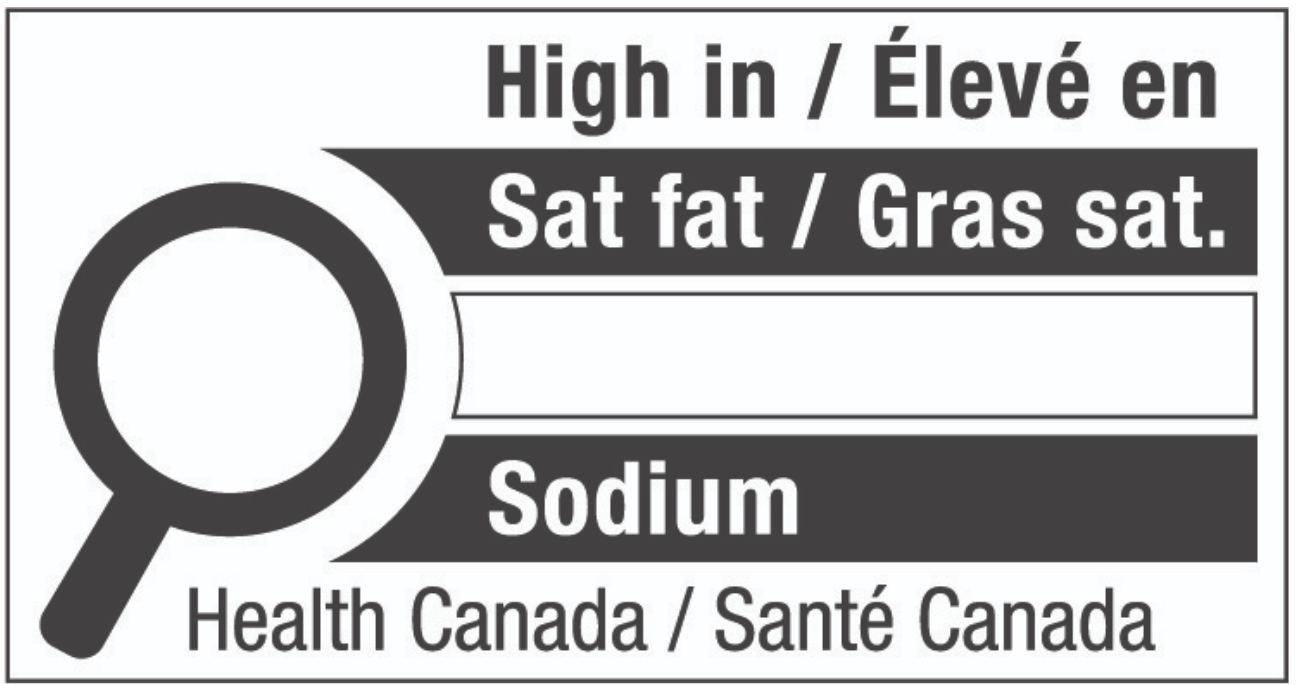
“The front-of-package nutrition symbol (…) highlights what the food is high in: saturated fat, sugars, sodium or any combination of these.” Image: Government of Canada.
UPFs are industrial formulations “composed of fractionated ingredients (e.g. refined starches, hydrogenated oils, protein isolates, high-fructose corn syrup) combined with cosmetic additives (e.g. emulsifiers, flavours, colours, preservatives, sweeteners) and subjected to industrial processes such as extrusion and pre-frying.” (Hayley M. O’Neill, 2026). Government intentions to regulate the marketing of ultra-processed foods (UPF) are rooted in public health concerns.
Ultra-processed foods’ effects on health
Last updated in June 2026, a report by the editorial team of the website Ultra Processed Food List, entitled “Ultra-Processed Food Around the World: Consumption & Regulation by Country,” shows that UPF consumption varies widely across countries. Estimates range from about 10–15% of calories in India and Italy to roughly 55–57% in the UK and US, although the figures come from different surveys and methodologies. The website’s report, based on its scoring of over 445,000 products, links these differences to factors including food culture, agricultural and trade policies, marketing regulation, and the spread of convenience foods, and highlights the range of responses governments have adopted.
“English-speaking countries tend to derive the largest share of their calories from ultra-processed products, while countries with strong culinary traditions built around fresh ingredients (particularly in Southern Europe, East Asia, and parts of Latin America) consume significantly less” – Ultra Processed Food List (2026).
Brazil was a pioneer in this area, becoming the first country to incorporate the Nova-based guidance into its official dietary guidelines in 2014, which shifted attention from individual nutrients to the degree of industrial processing and explicitly advised people to avoid ultra-processed foods. Its approach has since influenced other countries, particularly in Latin America, where several governments have introduced measures such as front-of-package warning labels and restrictions on the marketing of unhealthy products to children.
“In the late 2000s, researchers at the Center for Epidemiological Studies in Health and Nutrition, in Brazil, were pioneers in pointing out changes in industrial food processing as the main driver of the obesity pandemic, which started in the United States in the 1980s and, in the 21st century, has reached most countries in the world.” – Center for Epidemiological Research in Nutrition and Health, University of São Paulo.
The Nova classification is a system developed by researchers at the University of São Paulo in 2009 to group foods according to the extent and purpose of the processing they undergo. It divides foods into four categories: unprocessed or minimally processed foods (like fruits), processed culinary ingredients (like salt), processed foods (like yogurt), and ultra-processed foods (like much of what we see in supermarkets).
The framework emerged from the work of Carlos Augusto Monteiro, an Emeritus Professor at the Department of Nutrition of the School of Public Health at the University of São Paulo, whose research shifted from malnutrition toward broader dietary patterns as obesity increased in Brazil, particularly among lower-income populations. The Nova classification has since been widely adopted in nutrition and public-health research, policy, and dietary guidance around the world.
In a 2016 commentary article published in Public Health Nutrition entitled “The UN Decade of Nutrition, the NOVA food classification and the trouble with ultra-processing”, Carlos Augusto Monteiro and colleagues argue that the key issue is not food processing in itself, since many forms of processing such as drying, fermentation, freezing, pasteurization, and vacuum-packing can be beneficial, but the nature, extent, and purpose of processing.
The Nova classification identifies ultra-processed products as industrial formulations typically made through multiple processing steps, often with little or no intact food – which means that UPFs are not made from recognizable, whole pieces of plants or animals. Instead, it is an industrial formulation built with isolated substances extracted from foods, combined with chemical and cosmetic additives. They are designed to be convenient, durable, and highly palatable, as well as intensively marketable.
Drawing on studies from several countries, the 2016 article finds that higher consumption of these products is associated with poorer dietary quality and with obesity, hypertension, metabolic syndrome, and dyslipidemia (i.e., unbalanced levels of fats, called lipids, in the blood). The authors also argue that the expansion of ultra-processed foods has wider consequences beyond nutrition, including the displacement of home-prepared meals and local food cultures, greater economic and political power for large transnational food corporations, and environmental costs linked to packaging, transport, monocultures, and resource use. The authors therefore present the growing production and consumption of ultra-processed foods as a public-health and sustainability problem that should be addressed through broader food-system policies.
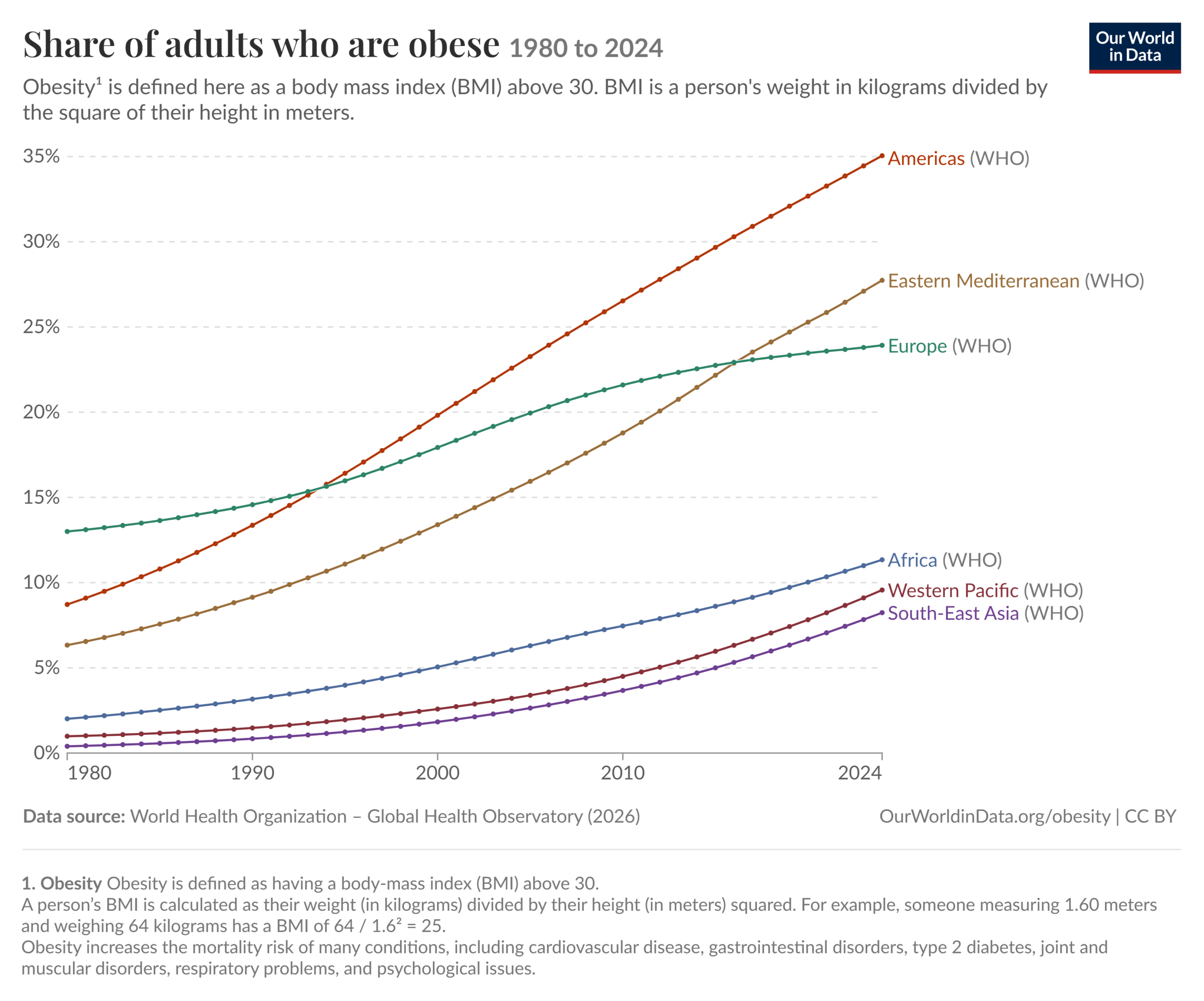
“Share of adults who are obese, 1980-2024”. Image: Our World in Data / World Health Organization – Global Health Observatory (2026).
Jimmy Chun Yu Louie, Associate Professor and Discipline Lead of Dietetics at the Department of Allied Health of the Swinburne University of Technology in Australia, argues that ultra-processed foods may promote obesity through a connected, self-reinforcing system involving gut microbiome disruption, inflammation in brain regions that regulate appetite, and dysfunction of fat tissue. The study was published in the Springer journal Current Obesity Report, in July 2026, and is entitled “The Gut–brain–adipose Axis in Ultra-processed Food and Obesity: A Mechanistic Synthesis and Its Implications for Food Classification.” The author notes that, while much of the mechanistic evidence comes from animal studies, human imaging research has also linked higher UPF intake to structural differences in feeding-related brain regions.
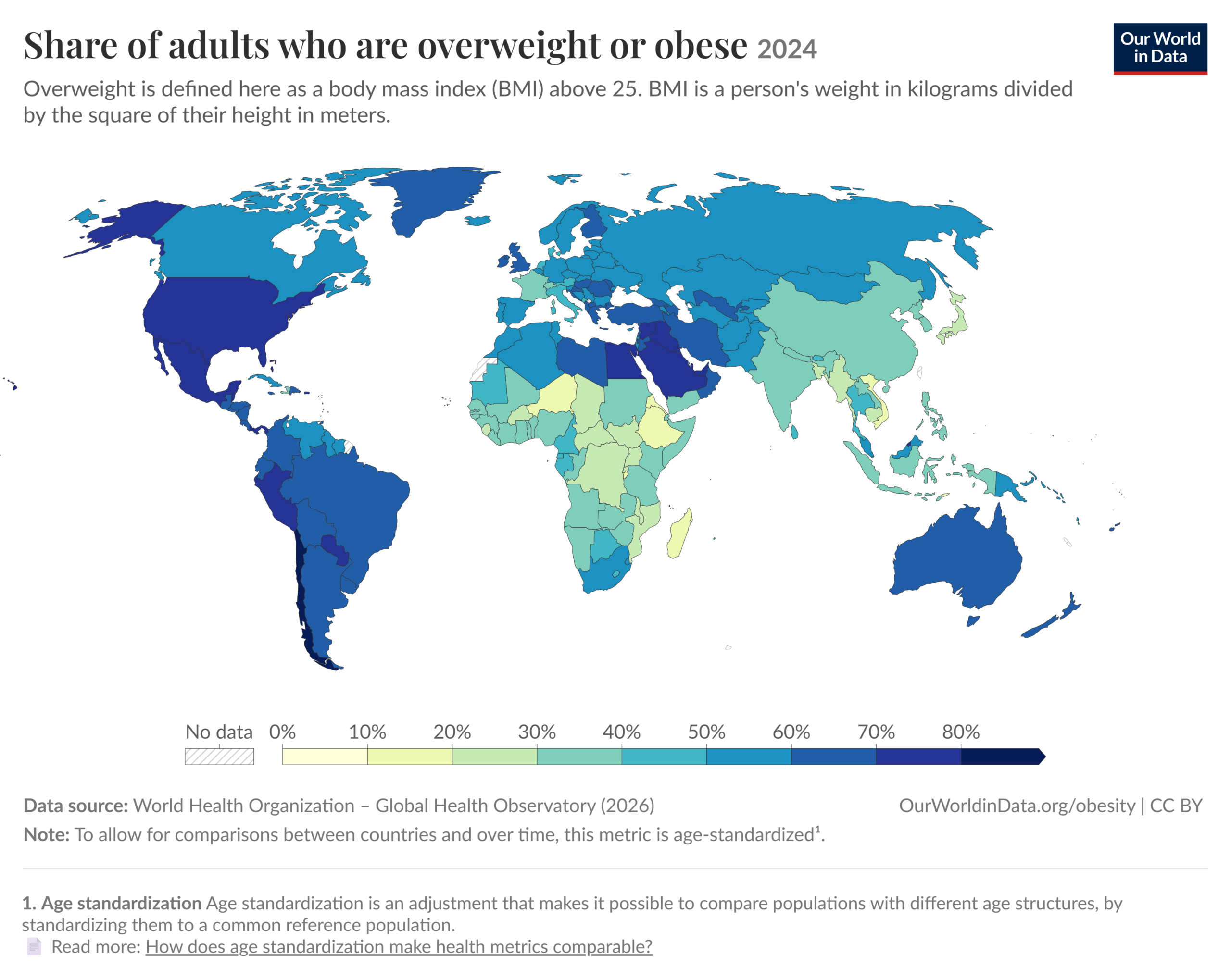
“Share of adults who are overweight or obese, 2024”. Image: Our World in Data / World Health Organization – Global Health Observatory (2026).
The links between ultra-processed food consumption and obesity seem very well established in the scientific literature.
For another example, in an article published in the journal PLOS One in April 2026 and entitled “Ultra-processed food consumption and the risk of overweight and obesity in adolescents: A systematic review and meta-analysis”, Mekuriaw Nibret Aweke, from the Department of Human Nutrition at the University of Gondar in Ethiopia, and co-authors conducted a meta-analysis involving 155,000 adolescents, and found that higher consumption of ultra-processed foods was associated with 63% greater odds of being overweight or obese compared with lower consumption.
Another study found that higher consumption of ultra-processed foods was associated with disrupted lipid metabolism and greater risk of several mental health conditions, including anxiety, depression, ADHD, eating disorders, food addiction, and autism spectrum disorder. The article is entitled “Neurobiological insights into the effects of ultra-processed food on lipid metabolism and associated mental health conditions: a scoping review” and was published in the journal Frontiers in Nutrition in 2025, by Emily Poon, from the Faculty of Medicine at the University of Queensland in Australia, and co-authors. The researchers propose that the mechanisms in operation include low-grade inflammation, changes in dopamine and serotonin signaling, and effects of food additives on neurochemical regulation.
Beyond weight gain, research also links UPF consumption to metabolic and reproductive effects. The December 2025 review article “Health effects of ultra-processed food: uncovering causal mechanisms”, published in the journal Nature Reviews Endocrinology, by Mathilde Touvier, from the Université Sorbonne Paris Nord in France, highlights growing evidence that emulsifiers can alter the gut microbiome and increase disease susceptibility in mice, while common mixtures of food additives were associated with higher incidence of type 2 diabetes in a large prospective cohort.
Professor Touvier’s research group has long focused on this subject. In another study, published in Springer’s journal BCM Medicine in September 2026, with Marie Payen de La Garanderie, from the Université Sorbonne Paris Nord in France, as first author, the research group followed more than 112,000 French adults and found that several commonly consumed mixtures of food additives were associated with higher risks of hypertension and cardiovascular disease, including coronary heart disease. The findings also suggested that additives within mixtures may interact, meaning that safety evaluations should consider the combinations of additives that people consume, rather than assessing substances only individually. The study is entitled “Food additive mixtures and hypertension and cardiovascular diseases incidence in the NutriNet-Santé prospective cohort.”
“Obesity is classified by the WHO as a chronic, relapsing disease arising from complex interactions between genetics, neurobiology, eating behaviours, access to healthy diet, market forces, and the broader environment. In the last decades, obesity has expanded globally as countries have experienced greater food security, socioeconomic development, and shifts in diet, physical activity, and societal and individual behavior driven by globalization and industrialized food systems. These forces have created increasingly obesogenic environments, contributing to what is now a global public health crisis with more than 1 billion people living with obesity and prevalence rising in nearly every country.” – World Health Organization
In the article entitled “Obesity and Cancer: A Translational Science Review”, published in the journal JAMA, in 2026, Sherry Shen, from the Memorial Sloan Kettering Cancer Center, in New York, and co-authors explain that overweight and obesity are associated with higher cancer risk, accounting for about 10% of new cancer diagnoses each year in the US. Excess body fat may promote cancer through inflammation, oxidative stress and DNA damage, changes in hormone production, impaired immune responses, and alterations in gut bacteria. The authors note that the observational findings suggest that losing more than 10% of body weight may modestly reduce the incidence of obesity-associated cancers.
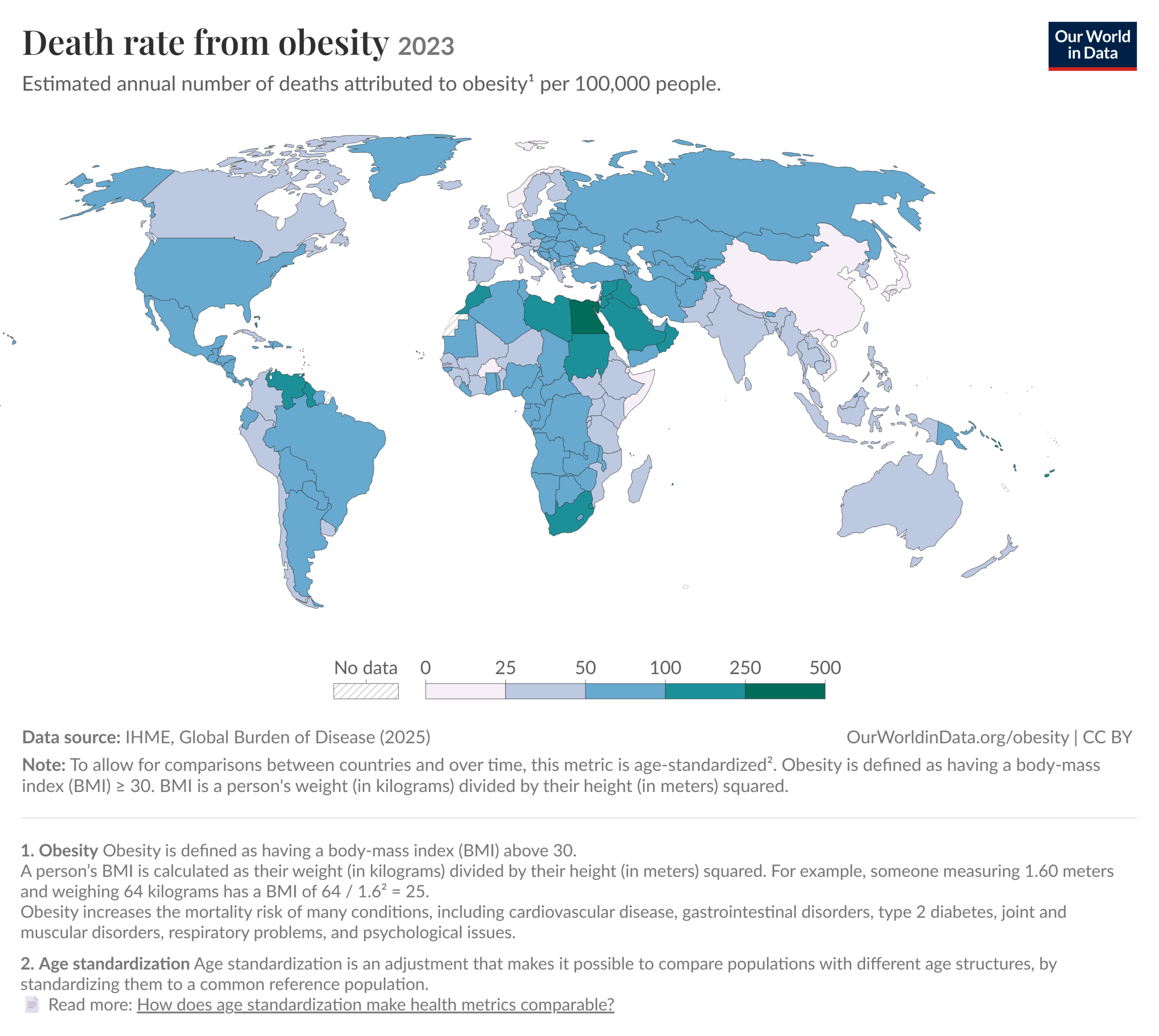
“Death rate from obesity, 2023”. Image: Our World in Data / IHME, Global Burden of Disease (2025).
Ultra-processed foods are everywhere we look.
A 2025 study published in Nature Food used machine learning to estimate how predominant are the processed foods sold in major U.S. grocery stores “Prevalence of Processed Foods in Major U.S. Grocery Stores” (pdf available here), was published by Babak Ravandi (Northeastern University), and co-authors, including corresponding author Giulia Menichetti (Harvard University), who was responsible for the licensing of the application they developed.
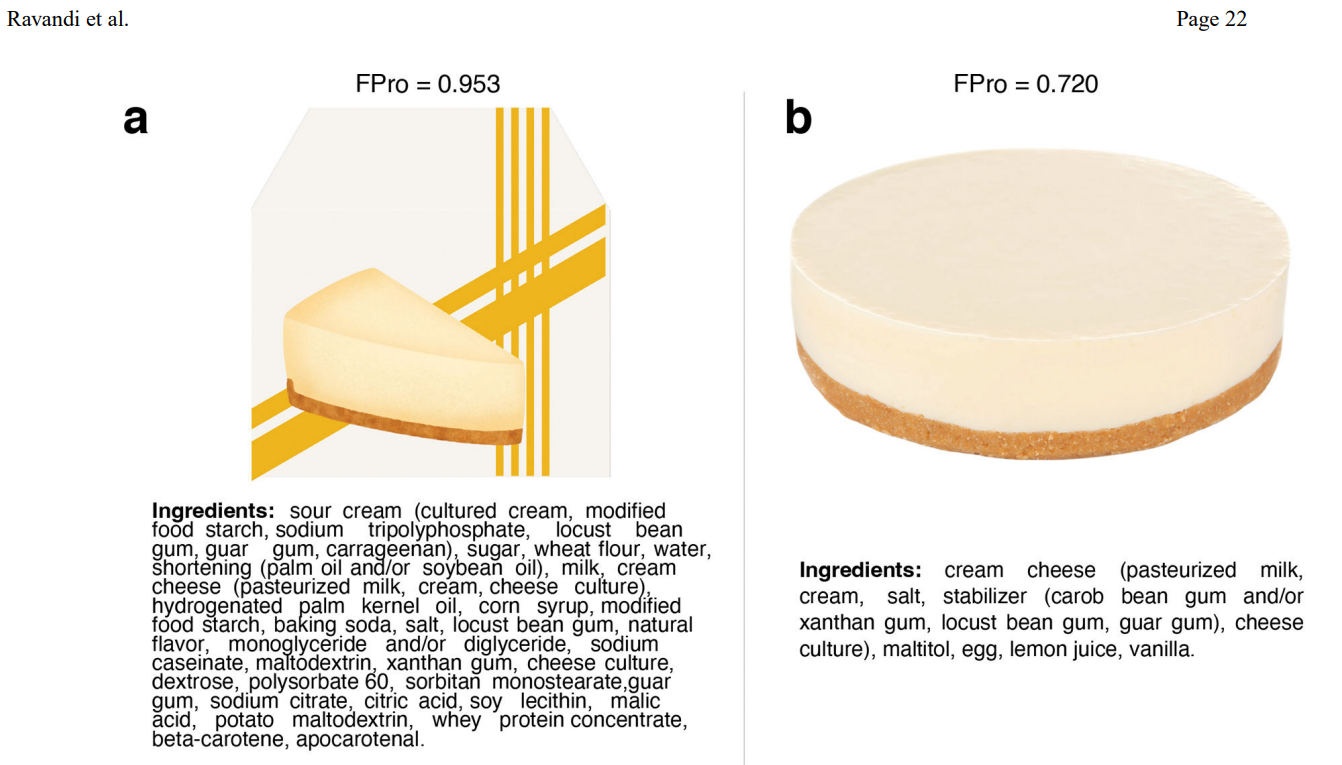
Example of how similar foods at first sight may be very different in the level of food processing. The image depicts two cheesecakes with different levels of processing involved. Image: Ravandi et al (2025) (pdf available here).
Example of how similar foods at first sight may be very different in the level of food processing. The image depicts two cheesecakes with different levels of processing involved. Image: Ravandi et al (2025) (pdf available here).
The researchers analyzed more than 50,000 products sold by Walmart, Target, and Whole Foods and developed GroceryDB, an open database and consumer-facing platform powered by FoodProX, a machine-learning model trained on the Nova classification. The AI model evaluates the nutrition label and assigns each product a continuous Food Processing Score, or FPro, ranging from 0 for unprocessed foods to 1 for ultra-processed foods. The application was released under the GNU Affero General Public License v3.0 (AGPL-3.0), a strong copyleft open-source license, meaning that anyone can use, study and modify it as long as any derivative work is also open and free for everyone.
The researchers found that most products offered by all three retailers fell toward the highly or ultra-processed end of the scale. Moreover, greater processing was generally associated with cheaper calories. Across GroceryDB, a 10% increase in FPro was associated with an 8.7% decrease in price per calorie, while the most ultra-processed products were, on average, 52.09% cheaper per calorie than the least processed alternatives within the same categories, although this relationship varied considerably depending on the type of food.
“Ultra-processed products are made to be hyper-palatable and attractive, with long shelf-life, and able to be consumed anywhere, any time. Their formulation, presentation and marketing often promote overconsumption.” – Carlos Monteiro et al. (2016).
As scientific evidence increasingly supports stricter regulation of ultra-processed foods, governments face the challenge of implementing effective protections despite corporate resistance that can delay regulation.
The evidence discussed here points to important links between ultra-processed food consumption and health problems, while also showing that affordability, food environments, regulation, corporate practices, and technological tools all shape what people eat. How should societies respond when the foods that are cheapest and most available may also carry greater health risks? Can healthier eating really be treated as an individual choice?
Craving more information? Check out these recommended TQR articles.
- Personal Data Tracking Is Everywhere: Why Privacy Protection Remains Uneven
- The AI Boom is Drawing Public Opposition to Data Center Expansion and Burden on Local Resources
- Synthetic Data: Filling Gaps While Creating New Uncertainties
- The AI Education Gap: Students Are Adopting, While Schools Are Adapting
- The Algorithmic Governance Challenge: Inside the Battle Over Social Media Algorithms
Enjoyed this? Help us improve.
Have we made any errors?
Spotted an error or want to contribute your expertise? We’d love to hear from you — reach us at info@thequantumrecord.com. The Quantum Record exists to bring researchers and curious minds together around science and technology that matters.