

Will AI forever change the classroom? Image: Wokandapix, on Pixabay
By Mariana Meneses
Millions of children are growing up alongside AI chatbots, asking them for homework help, comfort, and advice about what keeps them up at night. Educators, researchers, and international bodies are racing to understand what this means, and the picture that emerges from the latest wave of studies, surveys, and reports is anything but settled: real promise, real risk, and a widening gap between how fast AI is spreading and how ready schools, teachers, and policymakers are to guide it.
United Nations Agency UNICEF warned in a June 2026 statement that children are adopting AI technologies much faster than adults, with analysis from 10 countries estimating that at least 20 million children have used AI and that many are adopting it at rates more than three times higher than adults. More than 13 million children said they use AI to support learning and homework, while over 2 million (which accounts for about 1 in 10) said they turn to AI for advice about things that worry them.
“Children are adopting AI technologies more than three times faster than adults” – UNICEF
UNICEF argues that AI is already shaping childhood, but governance and child protections are not keeping pace, leaving children exposed to risks linked to data use, platform design, business models, misinformation, scams, emotional dependency, cognitive development, and sexually explicit deepfakes. The organization calls for child rights to be embedded in global AI governance through stronger research, laws, corporate accountability, safety-by-design, transparency, AI literacy, caregiver support, and better digital infrastructure to reduce inequalities in access and protection.
A report from February 2026 by the Pew Research Center, based on a survey of US teens ages 13 to 17 conducted in late 2025, found that 64% say they have used AI, including about three-in-ten who do so daily. The most common uses are searching for information (57%), getting help with schoolwork (54%), and fun or entertainment (47%), while more personal uses remain less common: 16% report using chatbots for casual conversations and 12% for emotional support or advice. Schoolwork stands out as a major area of use, with one-in-ten teens saying chatbots help with all or most of their schoolwork, and 59% saying students at their school use AI chatbots to cheat at least somewhat often.
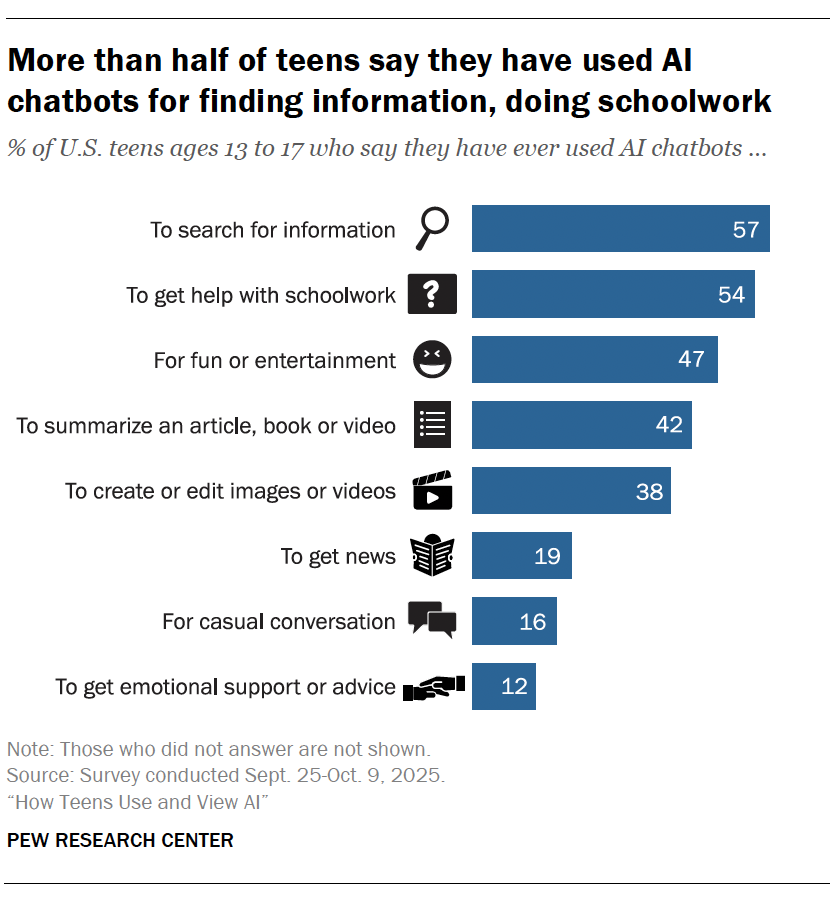
Image: Pew Research Center
The report also found that teens are more optimistic about AI’s impact on their own lives than on society. While 36% expect AI to have a positive personal impact over the next 20 years and 15% expect a negative one, views of its societal impact are more cautious: 31% expect a positive effect and 26% a negative one. Positive effects included convenience, efficiency, learning, and productivity, while negative effects included overreliance, loss of critical thinking or creativity, job displacement, misinformation, misuse, and harm to schooling.
Nearly all teens have heard of AI chatbots, but confidence varies, as about a quarter feel highly confident using them while about one-in-ten have little or no confidence.
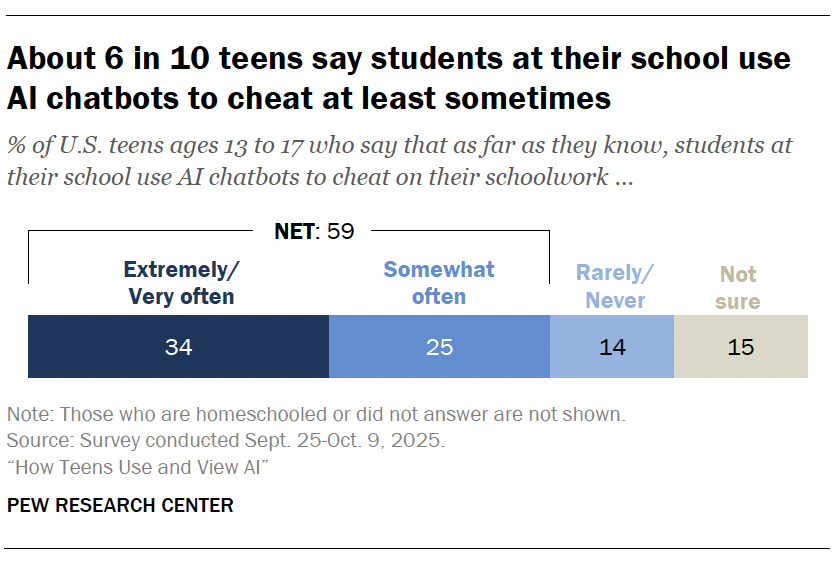
Image: Pew Research Center
The change is also in progress among college students. The “AI in Higher Education Global Survey 2026”, by the Digital Education Council, an international consortium of universities and education stakeholders with a shared vision to drive AI adoption and governance, based on more than 45,000 responses from students and faculty across 35 countries, suggests that AI is becoming part of higher education, but unevenly and with uncertain educational value.
Many students see benefits, especially for learning support, but most do not report transformative effects: only 15% say AI appears in many courses, and among those with classroom AI experience, just 5% say it has transformed how they learn. The report also highlights concerns about readiness, fairness, and relevance: only 29% of students think instructors are well equipped to guide AI use, 60% worry classmates may misuse AI for unfair advantage, and only 28% believe their assessments consistently reflect the skills needed in an AI-enabled workplace.
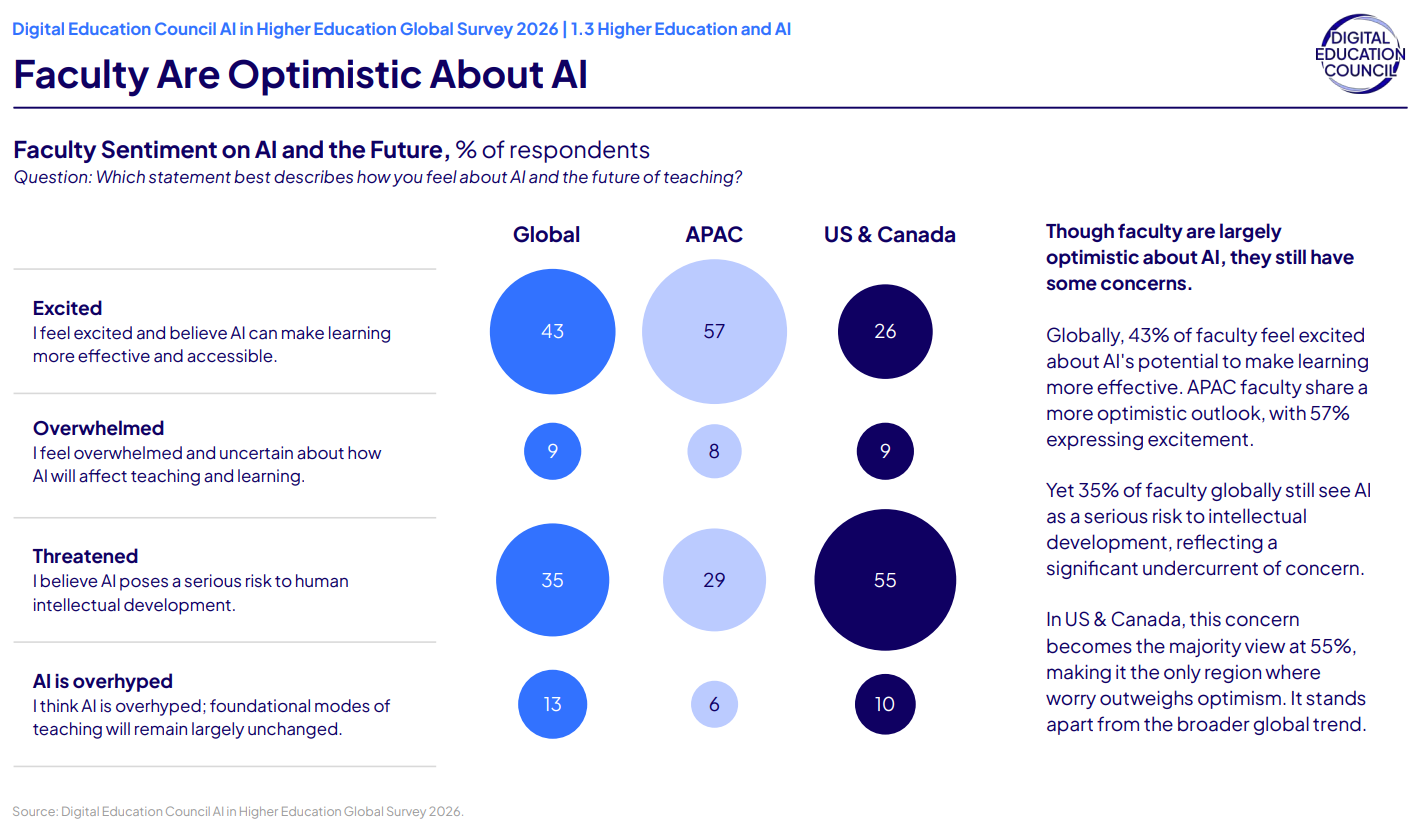
Image: Digital Education Council AI in Higher Education Global Survey 2026
Regionally, the Asia-Pacific area, commonly abbreviated as APAC, shows more optimism about AI’s promise, while the US and Canada are more cautious, with lower faculty adoption intent, stronger concern about risks to intellectual development, and more student support for AI bans. Overall, the report portrays higher education as being in an early, unsettled stage of AI integration, where students and faculty recognize AI’s potential but remain concerned about skills erosion, assessment integrity, job prospects, and whether curricula are keeping pace with technological change.
The report is consistently cautious, stressing that AI adoption also creates risks of bias, false predictions, privacy violations, cognitive offloading, overreliance, unequal access, weaker human relationships, and excessive control by opaque commercial systems. Its central policy message is that AI should not be introduced simply because it is available, but only where it serves clear educational goals, with teacher involvement, human oversight, data protection, equity safeguards, staged experimentation, transparent procurement, monitoring, and continuous evaluation as part of a national strategy for trustworthy and inclusive AI use in schools.
The OECD/Fondazione Agnelli paper entitled “AI adoption in the education system: International insights and policy considerations for Italy” (OECD Artificial Intelligence Papers, December 2025, No. 52) examines how AI could be used deliberately, in primary and secondary education in Italy, to address three persistent challenges: early school leaving and learning fragility, the gender gap in mathematics, and the integration of students with an immigrant background. It highlights possible uses such as early-warning systems, personalized tutoring, teacher workload support, AI-enhanced mentoring, bias detection, language-learning tools, translation, and family-school communication, while also stressing the need to build AI literacy and human capabilities such as critical thinking, creativity, empathy, ethical judgment, collaboration, and responsibility.
OECD’s Working Paper (2025) “AI adoption in the education system: International insights and policy considerations for Italy.”
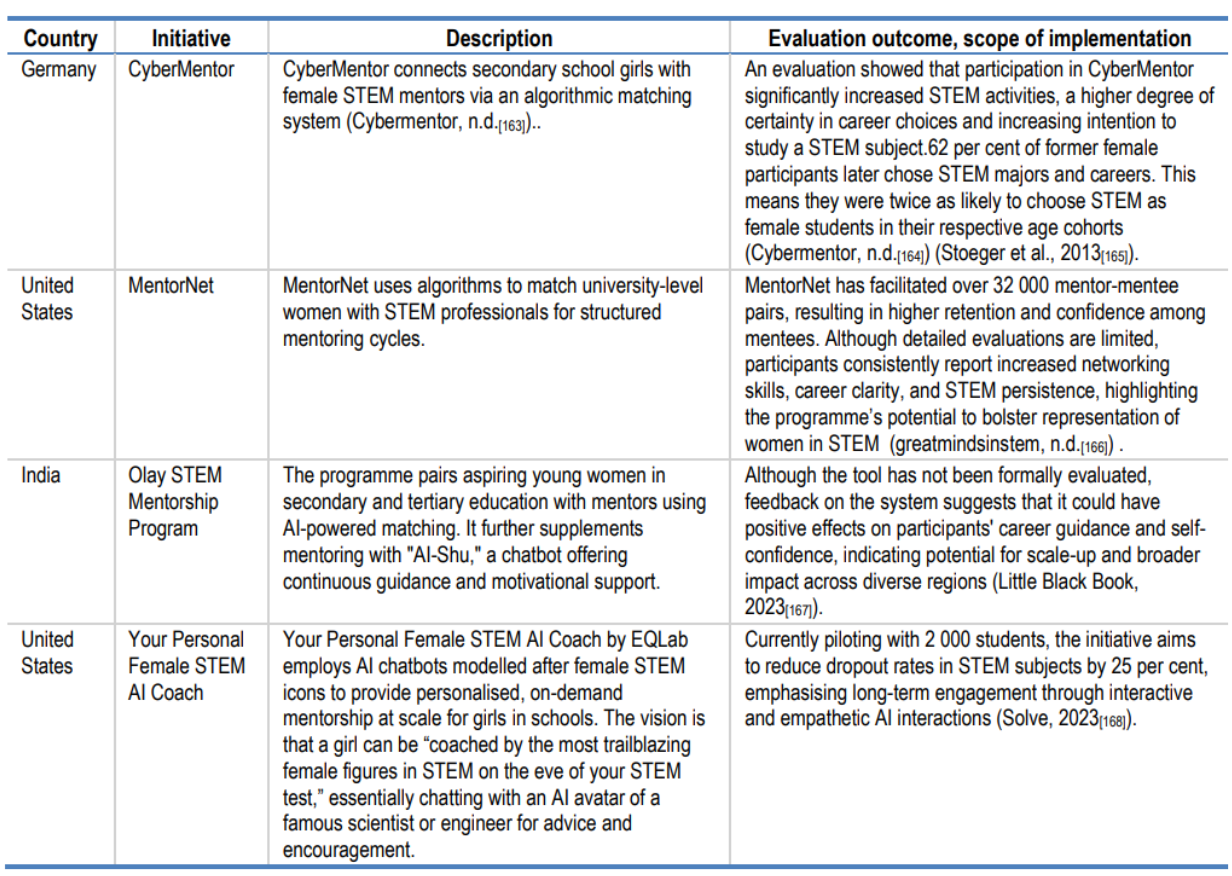
The report shows that AI tools could help reduce the gender gap in mathematics and STEM by expanding mentorship opportunities for girls and women. It presents examples of these approaches, including Germany’s CyberMentor which uses algorithmic matching to connect secondary school girls with female STEM mentors and has been associated with higher STEM activity, stronger career certainty, and increased intention to study STEM. In the United States, MentorNet has facilitated more than 32,000 mentor-mentee pairs, while India’s Olay STEM Mentorship Program combines AI-powered mentor matching with chatbot guidance. Another U.S. initiative, the MIT-sponsored Your Personal Female STEM AI Coach, uses AI chatbots modeled after female STEM figures to provide personalized encouragement and is being piloted with 2,000 students. Overall, the report presents AI-enhanced mentorship as a promising but still developing strategy for making STEM support more scalable, relatable, and accessible to girls.
Interestingly, girls and women may use AI differently than their male counterparts, at least in one specific context of higher education. The 2026 paper entitled “A systematic review of gender differences in students’ use of AI tools for learning in higher education” analyzed 30 studies published between 2020 and 2025 and found consistent gendered patterns in how students engage with AI tools. Male students generally reported more frequent use, greater confidence, and stronger intention to use AI, often viewing it as a practical tool for efficiency, technical mastery, and career development. Female students tended to approach AI more cautiously, placing greater emphasis on ethical use, privacy, reliability, meaningful feedback, and the risks of dependency or reduced critical thinking.
The review argues that these differences are shaped by confidence, learning goals, social expectations, institutional messaging, and disciplinary context, and concludes that higher education should design more inclusive, gender-responsive AI learning environments.

Image: Urban Origami, on Pixabay
Much research is focused on primary education. The article entitled “Artificial intelligence (AI) learning tools in K-12 education: A scoping review”, reviews 46 studies from academic journals and conferences to examine how AI literacy is being taught in K-12 settings, including the tools used, pedagogical strategies, assessment methods, and reported student outcomes. The authors find that AI literacy education has developed significantly over the past two decades, but that evidence on how to teach it remains fragmented. The review identifies several tools: PopBots for kindergarten students; intelligent agents such as Google’s Teachable Machine, Learning ML, and Machine Learning for Kids for broader K-12 AI literacy education; and tools such as Scratch and Python for primary and secondary students to develop computational thinking about AI algorithms. Reported outcomes include gains in knowledge, attitudes, behavior, course satisfaction, and soft skills.
But what does one mean, precisely, teaching AI literacy? In “Artificial intelligence literacy education in primary schools: a review”, researchers analyzed 25 empirical studies and found that primary-level AI literacy includes interacting with AI, computational thinking, critical data literacy, and AI ethics. The authors stress the need for stronger curricula, assessment methods, and further research.
A proposal for an AI literacy curriculum can be found in the chapter “Proposed Artificial Intelligence Literacy Curriculum in K–12 Education for Cultivating Competent Users, Smart Learners, and Passionate Thinkers”, in the Springer Nature Link’s Handbook of Asian Educational Innovation towards the Futures of Education, which proposes a K–12 AI literacy curriculum with three goals: developing students as competent users who understand basic AI concepts and use AI appropriately; smart learners who understand how AI works and use AI to strengthen communication, problem-solving, and self-regulated learning; and passionate thinkers who reflect critically on the relationship between human and artificial intelligence, especially when using generative AI tools.
The human role in AI literacy
In a study from 2026 entitled “AI’m learning to read!”: A kindergarten experiment with a chatbot”, researchers from Paris-Est Créteil University found that kindergarten children improved their early reading skills with both chatbot-based and traditional instruction. The chatbot appeared especially helpful for lower-performing students, particularly in letter recognition and phonological awareness, while higher-performing students benefited similarly from both approaches. The findings suggest AI chatbots may support early reading practice, especially for struggling children, but should supplement rather than replace teachers.
However, even the use of chatbots could benefit from human aid. The June 2026 working paper entitled “Access is Not Enough: Human Support Improves Engagement with AI Tutoring”, retrieved from Brown University’s Annenberg Institute, researchers from Stanford University led by Carly D. Robinson reports two randomized controlled trials testing whether elementary students used an AI literacy tutoring platform more when paired with an in-person tutor focused on motivation, accountability, participation, and troubleshooting rather than direct instruction.
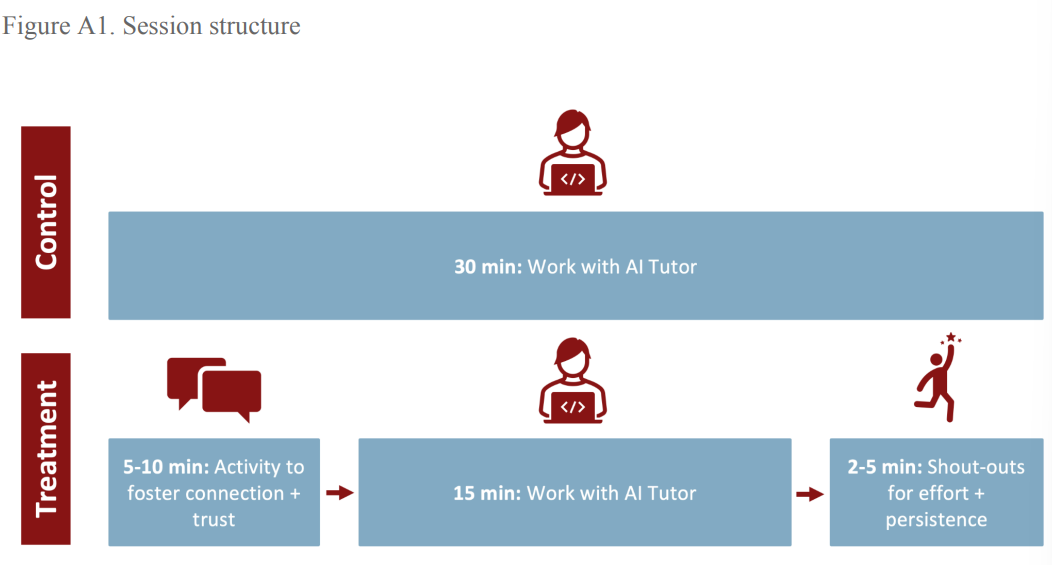
Experimental design: Robinson, Gormley, Ribeiro, Loeb (2026)
The study found that simply giving students access and dedicated time was not enough: in the control group, nearly half never used the platform, and average use was only about 2–5 minutes per week, far below the provider’s recommended 30 minutes per week. Human tutors increased platform usage by about 1 to 4.4 minutes per week and raised engagement, measured by stories read, by 71–80%, showing that human support can improve participation with AI learning tools. However, overall use remained low; the added exposure amounted to less than two extra hours across the intervention, and there was no measurable improvement in reading achievement. The central conclusion is that AI tutoring may help scale personalized learning, but its educational impact depends not only on the technology itself, but also on implementation, student engagement, and human relational support.
The ethics of AI use in education
Turning to higher education, a 2025 study entitled “Exploring the Ethical Implications of Using Generative AI Tools in Higher Education” examines how students, teachers, and researchers at University North in Croatia perceive ethical issues around generative AI, including copyright, authorship, transparency, responsibility, and academic integrity. Based on a survey of 883 participants, the researchers found that ethical awareness differs across academic roles, gender, and experience with generative AI tools: teachers and researchers showed the highest awareness, while students, especially undergraduates, showed lower awareness, likely because they had less structured ethical training. Women reported higher awareness across all ethical dimensions, and greater experience with GenAI tools was linked to stronger ethical understanding. Although ethical concerns were strongly connected to one another, they were less strongly linked to future adoption of AI tools, suggesting that universities need not only ethical guidelines, but also practical education on responsible GenAI use.
The 2025 paper “The Use of Generative AI Tools in Higher Education: Ethical and Pedagogical Principles” argues that GenAI can improve creativity, efficiency, personalized learning, and human-AI collaboration, but only if its use is carefully governed. The main risks are overreliance, bias, academic integrity violations, privacy concerns, and unequal access. The paper stresses that AI should support, not replace, human educators and traditional learning, and should be used in ways that strengthen critical thinking rather than weaken it. It concludes that universities need clear AI policies, AI ethics in curricula, stronger AI literacy for students and faculty, data privacy protections, equitable access, and ongoing faculty training.
The 2025 systematic review “Design and assessment of AI-based learning tools in higher education: a systematic review” analyzes 63 peer-reviewed articles published between January 2014 and April 2024 to examine how AI learning tools are designed and how they affect college students. The review finds that these tools are used mainly for assessment and evaluation, personalized feedback and recommendations, and intelligent tutoring. About half of the studies used publicly available AI systems, while the other half developed proprietary tools, and 26 studies used AI to generate and deliver multimodal learning materials.
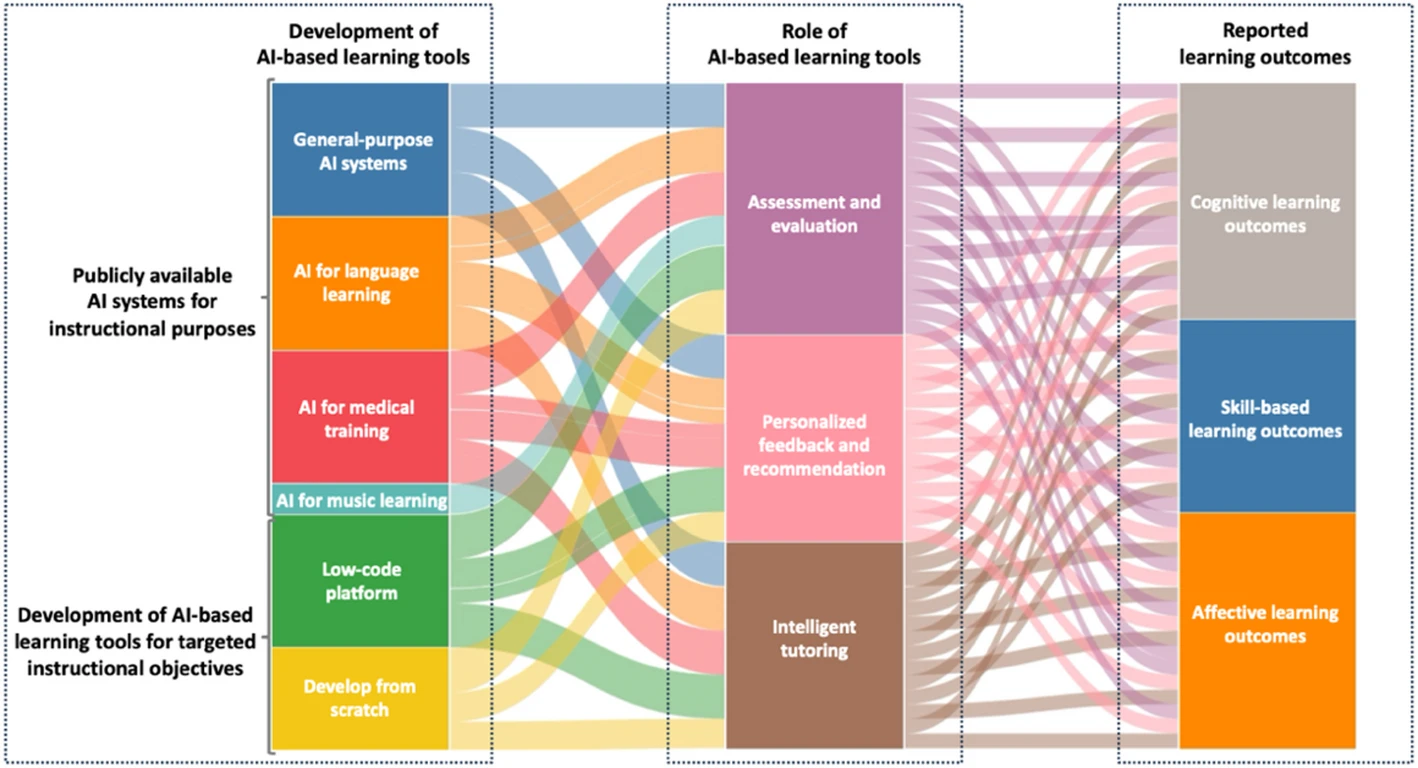
Overall, AI tools tended to improve students’ knowledge acquisition and affective outcomes, such as engagement or attitudes, but their effects on deeper cognitive processes and skill development varied considerably. The authors conclude that higher education needs stronger design and implementation strategies for AI learning tools, especially regarding algorithms, training data, information presentation, and the role AI plays in the learning process.
Another body of research focuses on the relationship between AI, teachers, and institutions. The 2025 study entitled “Integrating ethical knowledge in generative AI education: constructing the GenAI-TPACK framework for university teachers’ professional development” found that university teachers’ effective use of generative AI depends on more than familiarity with the technology. Teachers’ technological knowledge and active engagement with GenAI tools were important for using them effectively, and technical knowledge helped support evaluative decision-making. However, technical knowledge alone was not sufficient for successful integration into teaching. The results showed that teachers need a broader combination of technological, pedagogical, content, and ethical assessment knowledge. Ethical assessment knowledge was positively associated with both pedagogical and content knowledge, suggesting that ethical understanding is closely tied to teachers’ ability to evaluate and apply GenAI meaningfully in educational contexts. Overall, the study argues that ethics should be treated as a core part of university teachers’ professional development and AI training programs.
Another attempt at constructing such a tool for educators and institutions comes from a 2025 study entitled “The artificial intelligence literacy (AIL) scale for teachers: A tool for enhancing AI education”, which developed and validated a tool to assess teachers’ AI competencies and their readiness to integrate AI into teaching. Based on data from 292 secondary-level teachers across six countries, the study produced a 45-item scale organized into nine competence factors. Statistical testing confirmed the scale’s validity and reliability. The results showed significant differences in AI competencies by teaching experience and subject specialty, but not by gender. The authors present the AIL scale as a tool for teacher self-assessment, professional development, and policymaking around AI training in education – but behind a Taylor & Francis paywall (for a discussion about paywalls in science, read Can Science Break Free from Paywalls? Technologies for Open Science Are Transforming Academic Publishing).
The study (in preprint version, not peer-reviewed but open access) “Developing an AI Competency Scale for Preschool and K-12 Teachers — Localizing and Validating the UNESCO AI Competency Framework for Teachers” develops a tool for assessing teachers’ AI competencies in China. Building on UNESCO’s AI Competency Framework for Teachers, the authors adapted the framework to China’s education policies and school context, organizing AI competency into five areas: a human-centered mindset, AI ethics, basic AI knowledge and applications, AI-supported teaching reform, and AI for teachers’ professional development. After consulting experts and testing the tool with teachers, the authors developed a 47-item scale that they found to be reliable for assessing preschool and K-12 teachers’ AI competencies.
The 47-item scale includes sentences such as “I believe that when using AI tools to optimize documents, the decision to adopt revision suggestions should ultimately be my own.”, “I believe the process of emotional interaction between teachers and students cannot be fully replicated by AI.”, “I believe whether AI tools leak user information is directly related to the developer’s design.”, “I believe that with the rapid development of AI technology, relevant regulatory systems are gradually being put in place.”, and “I believe that responsibility attribution must be clarified when educational AI tools malfunction.” The scale is intended to help identify teachers’ training needs, support targeted professional development, and inform AI-related education policy.
The debate also concerns how the institutions should choose regarding the adoption of AI in education. The review “Decision-making criteria for AI tools in digital education” argues that AI tools can improve education but should be chosen through systematic evaluation rather than novelty or convenience. Based on studies from the previous five years, it identifies key selection criteria: evidence of impact on student motivation and knowledge gains, prediction accuracy tested with machine-learning and cross-validation methods, and algorithmic performance measures such as accuracy, precision, and recall.
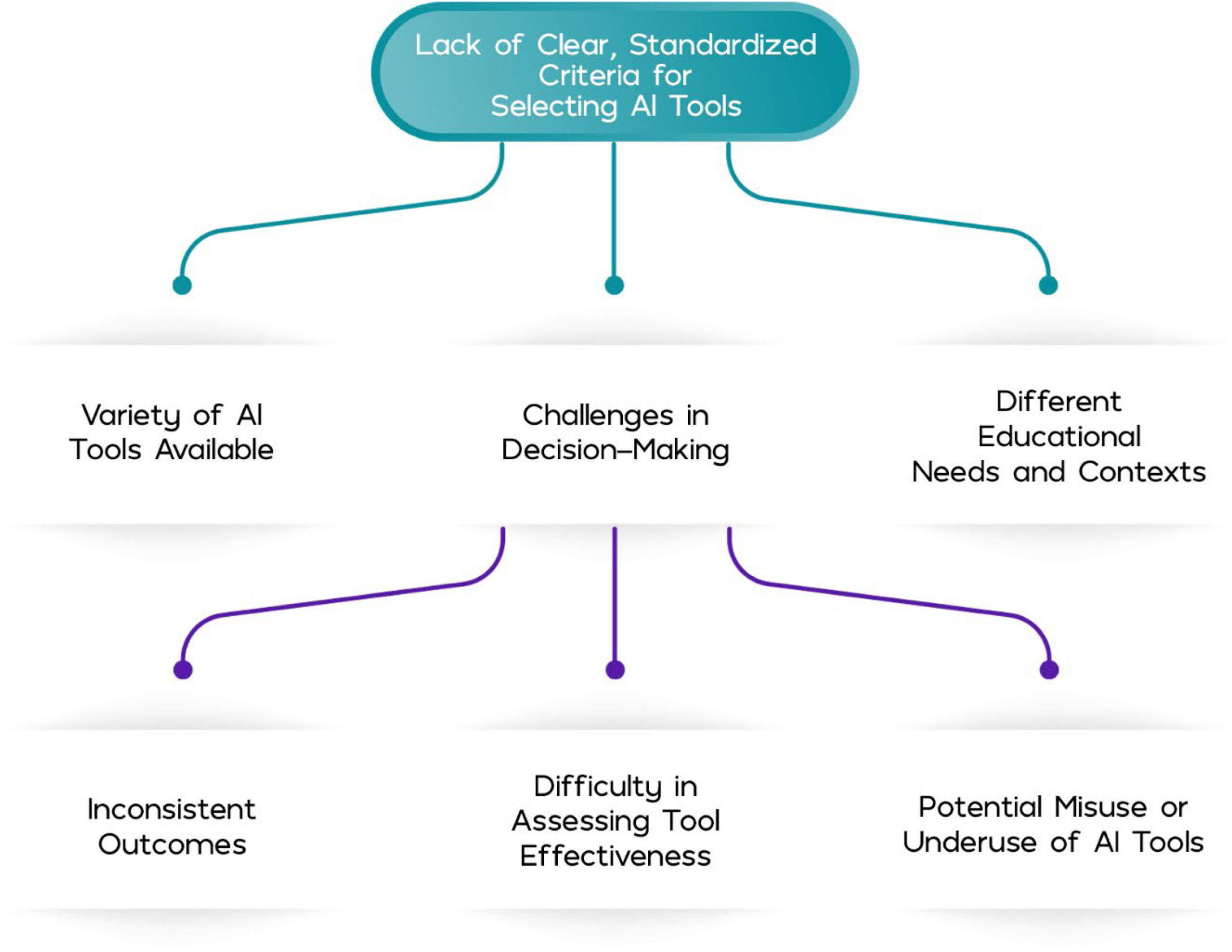
The authors also emphasize ethical and practical requirements, including fairness, transparency, gender bias prevention, educational equity, and the quality of AI-generated content for personalized learning. Overall, the review calls for clear policy frameworks and evaluation standards to ensure AI tools improve learning while reducing bias, opacity, and other risks.

Where are we leading the young generation? Image: Mohamed_hassan, on Pixabay
Taken together, these studies point to the same conclusion from different angles: students are moving toward AI far faster than the institutions meant to guide them. Access is spreading quickly, but access alone guarantees nothing, not learning, not safety, not fairness. What determines the outcome is whether schools and policymakers build the human infrastructure around the technology: teachers equipped to guide its use, assessments that reward thinking rather than outsourcing it and safeguards that protect children’s privacy and development.
The future of AI in education depends on whether institutions design systems that preserve human judgment, critical thinking, equity, and child protection.
What kinds of learners, teachers, and institutions is AI shaping us to become?
Craving more information? Check out these recommended TQR articles:
- Fraudulent Data Influencing Decision-Making: AI, Fake Respondents, and the Future of Public Opinion Research
- Research Highlights Benefits of AI Literacy and Questioning Outputs to Combat Cognitive Offloading
- The Algorithmic Governance Challenge: Inside the Battle Over Social Media Algorithms
Enjoyed this? Help us improve.
Have we made any errors?
Spotted an error or want to contribute your expertise? We’d love to hear from you — reach us at info@thequantumrecord.com. The Quantum Record exists to bring researchers and curious minds together around science and technology that matters.