
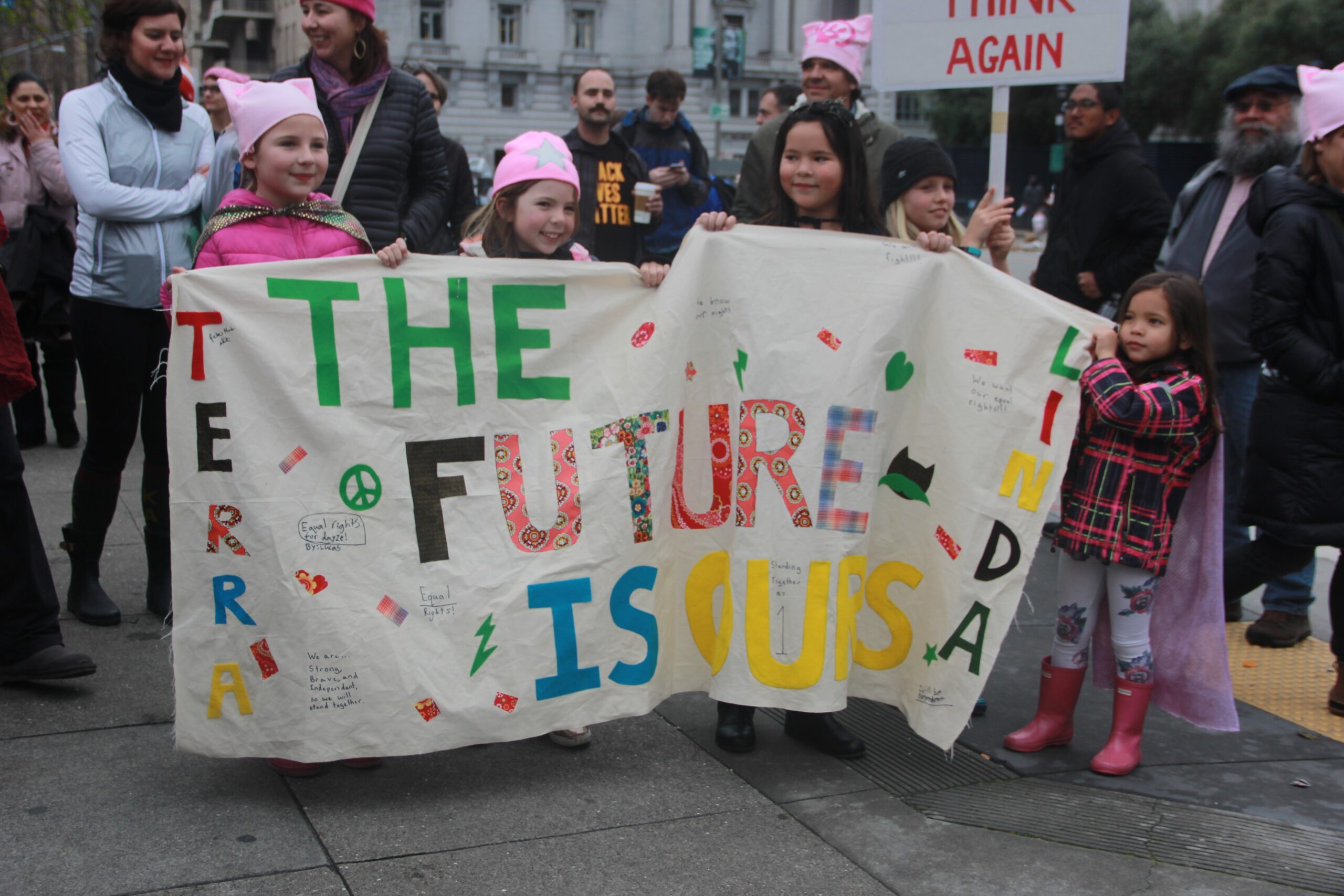
Image by Mary Bettini Blank, on Pixabay.
By Mariana Meneses
Young people across the globe are using technology to address problems in their communities, influence public policy, and expand participation in decisions that shape their futures. In India, Dev Karan combines low-cost sensors with local stewardship to restore village ponds; in Tunisia, Sarra Hannachi uses research and policy advocacy to examine the human-rights implications of AI in security settings; and in Japan, Rena Kawasaki has built digital channels connecting young people with political decision-makers.
Their causes and methods differ, but each shows how technological tools can support practical forms of environmental, social, and civic action.
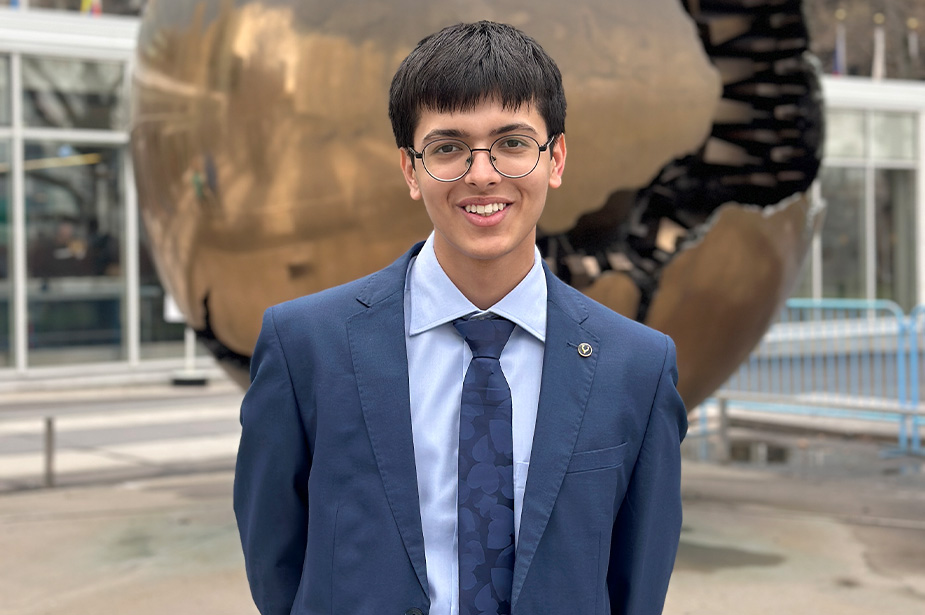
“Used responsibly, technology can help protect our planet in the long run.” — Dev Karan
Dev Karan is an Indian environmental activist and founder of Pondora, a youth-led initiative that restores neglected village ponds through community partnerships, low-cost water-quality monitoring, and long-term stewardship. Raised near farmland in a family where environmental issues were part of everyday life – his mother holds a PhD in environmental studies – Karan developed the idea after seeing a pond near Delhi filled with plastic and turned purple by dye waste.
Recognizing the role ponds play in storing water, limiting floods and soil erosion, supporting biodiversity, and cooling local environments, he built a model designed for communities to sustain themselves. Pondora trains local “Pond Ambassadors,” provides IoT sensors and a mobile app he developed to monitor water quality, and works with village committees to maintain restored ponds after the initial cleanup.
Karan’s work earned him recognition as a UN Young Activists Summit Laureate in 2025 and acknowledgment from India’s Ministry of Youth Affairs and Sports, while also taking him to a United Nations Economic and Social Council (ECOSOC) Youth Forum side event for the Asia-Pacific region and the World Food Prize Foundation’s Global Youth Institute. Karan has since expanded into agriculture, independently developing EchoShield to explore whether ultrasonic signals can help detect crop disease before farmers resort to chemical treatments, and working as a Borlaug-Ruan International Intern at the International Potato Center in Nairobi on agricultural research and food security.
Viewing technology as a “double-edged sword,” Karan designs tools that communities across generations can use without depending on him. He also advises Project Earth, supporting students developing climate solutions, and serves as Research Director for India at Youth Publications & Socioeconomic Forum (YPSF), connecting aspiring young researchers with academic mentors.

“A little leap of faith would be very nice, especially since these are very dark times, with a lot of conflict and violence.” — Sarra Hannachi
Sarra Hannachi is a Tunisian technology researcher and activist who uses her expertise in AI and data-driven research to examine how emerging technologies are deployed in warfare, migration, border security, and other high-stakes contexts across the Middle East and North Africa region. As a Research Fellow at the Canadian think tank Aula, Hannachi studies gaps in AI governance within defense and security institutions and translates her findings into policy recommendations grounded in human rights. An alumna of the Mozilla Foundation’s Tech & Society Fellowship and a member of the Coalition for Independent Technology Research, she also joined the North Africa Internet Governance Forum’s Multi-Advisory Group in 2026, contributing to regional digital-policy discussions.
Hannachi also works to ensure that young people have a meaningful role in shaping technology policy. As a member of the AU-EU Youth Voices Lab’s Youth Advisory Board, she advocates for youth participation beyond token representation. She is also the founder and host of Security Unwired, a podcast exploring how AI and emerging technologies are reshaping warfare, conflict, border security, and humanitarian response.

“My ultimate goal is not only to offer better opportunities to my generation but also to future generations” — Rena Kawasaki. Photo: Olivia Falcigno for Global Citizen
Rena Kawasaki is a Japanese youth activist who co-founded Earth Guardians Japan at age 14 to create more opportunities for young people, particularly young women, to participate in public life. Earth Guardians’ Let’s Talk to a Politician project used recurring Zoom meetings to connect middle and high school students with politicians from different parties, giving young people without voting rights a direct channel to discuss public issues. The initiative reportedly prompted some politicians to reconsider how they engaged with younger constituents and was recognized by Japan’s Ministry of Environment. Kawasaki later helped develop an online citizen-input system adopted by Niihama City, contributed to a QR-code platform for youth participation in municipal decisions, advised the Tokyo government on the long-term sustainability of Tokyo Bay, and became the youngest participant in Euglena Corporation’s “Chief Future Officer” youth advisory program.
In 2022, at the age of 17, Kawasaki won the KidsRights International Children’s Peace Prize, followed by recognition from the Young Activists Summit in 2025. She also co-founded the U18 Summit, a leadership program for young changemakers. She is now studying at Yale University, while continuing to work on digital and civic tools that expand youth participation in decision-making.

A leap of faith? Image: Gerd Altmann, on Pixabay
The work of young people like Karan, Hannachi, and Kawasaki shows that age does not have to be a barrier to contributing to social change. For those who care about a problem in their community or beyond, the first step may be to learn more, connect with others, and begin developing the skills or tools needed to act.
Meaningful change rarely starts at scale; it often begins with someone deciding that an issue is worth pursuing.
Craving more information? Check out these recommended TQR articles:
- Fraudulent Data Influencing Decision-Making: AI, Fake Respondents, and the Future of Public Opinion Research
- Research Highlights Benefits of AI Literacy and Questioning Outputs to Combat Cognitive Offloading
- The Algorithmic Governance Challenge: Inside the Battle Over Social Media Algorithms
Enjoyed this? Help us improve.
Have we made any errors?
Spotted an error or want to contribute your expertise? We’d love to hear from you — reach us at info@thequantumrecord.com. The Quantum Record exists to bring researchers and curious minds together around science and technology that matters.