
To fight climate change, we may need an ecosystem of solutions. Image: Gerd Altmann, on Pixabay.
By Mariana Meneses
The energy transition is often described through breakthroughs like a new source of clean hydrogen, a safer battery, or a faster-growing solar market. But the harder question is what happens after discovery. Can these technologies scale inside a global energy system still shaped by rising demand, fossil-fuel dependence, geopolitical risk, uneven regional pathways, and weak international coordination? The transition is not only a race for better technologies, but a test of whether societies can organize a shared planetary challenge.
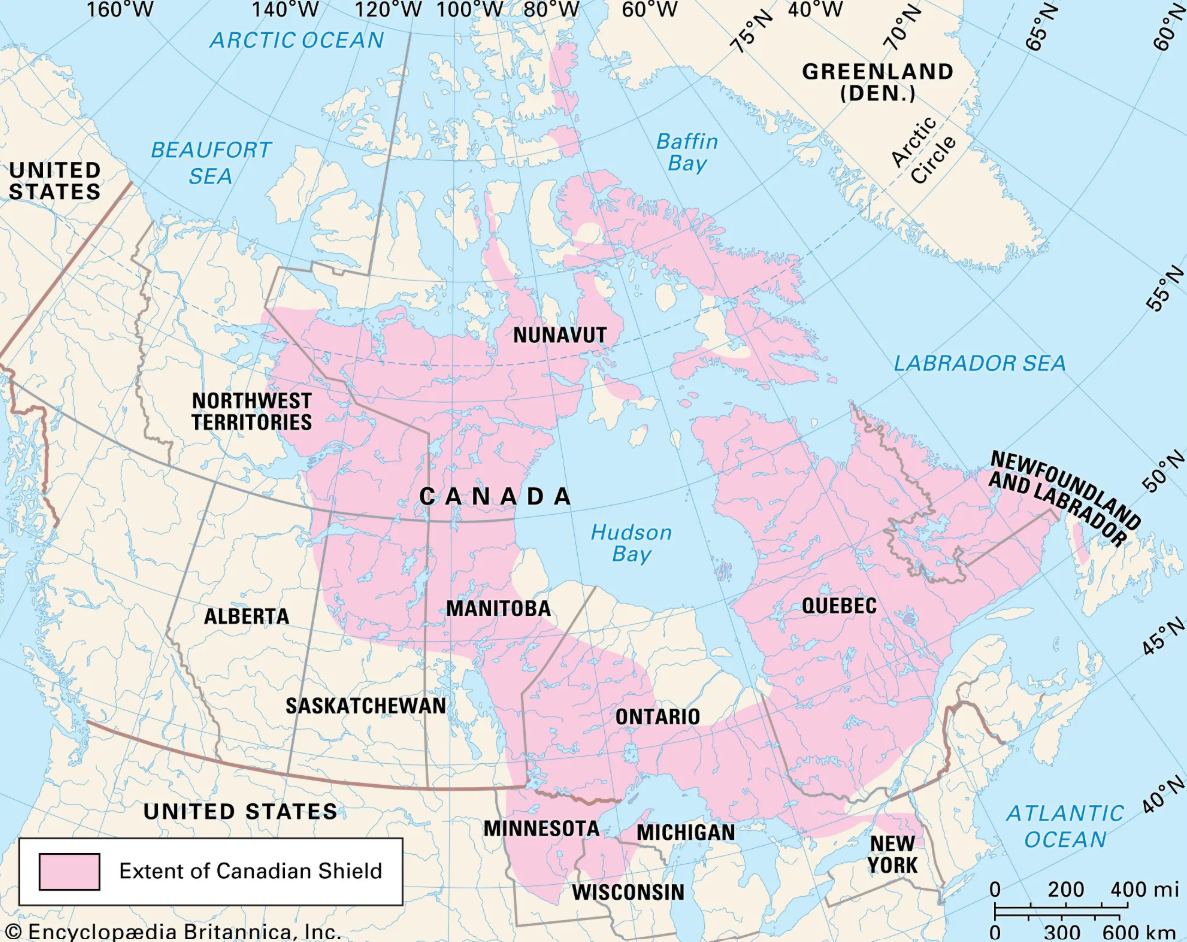
“The Canadian Shield constitutes the largest mass of exposed Precambrian rock on the face of Earth”. Britannica
In May 2026, Science Daily reported that scientists in Canada have found evidence that ancient rocks beneath the Canadian Shield are naturally producing and releasing hydrogen gas, a potential clean energy source known as “white hydrogen.” Researchers from the University of Toronto and the University of Ottawa studied boreholes (i.e., deep, narrow wells drilled to reach underground sources) in an active mine near Timmins, Ontario, where hydrogen was found to flow continuously for years. According to the researchers, this mine could generate around 4.7 million kWh of energy per year, enough to meet the annual energy needs of more than 400 homes.
The researchers, Barbara Sherwood Lollar and Oliver Warr, describe the study as the first long-term decadal record of hydrogen discharge rates from a Precambrian continental setting, which matters because previous estimates of natural hydrogen’s energy potential were largely based on theoretical models rather than sustained measurements from real sites. They argue that the data suggest hydrogen production and storage in ancient continental rocks may be sufficient to support economically useful local discharge rates, especially for industries and communities located near hydrogen-producing formations.
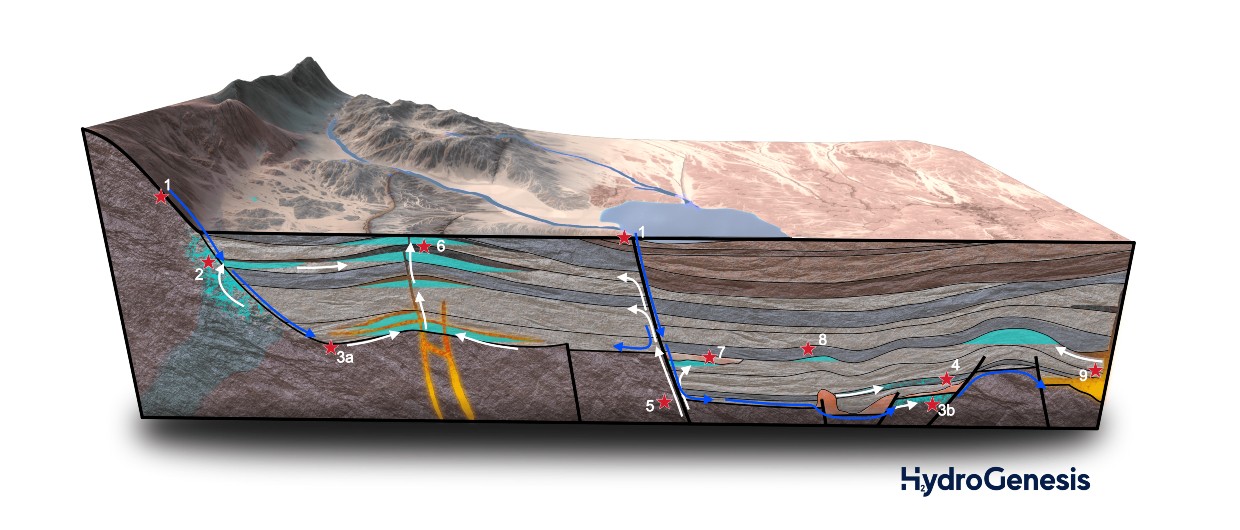
Hydrogen generation in Intracratonic basins. GeoExPro
Natural hydrogen points to one possible way of expanding low-carbon energy supply. But finding new energy sources is only part of the transition challenge, and cleaner energy system also depends on better energy storage: as electricity plays a larger role in daily life, batteries must become safer, denser, more durable, and easier to scale.
Storing energy: the promise of solid-state batteries
In a newly published article entitled “2026 Roadmap on Next-Generation Solid Electrolytes for Battery Applications,” Florian Strauss, from the Karlsruhe Institute of Technology, in Germany, and an international group of researchers argue that the future of advanced battery technology will depend heavily on progress in solid electrolytes, materials capable of replacing the flammable liquid electrolytes used in conventional lithium-ion batteries.
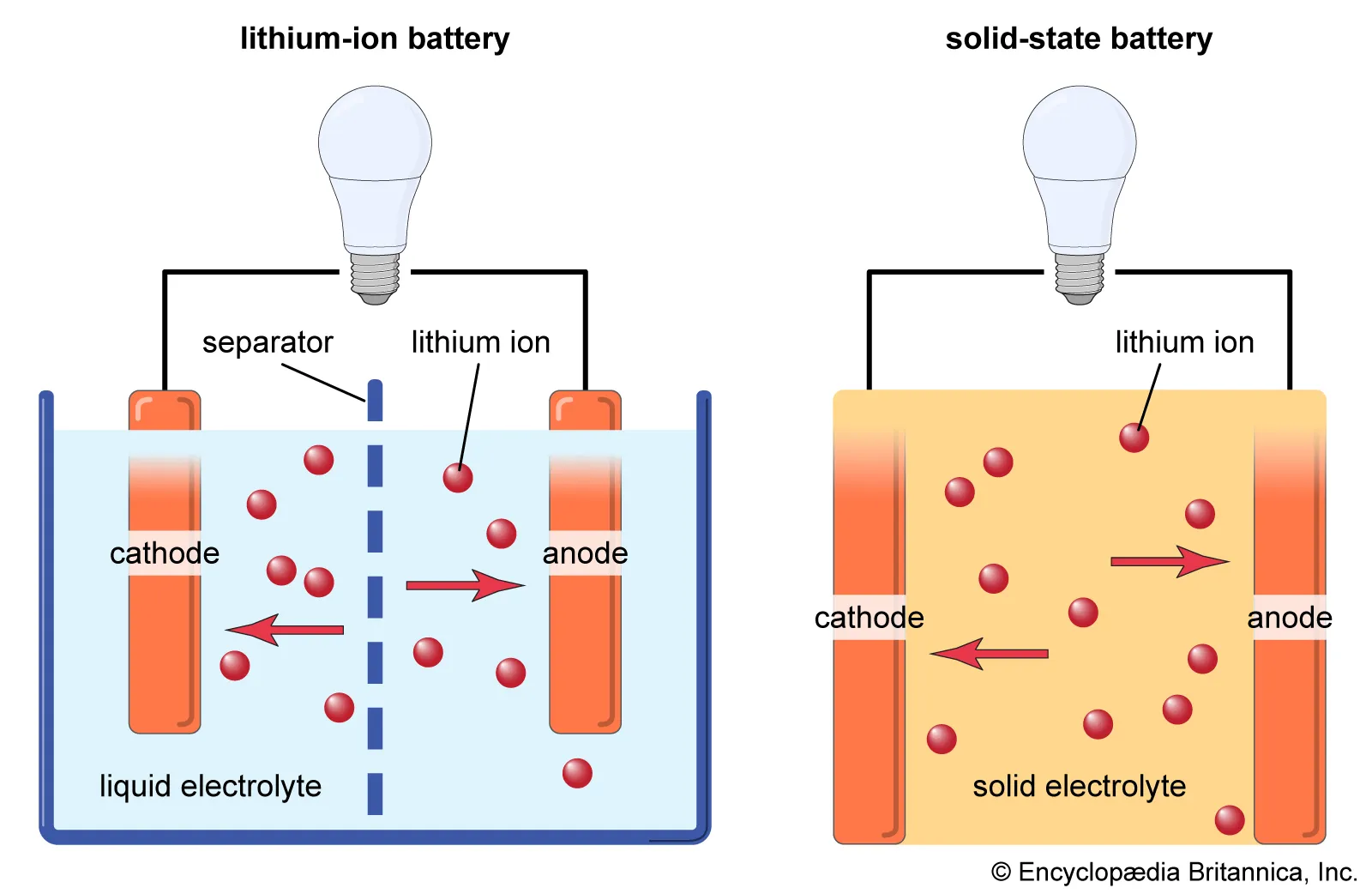
“While lithium-ion batteries use liquid or gel electrolytes to transport ions, solid-state batteries use a solid electrolyte that does not require a separator.” Encyclopedia Britannica, Inc./Steven N. Kapusta
Strauss and co-authors note that solid-state batteries promise major advantages, including improved safety, higher energy density, and new possibilities for recyclability. Although substantial scientific and engineering barriers still prevent these systems from reaching large-scale commercial adoption, the researchers believe that enabling practical solid-state batteries will help support a decarbonized global energy system.
However, although natural hydrogen and solid-state batteries help the energy transition at the level of discovery and materials design, one broader question is whether such developments can scale inside an energy system still shaped by rising demand, fossil-fuel dependence, infrastructure limits, and geopolitical risk. To address that larger system, the focus must move from individual technologies to global data on energy supply, emissions, trade, and regional transition pathways.
According to the 2025 “Statistical Review of World Energy”, the year was marked by the continuing surge in energy demand, with low carbon electricity reaching a historic milestone, although transition pathways diverge sharply across regions – as the report stresses, “all against a backdrop of rising geopolitical risk.”
The Energy Institute (EI) is a UK-based chartered professional membership body and registered charity for energy sector professionals. Created in 2003, its stated aims are to support the energy transition, inform decision-making, and promote safer and more efficient industry practices. In its public materials, the EI identifies its main sources of funding as individual and company membership fees, publications, and conference and training income.
The Statistical Review shows that, in 2025, North America was the only region in the world where the carbon intensity of energy increased, meaning that each unit of energy supplied was associated with more CO₂ emissions than in the previous year. The US was central to this shift, and, in absolute terms, the increase in US emissions was four times greater than China’s.
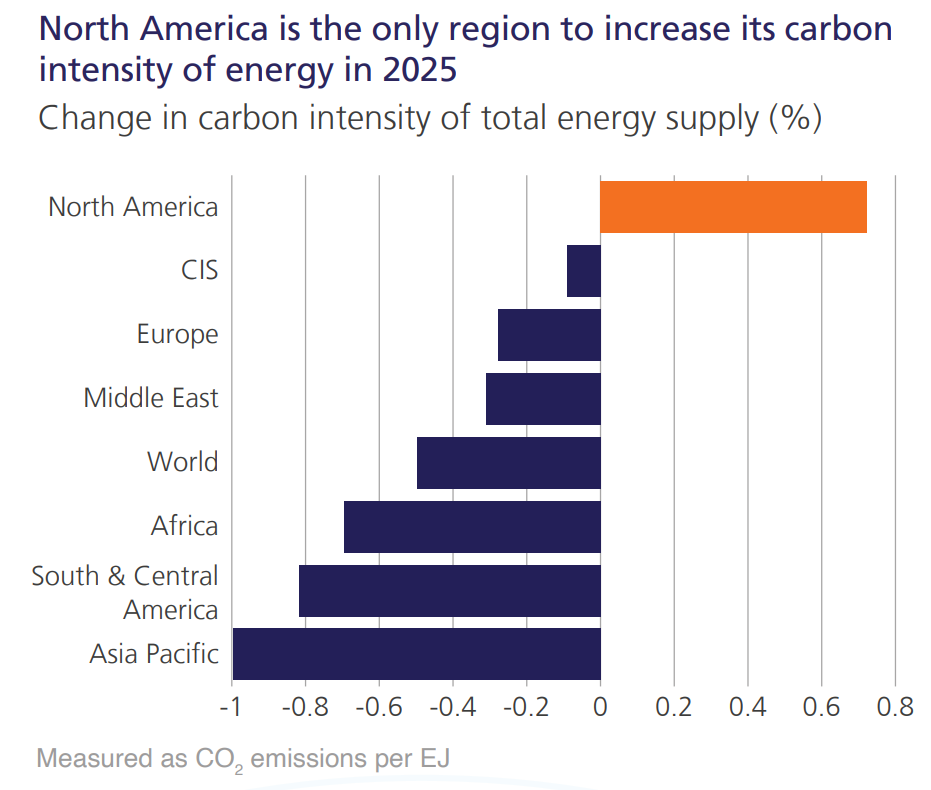
“In absolute terms, the increase in US emissions was four times greater than that of China”. Energy Institute’s “Statistical Review of World Energy”
Moreover, the US established itself as an even bigger exporter of oil and gas in 2025. According to the review, the US remained the world’s largest oil producer, accounting for around 21% of global output, a level comparable to the combined production of Saudi Arabia and Russia.
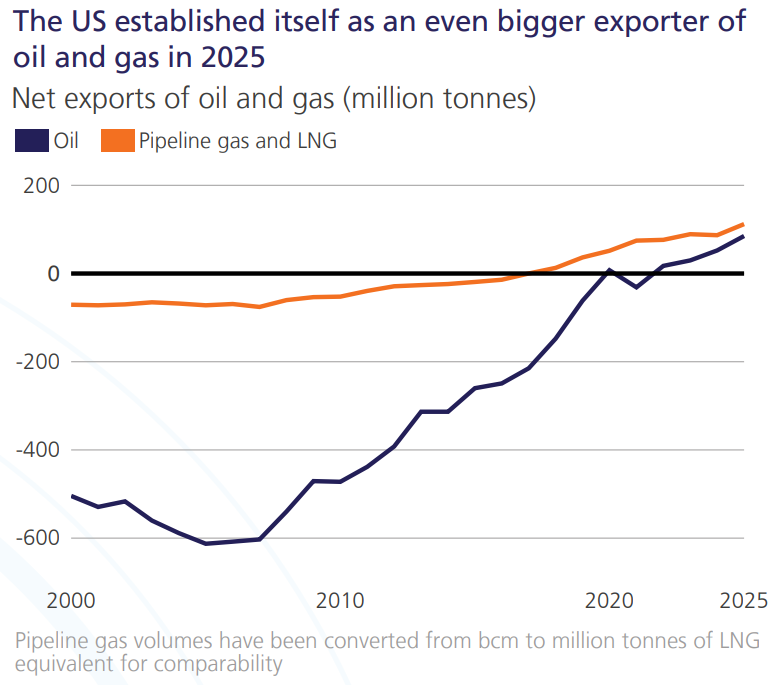
“The US position as a net energy exporter is underpinned by strong oil and gas production. In 2025, the country remained the world’s largest oil producer, accounting for around 21% of global output, comparable to the combined production of Saudi Arabia and Russia.” Energy Institute’s “Statistical Review of World Energy”
Many of the world’s largest economies remain highly dependent on imported fossil fuels, with about 22% of global energy consumption met through net imports in 2023. The review shows that this dependence varies by region.
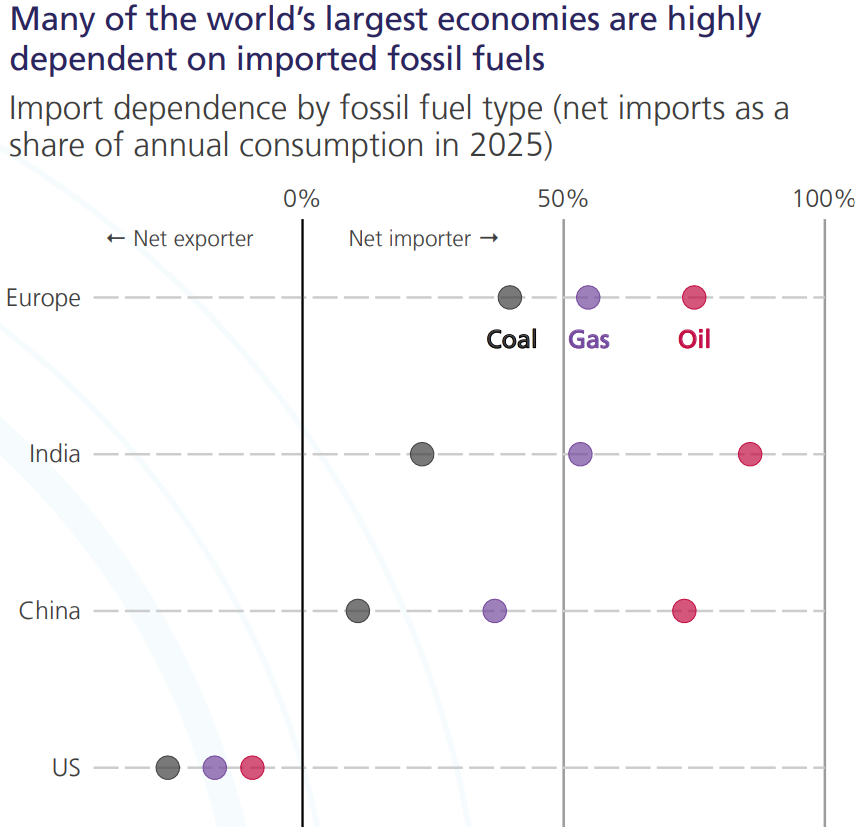
“Globally, about 22% of energy consumption was met through net imports, according to World Bank data in 2023. Europe has reduced reliance on Russian gas but remains exposed to supply risks from alternative exporters. The US has largely reversed its dependence through domestic production growth. China has strengthened domestic supply of gas and coal but continues to rely heavily on imports to meet oil and gas supply needs.” Energy Institute’s “Statistical Review of World Energy”
China has electrified faster than Europe and the US, helped by rapid EV adoption. In 2025, more than a quarter of new cars sold globally were electric, and China accounted for 60% of those sales.
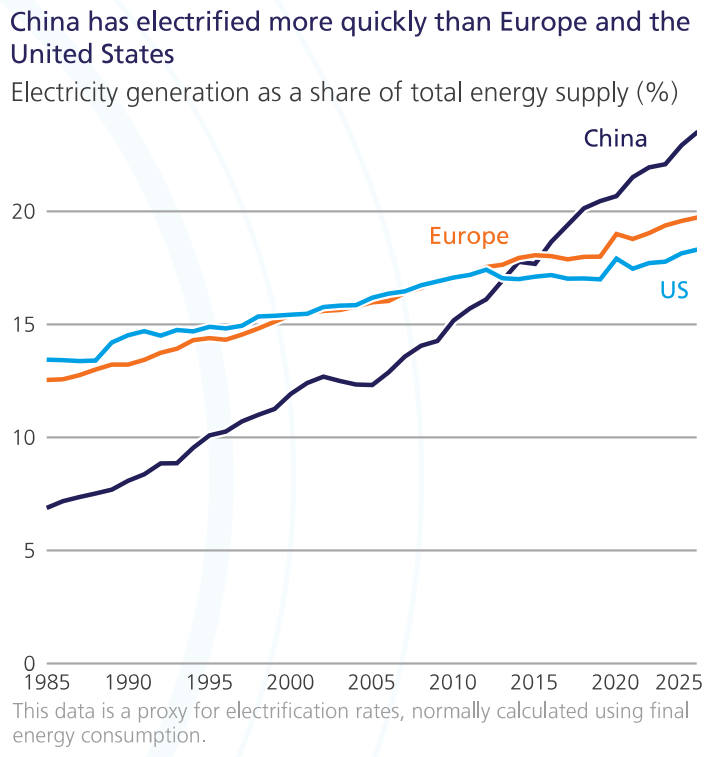
“A growing contributor to the growth in electrification is the transport sector. Internal combustion engine vehicle sales have been falling since 2017 and more than a quarter of new cars sold globally in 2025 were electric. In terms of absolute size, China remains the largest electric vehicle market, accounting for 60% of electric vehicles sold globally in 2025.” Energy Institute’s “Statistical Review of World Energy”
The review notes that, over the last 60 years, the sources of energy growth have changed substantially, with renewables becoming a larger driver of new supply in 2025 than coal, oil, or gas.
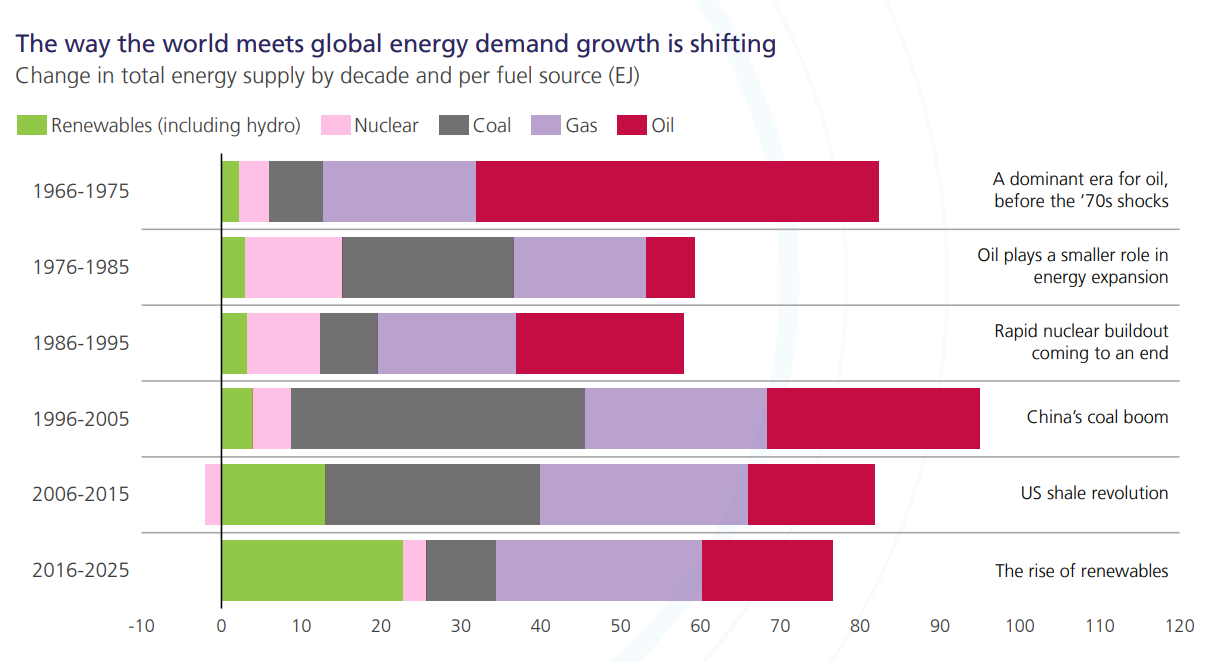
“In the last 60 years, the way in which the world meets its growing demand for energy has changed substantially.” Energy Institute’s “Statistical Review of World Energy”
A regional breakdown of the 2025 global energy system shows relevant distinctions, shaped by resource availability, geopolitics, infrastructure, and stages of economic development.
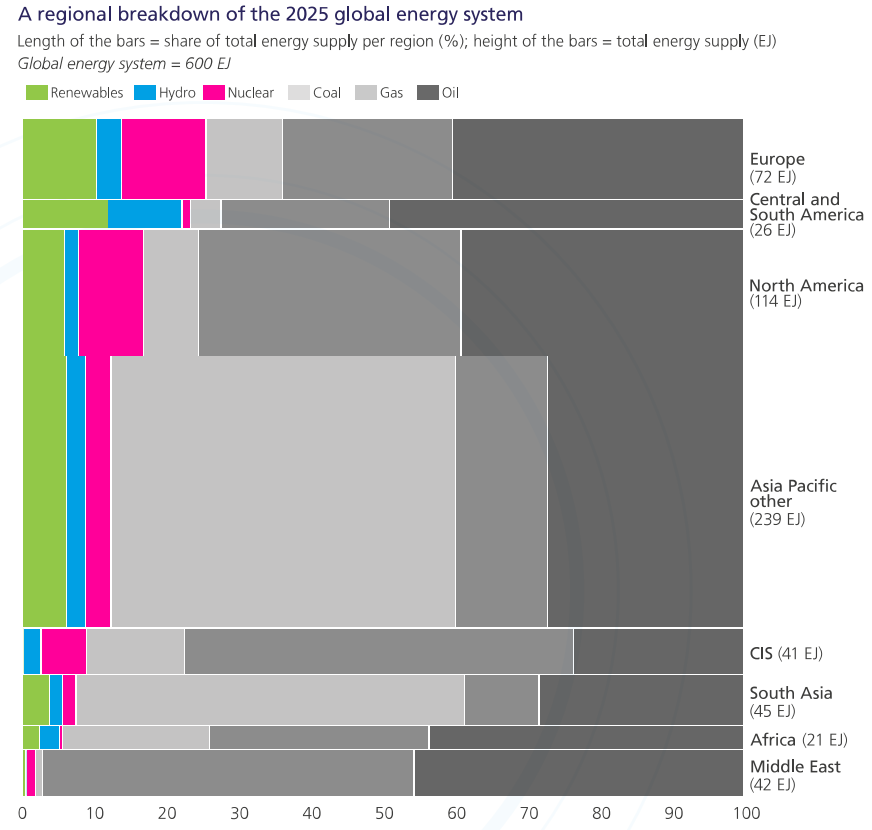
“Overall, the 2025 data point to a fragmented global energy landscape, with increasingly divergent regional transition pathways driven by resource availability, geopolitics and varying stages of development.” Energy Institute’s “Statistical Review of World Energy”
In the EU’s energy system, renewables are carving out a larger role, partly as a response to the energy-security shock that followed Russia’s invasion of Ukraine in 2022.
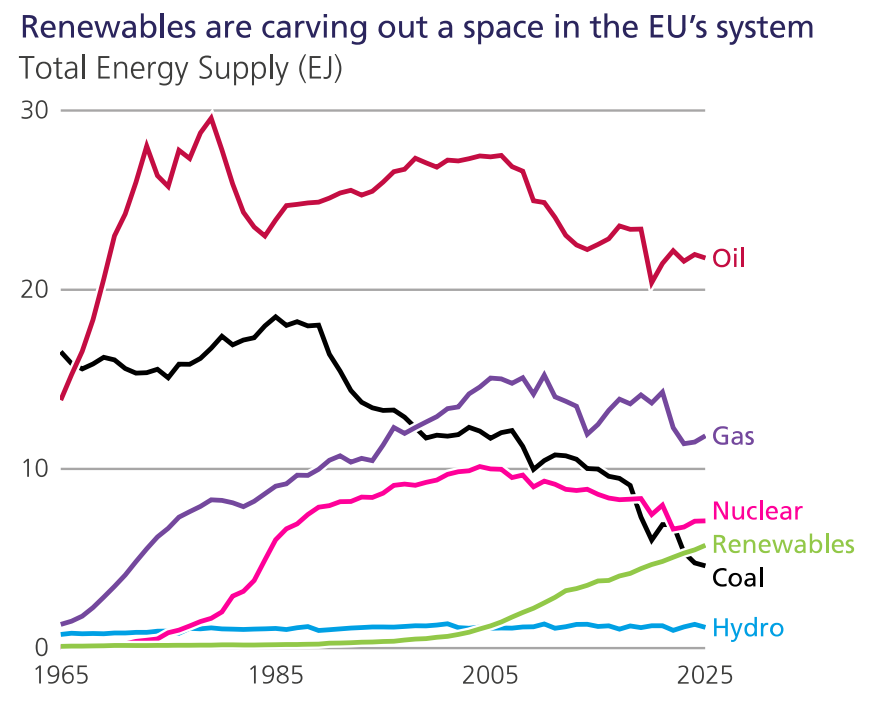
“The EU energy system of 2025 was fundamentally different from that of 2022, the year of the full-scale Russian invasion of Ukraine. Since then, reduced reliance on Russian fossil fuels and a rapid expansion of renewable electricity have reshaped the overall energy mix.” Energy Institute’s “Statistical Review of World Energy”
China’s rapid renewable-energy expansion is matched by a major buildout in battery storage. As wind and solar grow, battery systems help manage their intermittency by storing excess electricity and releasing it when generation falls, making large-scale renewable integration more feasible.
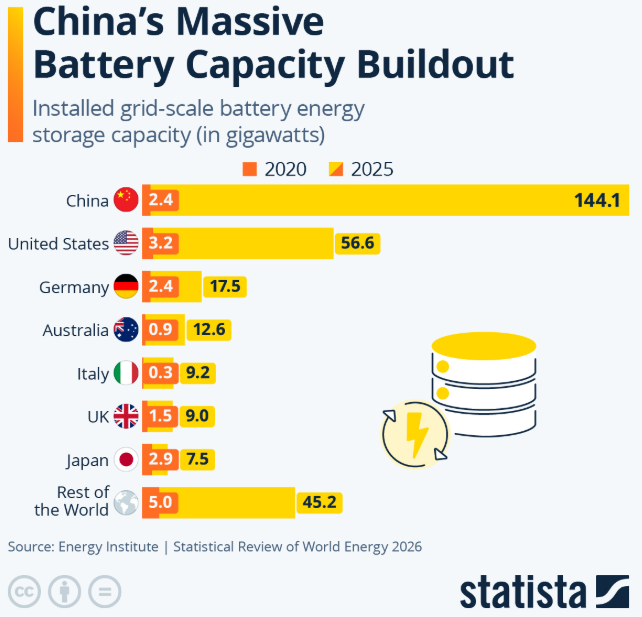
“China’s lead in renewable energy is matched by its dominance in battery storage.” Statista
According to Statista, China has cemented its position as the global leader in renewable energy, with installed wind and solar capacity far exceeding that of any other country or region.
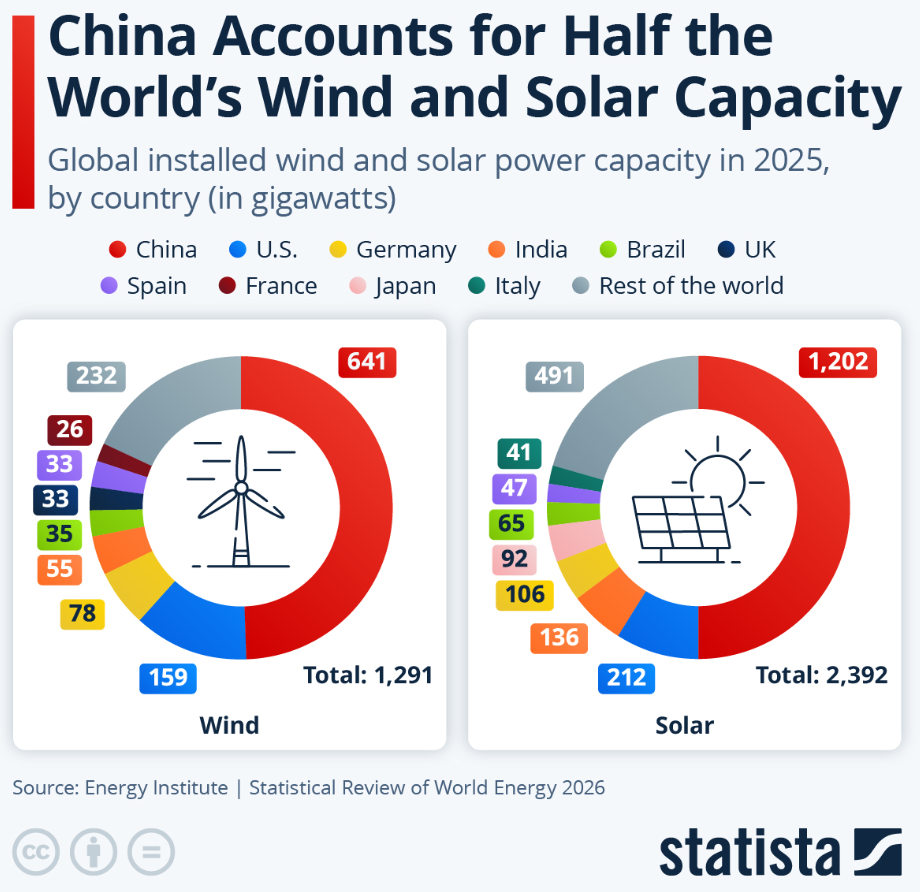
“In 2025 alone, China installed 120 gigawatts of wind power capacity – more than the total installed capacity of any country except the United States. The gap is even more striking in solar power, where China added 315 gigawatts to the grid last year, which is equivalent to roughly one and a half times the United States’ entire installed solar capacity.” Wik Statista
With this context in mind, one can argue that global environmental governance has expanded but remains inadequate.
The article entitled “Toward Transformative Global Environmental Governance: Nested Systems, Planetary Politics, and the Case for a World Federation”, by Manuel Galiñanes, from the Academy of Medical and Health Sciences of Catalonia and the Balearic Islands, andLeo Klinkers, from the Institute for State and Administrative Law at the State University Utrecht, in The Netherlands, argues that global environmental governance has expanded substantially through treaties, institutions, scientific bodies, and multilateral agreements, but remains structurally inadequate for planetary crises such as climate change, biodiversity loss, and ecological instability.
Galiñanes and Klinkers argue that the current system is fragmented, weakly coordinated, largely voluntary, and constrained by state sovereignty, meaning that even ambitious agreements often lack the authority, enforcement mechanisms, and democratic accountability needed to produce systemic change. They review the evolution from treaty-based environmental cooperation to today’s more complex and polycentric governance landscape, noting that this expansion has enabled participation and innovation but has also produced overlapping mandates, coordination gaps, compliance deficits, and legitimacy problems.
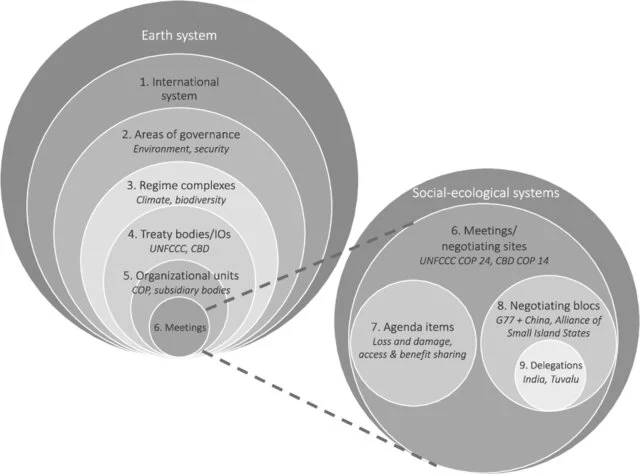
“Nested Systems in Global Governance and International Environmental Negotiations Note: text in italics shows examples of systems at each level.” Jonathan Pickering (2019)
The authors examine Nested Systemic Governance as a pragmatic reform model that could reduce fragmentation through issue clusters, regional hubs, scientific assessment offices, and participatory forums. To understand what nested systems in global governance are, we can refer to Jonathan Pickering (2019)’s explanation of how the international system has areas of governance (e.g., the environment, security), creating then regimes (e.g. climate, biodiversity), which lead to the creation of Treaty bodies (e.g. UNFCCC), and then their organizational units (e.g. COP), which organize meetings comprising the negotiation sites (e.g. UNFCCC COP 24), where agenda items are discussed and negotiating blocs are formed.
Galiñanes and Klinkers, however, argue that this approach remains insufficient because it still depends on voluntary cooperation among sovereign states.
As a longer-term institutional horizon, they propose a gradual evolution toward a constitutionally grounded World Federation, not as an immediate world state, but as a framework that could combine multilevel participation, democratic legitimacy, binding authority, judicial enforcement, and subsidiarity. (Subsidiarity is the principle that decisions should be made at the most local level capable of addressing them effectively, while higher levels of authority handle issues that exceed local capacities or require broader coordination). The authors argue that, if ecological crises continue to outpace voluntary coordination, deeper constitutional integration may arise as an adaptive institutional response to planetary interdependence.
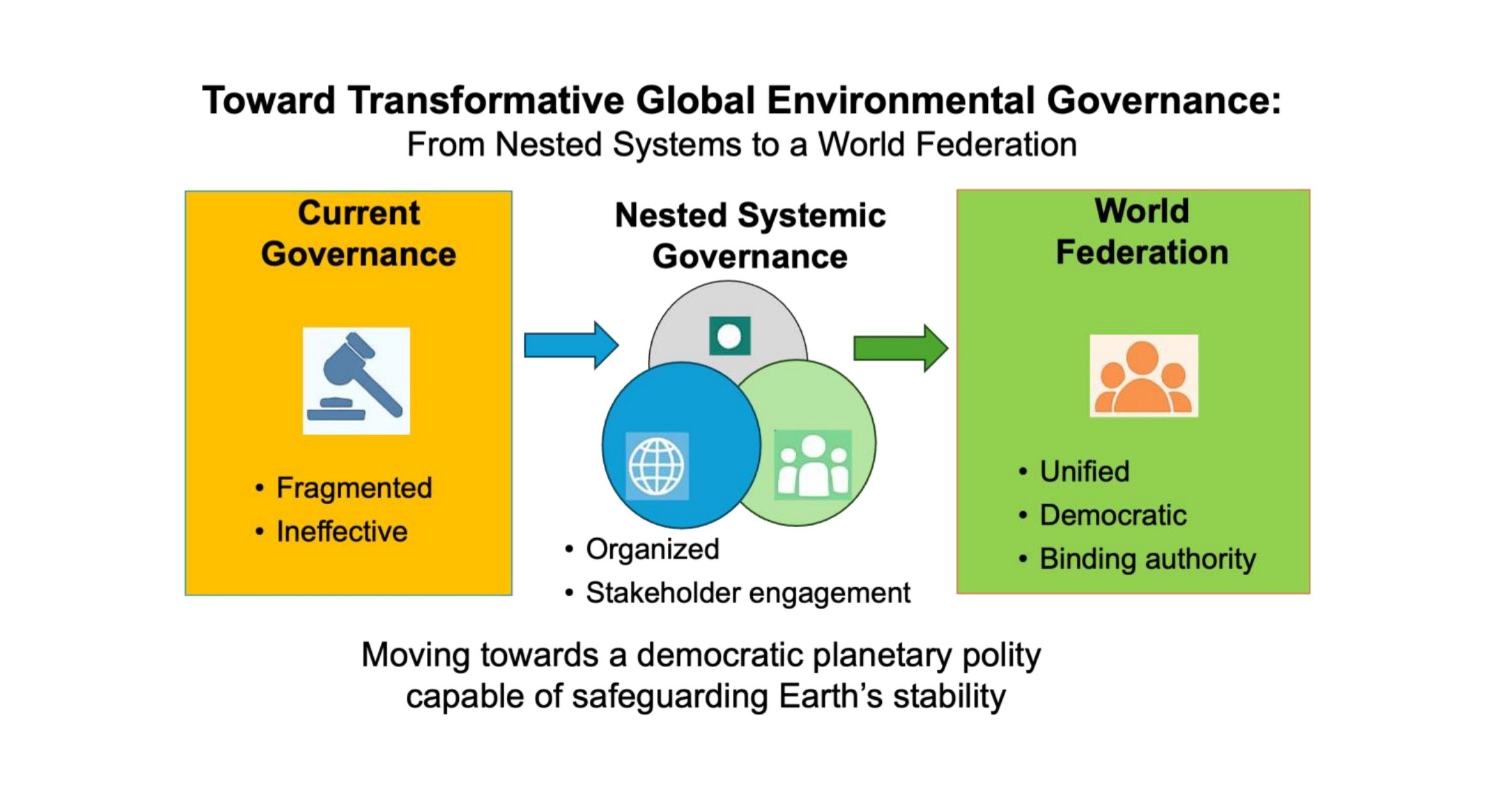
The article conceptualizes an evolution toward a federative framework combining multilevel participation with enforceable authority and democratic legitimacy. Galiñanes and Klinkers (2026)
Climate change, biodiversity loss, and ecological instability unfold over decades, yet decisions are still largely shaped by present-day governments, interests, and bargaining.
The article entitled “Filling the descriptive representation gap? Youth Platforms in Global Environmental Governance”, by Amandine Orsini and Yi Hyun Kang from the UCLouvain Saint-Louis, in Bruxelles, is concerned with this issue from the youth perspective, as they are expected to live with, and eventually implement, environmental decisions made in forums where they remain underrepresented.
The authors examine whether official youth platforms in global environmental governance help increase young people’s representation in international decision-making. Focusing on four platforms – UN-MGCY (United Nations Major Group for Children and Youth),YOUNGO (Youth Climate Movement), GYBN (Global Youth Biodiversity Network), and CYMG (Children and Youth Major Group to UNEP) – the authors show that these bodies were often created through top-down support from UN institutions and governments but also depended on youth self-organization and learning across platforms.
They find that youth platforms are fragile because they rely heavily on volunteer labor, limited funding, online coordination, and participants who are often privileged enough to attend international meetings. Still, these platforms can broaden youth participation through horizontal structures, consultations, working groups, and regional networks, allowing young people to formulate collective positions and sometimes represent wider civil society concerns.
This weak international coordination also means that economic growth, social development, governance standards, and climate policy may not be aligned in ways that significantly reduce CO₂ emissions.
The study entitled “Global environmental sustainability: the role of economic, social, governance (ECON-SG) factors, climate policy uncertainty (EPU) and carbon emissions” examines how economic, social, governance, and climate-policy uncertainty factors relate to global CO₂ emissions from 2001 to 2020. The study finds that economic growth and industrial production tend to increase CO₂ emissions when they remain largely powered by fossil fuels, suggesting a pattern of unsustainable growth. By contrast, social factors appear to help reduce emissions: higher social awareness, education levels, and life expectancy may strengthen environmental awareness and lower CO₂ output. The authors argue that economic and social policies need to be better aligned, and they interpret the insignificant effect of climate-policy uncertainty on emissions as a possible sign that global climate policies remain too weakly coordinated across countries to meaningfully shape emissions outcomes.

In terms of carbon footprint, one serving of beef (100g) is equivalent to 78.8Km of driving (CO2Everything). Image: Gerd Altmann, on Pixabay
Natural hydrogen, solid-state batteries, electric vehicles, and battery storage all point to real possibilities for expanding low-carbon energy.
Yet the global data shows that these advances are unfolding inside an energy system where fossil fuels remain deeply embedded in production and trade; emissions are still difficult to reduce, and transition pathways differ sharply across regions. Thus, clearly, the challenge cannot be solved by scientific discoveries alone. It also depends on infrastructure, social conditions, economic incentives, political representation, and international participation. Cleaner technologies exist, but will global institutions, national policies, and societies organize them quickly and appropriately enough to reduce emissions at the scale required?
Craving more information? Check out these recommended TQR articles:
- Fraudulent Data Influencing Decision-Making: AI, Fake Respondents, and the Future of Public Opinion Research
- Research Highlights Benefits of AI Literacy and Questioning Outputs to Combat Cognitive Offloading
- The Algorithmic Governance Challenge: Inside the Battle Over Social Media Algorithms
Enjoyed this? Help us improve.
Have we made any errors?
Spotted an error or want to contribute your expertise? We’d love to hear from you — reach us at info@thequantumrecord.com. The Quantum Record exists to bring researchers and curious minds together around science and technology that matters.