
Image: SETI Institute
By Mariana Meneses
For decades, scientists have searched for evidence that humanity is not alone in the universe. Advances in astronomy, artificial intelligence, and the discovery of thousands of exoplanets have transformed that search, expanding it beyond hunting for alien radio signals to include a wide range of potential technological signatures. Still, no confirmed evidence of extraterrestrial intelligence has ever been found. As researchers investigate mysterious signals, unexplained aerial phenomena (UAPs), and the possibility that alien transmissions may be distorted before reaching Earth, one challenge remains constant: distinguishing a genuine sign of another civilization from the vast background noise of the cosmos.
In 2024, a TQR article on the search for extraterrestrial intelligence examined how scientists are investigating the possibility of alien life through increasingly rigorous methods, from NASA’s analysis of UAPs and radio-signal searchesby the Search for Extraterrestrial Intelligence (SETI) Institute, to the Harvard University-based Galileo Project, which studies interstellar objects and potential technological signatures. It also addressed ethical questions surrounding contact with extraterrestrial life and space exploration, arguing that the search for intelligent life requires both scientific skepticism and openness to discoveries that could fundamentally transform humanity’s understanding of the universe.
This May, the search for extraterrestrial life returned to the headlines with the release of previously classified UAP files by the U.S. government. Reporting for The Guardian, Richard Luscombe described an initial batch of 162 records containing military videos, FBI interviews, NASA documents, and decades of eyewitness accounts, including a 1969 Apollo 11 debrief in which astronaut Buzz Aldrin reported seeing a “sizeable” object near the Moon. Additional records included footage of unusual objects over the East China Sea and the Middle East, as well as reports from pilots and military personnel.
According to a BBC report by Sakshi Venkatraman and Rebecka Pieder, the broader archive also contains astronaut transcripts describing unexplained flashes of light and particles observed during Apollo-era missions, civilian reports of hovering metallic objects and luminous phenomena, and military footage from Iraq, Syria, and the UAE that remains unresolved.
However, neither release provided evidence of extraterrestrial origins. Instead, the documents largely consist of ambiguous observations and unexplained incidents, despite previous Pentagon investigations concluding that many sightings likely stem from conventional causes such as weather phenomena, balloons, birds, or satellites, and finding no evidence that the U.S. government possesses alien technology or non-human beings.
Shortly after the first disclosure, a second batch added 50 files to the archive, including military footage of unidentified objects flying in formation over the Persian Gulf, observations near Iran, and a fast-moving object recorded over Syria. While the new material expanded the catalogue of unresolved cases, the Pentagon’s All-domain Anomaly Resolution Office reiterated that it has found no evidence linking any reported phenomenon to extraterrestrial activity.
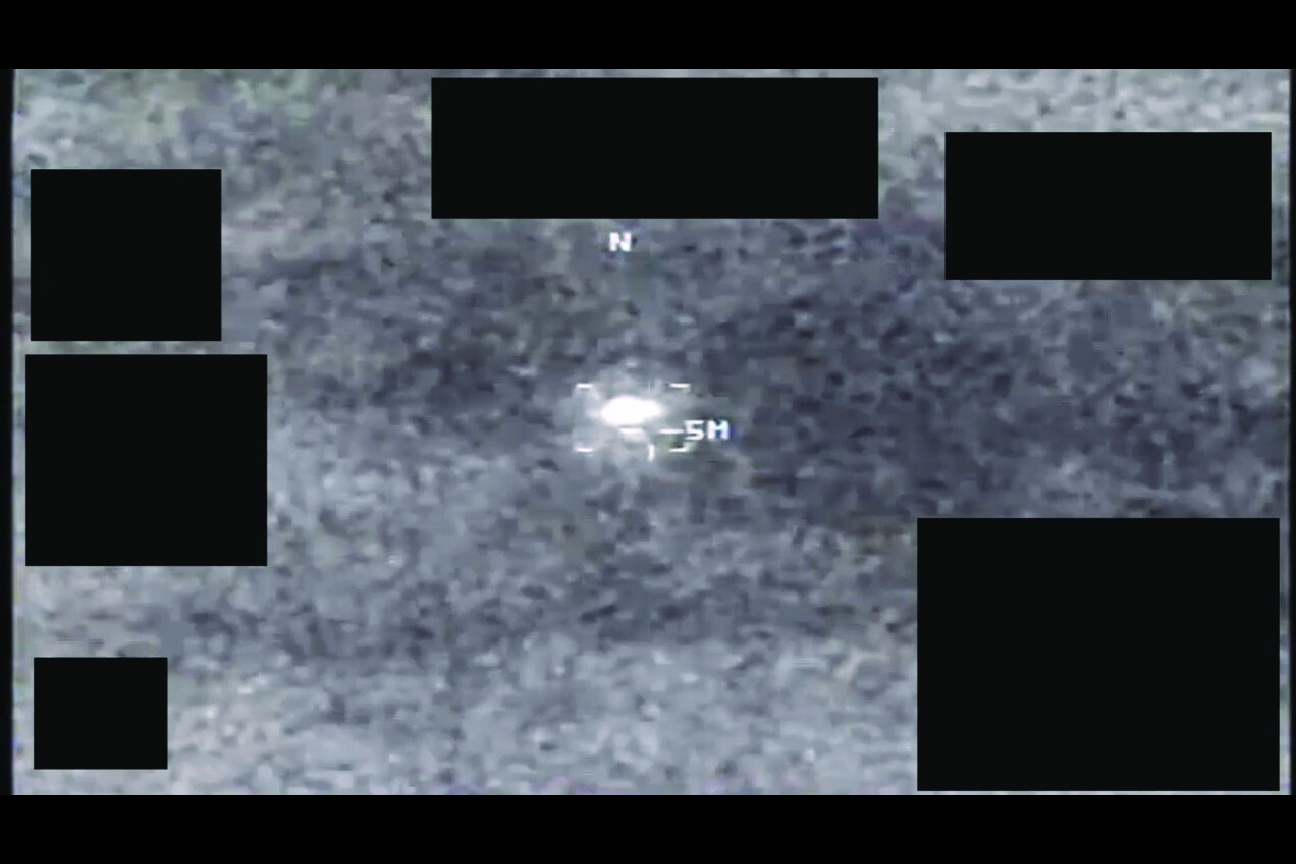
“Imagery likely derived from an infrared sensor aboard a U.S. military platform operating within the United States Central Command area of responsibility in 2021.” Image: U.S. Department of Defense
Yet unresolved cases continue to fuel debate. While Pentagon investigations have found no evidence of extraterrestrial technology, retired U.S. Navy Rear Admiral Tim Gallaudet argues that a small number of UAP incidents remain difficult to explain using current scientific or technological knowledge. Citing cases such as the 2004 “Tic-Tac” encounter and the2015 “Go Fast” video, he points to reports of objects apparently moving between air and water at high speeds without visible propulsion. Although Gallaudet does not present evidence of extraterrestrial origins, he contends that the persistence of such anomalies warrants further investigation and may represent a national security concern. His argument reflects a broader debate over how governments and scientists should evaluate unexplained aerial and maritime phenomena in the absence of definitive evidence.
These debates highlight a fundamental challenge: an unexplained object is not the same as evidence of another civilization. Unlike eyewitness accounts or ambiguous observations, SETI seeks signals that can be measured, tested, and compared against natural explanations, turning the search for extraterrestrial intelligence into a scientific problem.
According to space journalist Matthew Williams, writing for Universe Today, recent developments coming from a non-profit research organization located in California’s Silicon Valley have challenged many assumptions behind the famous “Fermi Paradox”. The Fermi Paradox captures one of the central mysteries behind the search for extraterrestrial intelligence: if advanced civilizations are common and the Milky Way is billions of years old, why have we found no clear evidence of their existence? SETI explains that technological civilizations could be difficult to detect, uninterested in expansion, or communicating in ways humans have not yet learned to recognize.
Williams notes that advances in astronomy, particularly the discovery of thousands of exoplanets, have revitalized the search for extraterrestrial life. SETI efforts now include major projects such as Breakthrough Listen, China’s FAST telescope, and the CHIME observatory, while expanding beyond traditional radio searches to look for “technosignatures,” or signs of technology, including laser signals, industrial pollutants, artificial illumination, megastructures, and even gravitational-wave or neutrino communications.
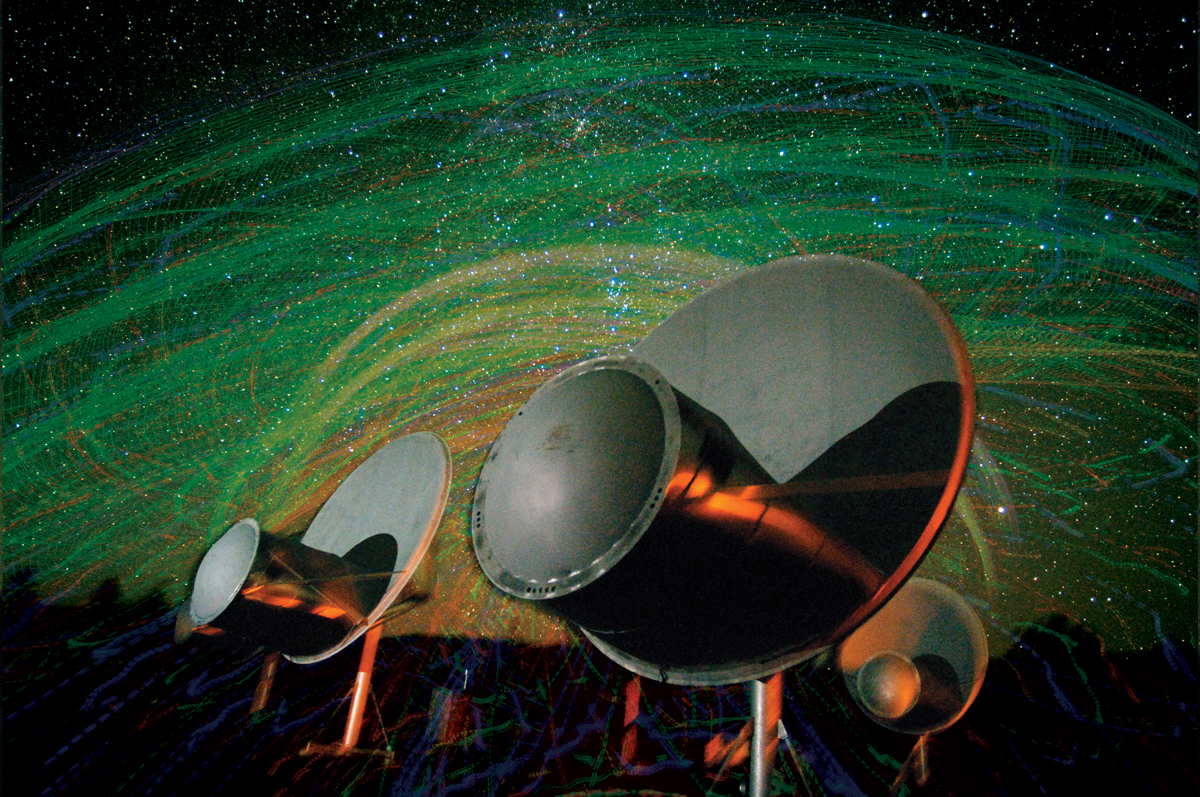
According to a June 2026 SETI Institute press release reporting on observations conducted with the Allen Telescope Array at the Hat Creek Radio Observatory in California, researchers used the Allen Telescope Array (ATA) in Northern California to search the interstellar object 3I/ATLAS for possible signs of extraterrestrial technology. The object, discovered in July 2025, is only the third confirmed visitor from another star system ever observed passing through our Solar System, after 1I/‘Oumuamua and 2I/Borisov. Although astronomical observations indicate that 3I/ATLAS is a natural comet-like object, its interstellar origin makes it a rare opportunity both to study material from another planetary system and to test whether any detectable technological signals might be present.
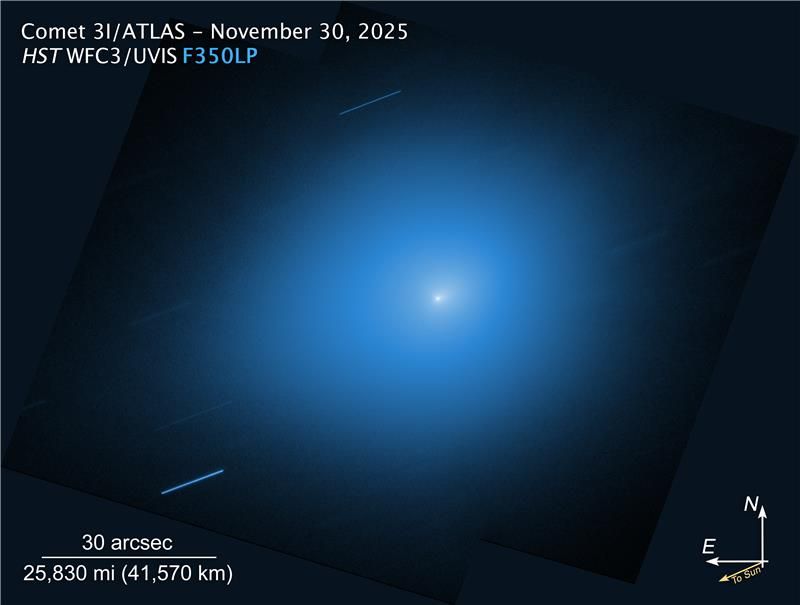
Hubble Telescope image of 3I/ATLAS. Image: NASA
The team observed 3I/ATLAS for more than seven hours, scanning radio frequencies between 1 and 9 gigahertz for narrowband signals. Such signals are considered promising technosignatures because they are not known to be produced by natural astrophysical processes. The observations initially detected nearly 74 million candidate signals. However, after removing human-generated interference and filtering for signals consistent with the object’s motion through space, only about 200 candidates remained. Further analysis showed that all of these originated from terrestrial technology or Earth-orbiting satellites rather than from 3I/ATLAS itself.

Dr. Sofia Sheikh, Technosignature Research Scientist. Image: SETI.
While no evidence of extraterrestrial technology was found, the observations established new limits on what could have been present. The study ruled out radio transmissions stronger than roughly 10 to 110 watts across the observed frequencies, comparable to the power consumption of a household appliance, and demonstrated the sensitivity of current technosignature searches. The researchers also note that narrowband radio signals are particularly valuable targets because they are not known to arise from natural astrophysical processes.
According to lead author Sofia Sheikh, studying interstellar objects is important partly because humanity’s own Voyager spacecraft will eventually become artificial interstellar artifacts in other stellar systems, making it essential to understand what natural interstellar visitors look like in order to recognize any future anomalies (For more on this subject, read “Low Earth Orbit Is Becoming Structurally Unstable with Megaconstellations, Space Debris, and Governance Issues”). The observations began less than a day after 3I/ATLAS was announced, highlighting the Allen Telescope Array’s ability to rapidly respond to newly discovered interstellar objects and expanding the search for technosignatures beyond our Solar System.
Despite decades of increasingly sophisticated searches, the universe has remained silent. This “Great Silence” has led researchers to ask whether extraterrestrial signals are genuinely rare, or whether current search methods may be overlooking them. Some scientists now argue that alien transmissions could be altered long before they ever reach Earth.
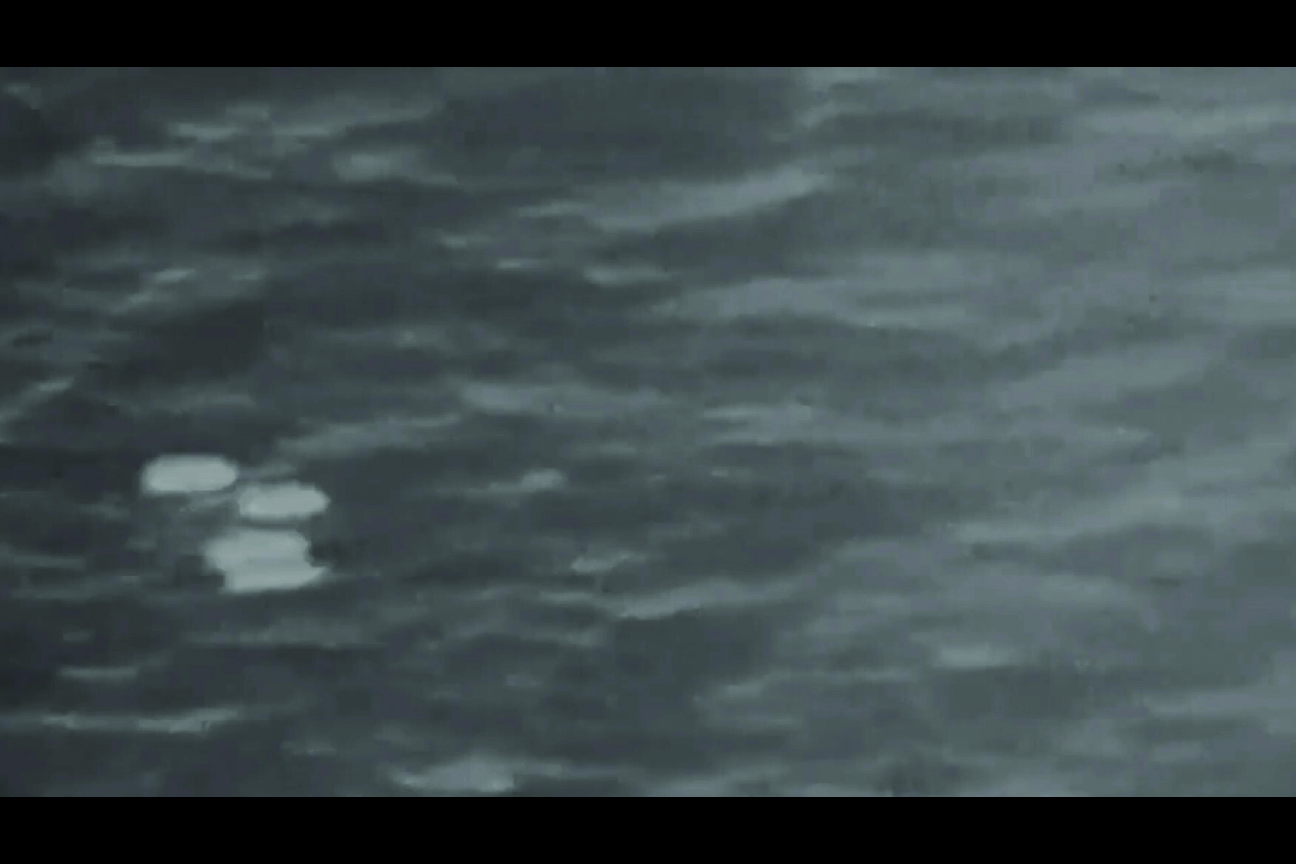
“Imagery likely derived from an infrared sensor aboard a U.S. military platform.” Image: U.S. Department of Defense
In the article “Exo–IPM Scattering as a Hidden Gatekeeper of Narrowband Technosignatures,” published in The Astrophysical Journal in 2026, SETI researcher Vishal Gajjar and colleague propose a physical reason why extraterrestrial radio signals may remain undetected even if they exist. The authors note that SETI searches often look for narrowband technosignatures, which are radio signals concentrated in an extremely tight frequency range, making them promising signs of technology because nature rarely produces them. But as these signals pass through the turbulent clouds of charged particles surrounding their home stars, they may undergo spectral broadening: instead of remaining razor-thin, they spread across a wider range of frequencies, weakening the very feature that makes them recognizable as artificial.
Using decades of spacecraft data from missions including Mariner, Pioneer, Voyager, Galileo, and Cassini, the researchers modeled how this effect could operate around other stars. They found that lower-frequency signals are especially vulnerable, and that the problem may be greater around M dwarfs, the small, magnetically active stars that make up roughly three-quarters of the Milky Way and host many known exoplanets.
In some cases, a signal could be smeared across tens or hundreds of hertz of frequency before leaving its own star system, with coronal mass ejections – which are violent eruptions of plasma and magnetic fields from the sun – making the distortion far more extreme. The team then simulated one million hypothetical planetary systems and found that such effects may be widespread enough to significantly hinder the detection of extraterrestrial radio transmissions. The study therefore raises the possibility that part of the so-called Great Silence reflects limitations in current search methods rather than the absence of technological civilizations.
The difficulty of interpreting potential technosignatures is illustrated by one of the most famous mysteries in SETI history: the 1977 “Wow!” signal.
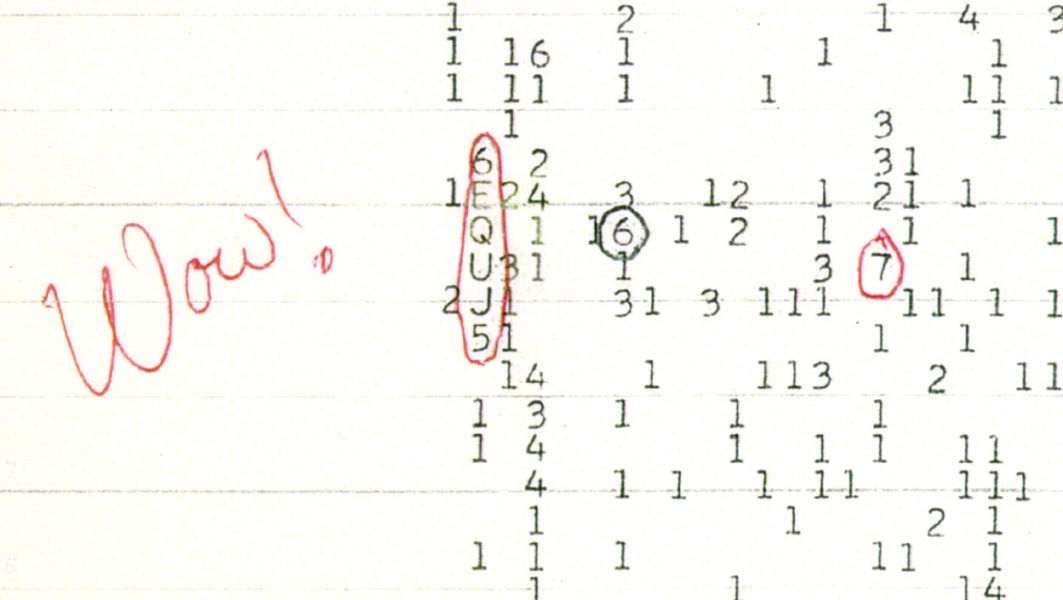
“The Wow! Signal has captivated the imagination of scientists and the public alike since its detection in 1977. This powerful radio signal, picked up by the Big Ear telescope in Ohio, remains one of the most compelling potential signs of extraterrestrial intelligence ever recorded. But a new study suggests a natural explanation for this enigmatic event.” Image: Big Ear Radio Observatory e North American AstroPhysical Observatory (NAAPO), via SETI.
According to a 2025 reanalysis draft by Abel Méndez and colleagues, the event was even stronger and more precisely localized than previously believed. After digitizing more than 75,000 pages of archival records from Ohio’s Big Ear Observatory, the researchers corrected historical errors, refined the signal’s frequency and position, and concluded that it was almost certainly astronomical rather than the result of terrestrial interference, satellites, software errors, or other conventional explanations. Phys.org reported that while the analysis does not support an extraterrestrial explanation, it suggests that a cloud of neutral hydrogen remains the most plausible natural source, despite the signal’s unusual intensity and the fact that no similar event has ever been observed again.
A similar position is taken by Harvard University astrophysicist Avi Loeb, director of the Galileo Project. In his analysis of the Pentagon’s second batch of UAP files, Loeb argues that most reported cases are likely attributable to human-made technologies. However, he maintains that a small subset remains unexplained because available data are insufficient to determine their distance, speed, or physical characteristics with confidence. Loeb views these cases as a justification for more systematic observation. Through the Galileo Project, researchers aim to collect higher-quality, publicly accessible data that could help determine whether unexplained objects represent advanced terrestrial technologies, intelligence gaps, unknown natural phenomena, or, in the most extraordinary scenario, evidence of a non-human technological civilization.

Image: Gerd Altmann, on Pixabay.
Together, these cases suggest that the search for extraterrestrial intelligence is becoming less a search for a single dramatic revelation than a test of how science handles uncertainty. UAP files show how easily ambiguous observations can invite extraordinary interpretations without providing extraordinary evidence. SETI shows the opposite challenge: even signals designed to be detectable may be missed, distorted, or mistaken for natural phenomena.
Craving more information? Check out these recommended TQR articles:
- Thinking in the Age of Machines: Global IQ Decline and the Rise of AI-Assisted Thinking
- Digital Sovereignty Movement Grows as Global Infrastructure Concentrates Under Few Companies
- Nations Adopt Digital IDs for Citizens, While Critics Highlight Privacy Issues
- Cleaning the Mirror: Increasing Concerns Over Data Quality, Distortion, and Decision-Making
Enjoyed this? Help us improve.
Have we made any errors?
Spotted an error or want to contribute your expertise? We’d love to hear from you — reach us at info@thequantumrecord.com. The Quantum Record exists to bring researchers and curious minds together around science and technology that matters.